
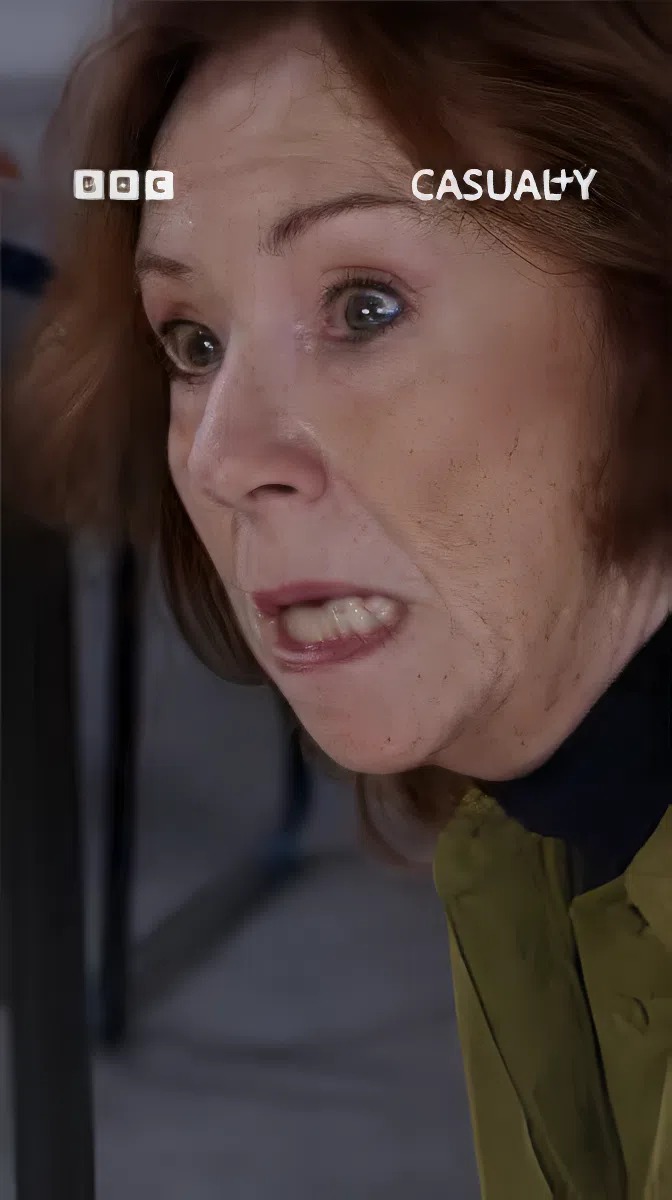
Violence Breaks Out During A Prison Visit | Casualty
A routine prison visitation descends into terrifying violence in a gripping and highly emotional episode of Casualty, as a long-awaited family reunion turns into a full-scale security crisis, exposing deep fractures between prisoners, staff, and visiting medical personnel.
What begins as a controlled, monitored environment quickly spirals into panic, injury, and lockdown conditions—forcing emergency responders into a situation where medical urgency clashes with personal history and escalating aggression.
A Prison Visit Years in the Making
The episode opens inside a prison visitation hall where emotional reunions are finally taking place after years of separation. Among those present is Clive, a man who has waited over 15 years for a moment with a family member he may never see outside of these walls again.
The atmosphere is initially calm but emotionally charged. Small conversations, restrained laughter, and fragile reconciliations hint at how much these moments mean to everyone involved.
But beneath the surface, tension is already building.
Security staff move through the room with visible alertness. Prisoners exchange guarded looks. And certain familiar faces appear more volatile than others.
Inside this environment, the fragile balance of control is only one trigger away from collapse.
Early Signs of Trouble
The first disruption is subtle—an argument at a table, a sharp exchange of words between prisoners and guards. Staff attempt to de-escalate, but frustration begins to ripple across the hall.
One prisoner, Germain, becomes increasingly agitated, his behaviour drawing attention from both security and visiting staff.
Warnings are issued. Movement is restricted. But the emotional weight of the visit hall makes restraint difficult.
In a space designed for connection, control is constantly at risk.
Sudden Lockdown Shatters the Visit
Without warning, an announcement changes everything:
The visitation hall is closing due to an internal incident.
Prisoners will be escorted out immediately.
Confusion erupts. Families protest. Prisoners demand more time. Emotional pleas fill the room as long-awaited reunions are cut short in seconds.
For Clive, the news is devastating. After 15 years of waiting, he refuses to leave quietly, pleading for just a few more minutes.
But protocol is absolute.
There are no exceptions.
Escalation Into Violence
As tensions rise, the situation deteriorates rapidly. Prisoners begin shouting, guards attempt to regain control, and the atmosphere becomes increasingly unstable.
Then everything changes.
A physical confrontation breaks out, and the hall erupts into chaos.
Security teams move in to restrain individuals, but the situation escalates beyond containment. The carefully controlled environment collapses into violence, confusion, and panic.
A full emergency response is immediately activated.
Emergency Medical Response Under Pressure
Among those caught in the chaos is a visiting nurse from the world of Casualty, who quickly transitions from observer to frontline responder as injuries begin to mount.
One prisoner suffers a severe abdominal wound during the outbreak of violence, requiring urgent assessment and potential surgical intervention.
The injury is critical.
The environment is unstable.
And time is running out.
Attempts are made to stabilise the patient on-site, but the risk level is too high for immediate transport without further escalation.
A High-Risk Medical Intervention

Inside the locked-down facility, medical personnel are forced to work under extreme pressure. With limited equipment and restricted movement, they attempt to control bleeding and prevent further deterioration.
The injured prisoner is conscious but in severe distress, and communication becomes increasingly difficult as panic spreads.
Medical staff must balance urgent care with personal safety, all while security teams struggle to regain full control of the environment.
Every decision carries risk.
Every second matters.
Emotional Tensions Complicate the Crisis
As treatment continues, it becomes clear that this is not just a medical emergency—it is also deeply personal for some involved.
A complex history between staff and prisoners surfaces during the chaos, revealing past connections that blur the boundaries between professional duty and emotional involvement.
One medical professional recognises the injured prisoner, triggering a moment of visible internal conflict.
The relationship between them is not fully explained, but it is clear that history exists—one shaped by trust, disappointment, and unresolved emotional weight.
Inside Casualty, where personal and professional lives often collide, this dynamic adds another layer of intensity to an already volatile situation.
Arguments Over How to Proceed
As the prisoner’s condition worsens, disagreement arises over how to safely proceed with treatment.
Some argue for immediate hospital transfer under armed escort. Others insist on stabilising the patient before any movement is attempted.
Security concerns clash with medical urgency.
And trust between all parties begins to erode.
One voice in particular attempts to calm the situation, urging negotiation rather than force—but their words are drowned out by rising tension and fear.
A System Under Strain
The prison visit hall becomes a symbol of systemic breakdown—where emotional vulnerability, institutional pressure, and security failures collide.
In the world of Casualty, emergencies often take place in hospitals. But here, removed from familiar surroundings, the team must operate in an environment that is actively hostile to medical care.
There are no clean procedures.
No predictable outcomes.
Only improvisation under pressure.
A Desperate Attempt to Save a Life
Despite the chaos, the medical team pushes forward with stabilisation efforts. Pressure is applied to control bleeding, and efforts are made to keep the patient conscious and calm.
But the situation remains critical.
The patient is deteriorating, and transport to a surgical facility is now essential—but still not guaranteed.
Security teams warn that movement through the facility could further escalate unrest.
The risk of doing nothing, however, is equally fatal.
The Emotional Breaking Point
Amid the crisis, emotional confrontation reaches its peak. The prisoner lashes out verbally, expressing fear, anger, and distrust toward authority figures.
Old grievances resurface. Past relationships are referenced. Accusations are made.
For a moment, medical urgency is overshadowed by emotional collapse.
The situation threatens to spiral again.
Final Attempt at Control
As the episode reaches its climax, a fragile attempt is made to restore order. Security tightens containment. Medical staff maintain focus. And negotiations continue in a desperate effort to avoid further violence.
The injured prisoner is stabilised just enough to consider transfer—but the outcome remains uncertain.
What Happens Next in Casualty?
As the lockdown continues and the aftermath begins to unfold, questions remain about how the situation escalated so quickly—and whether it could have been prevented.
The incident leaves lasting consequences for everyone involved: prisoners, staff, and medical responders alike.
And in a system where control can disappear in seconds, one truth becomes unavoidable:
In Casualty, even the most carefully managed environments can turn into chaos without warning.