
Willow accidentally killed Tracy; will Chase help her cover up the crime? General Hospital Spoilers
Port Charles is reeling as General Hospital delivers a jaw-dropping twist that will leave fans debating morality, loyalty, and consequences for weeks to come. In a shocking turn, Willow Tait has accidentally killed Tracy Quartermaine at the lake, transforming what was meant to be a tense confrontation into a life-altering tragedy. But the question hanging over the city now is darker still: Will Harrison Chase help Willow cover up the crime, or will justice take its course?
The Fatal Confrontation
Tension had been simmering for months between Willow and Tracy, a powder keg waiting for a spark. Tracy, ever vigilant and determined, had been tracking Willow’s increasingly erratic behavior—her obsession with Chase, her manipulations around Brook Lynn, and her descent into morally gray territory. The confrontation at the Quartermaine lake, triggered by a deceptive text from Wiley, escalated in ways fans could never have predicted.
Tracy cornered Willow, her words cutting deep, exposing Willow’s past missteps, and threatening the very custody of her children. The camera captured every flicker of emotion as Tracy’s classic, unyielding stare met Willow’s panic. Katelyn McMullen’s portrayal of Willow in this moment was mesmerizing, shifting from desperation to a raw, unfiltered fury that catalyzed the accidental tragedy. The struggle culminated in Willow shoving Tracy in blind rage, sending the matriarch tumbling over the mossy edge, her head striking stone with a sickening thud. Tracy’s life was extinguished instantly, leaving viewers stunned.
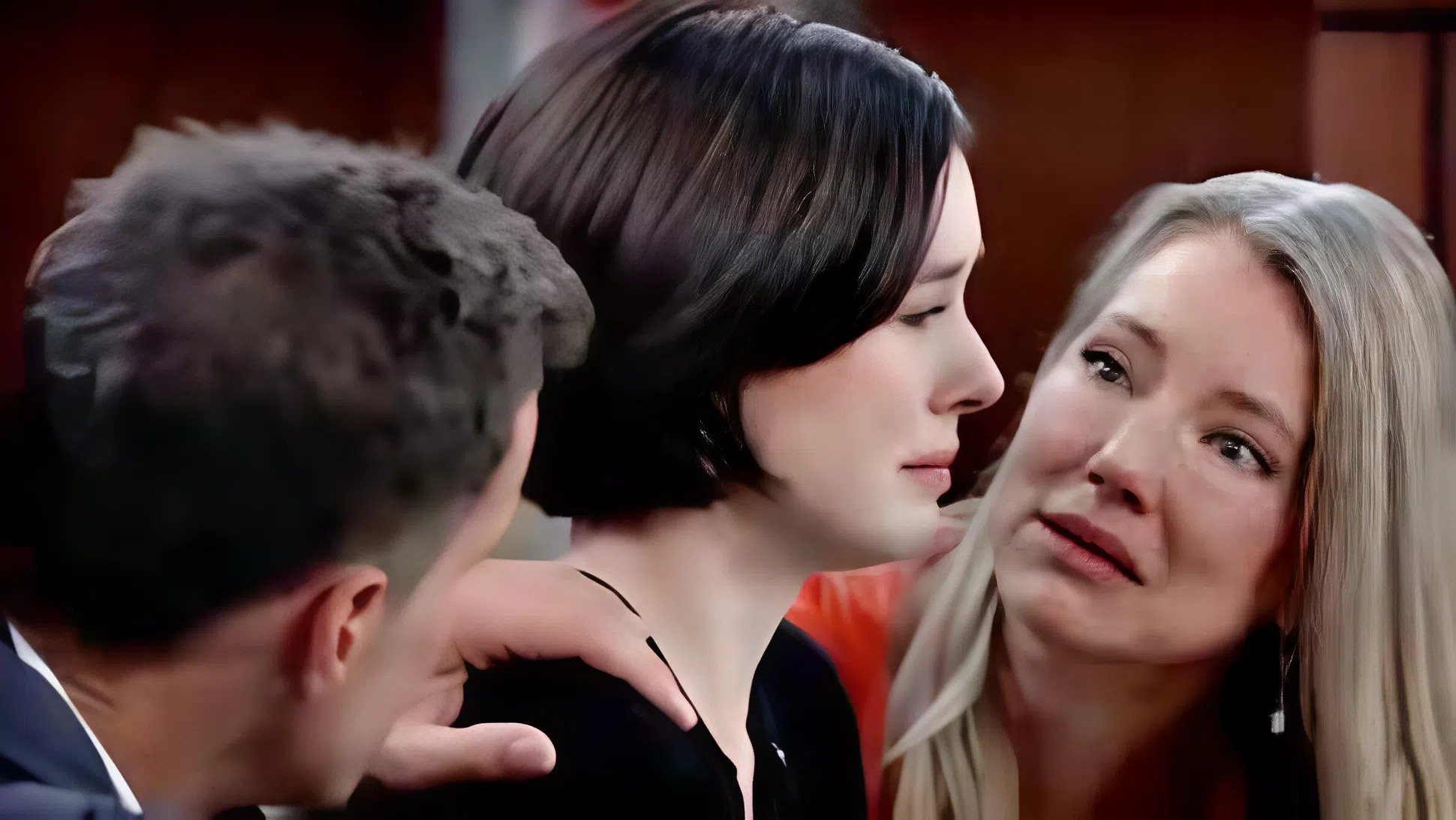
Willow’s Calculated Response
In the immediate aftermath, Willow’s reaction transformed her from a sympathetic character into a chilling figure of cold pragmatism. Instead of calling for help or succumbing to panic, she meticulously staged the scene to look like a tragic slip. Her actions—wiping fingerprints, arranging Tracy’s body, and assessing the surroundings—highlighted a psychological tension that felt as much like a thriller as a daytime soap moment. For Willow, the priority was survival and preserving her claim to her children, not grieving the woman she had just killed.
This unexpected turn raises profound questions about Willow’s morality. Is she a desperate mother acting out of fear, or has she crossed the threshold into irredeemable darkness? Her transformation mirrors classic soap opera storytelling, where beloved characters are pushed to extremes, forcing viewers to confront the complexity of human behavior in crisis.
Chase’s Dilemma
Harrison Chase’s arrival at the crime scene injects an almost unbearable dramatic irony. Here is a detective with unwavering integrity, facing a case that implicates the woman he once loved. His trained eye notices the small but damning detail—a defensive bruise on Tracy’s arm, evidence of a struggle rather than an accidental fall. The subtlety of the clue exemplifies General Hospital’s expert pacing: the tension is not just in the act but in the detective unraveling it.
Chase’s predicament is further complicated by personal entanglements. Willow’s connection to his ex-lover status, the ongoing family alliances, and the political implications of her actions place him in a unique moral and professional bind. Every choice he makes could have cascading consequences, testing his loyalty to the law against the emotional bonds he shares with those involved.
Fallout for the Quartermaines
The death of Tracy Quartermaine sends shockwaves through her family and Port Charles at large. The Quartermaine mansion, a longstanding symbol of power and legacy, becomes a pressure cooker of grief, anger, and betrayal. Brook Lynn, already entangled in complex marital and political conflicts, is poised to explode upon learning Willow’s role in her grandmother’s demise. The potential for revenge and intergenerational conflict is immense, promising some of the most emotionally charged episodes in recent memory.
Meanwhile, the absence of Tracy’s guiding hand destabilizes ELQ and family dynamics, leaving a vacuum of authority that will inevitably reshape alliances. Who will step into the leadership void? How will corporate and personal rivalries evolve in the wake of such a sudden loss? The stage is set for a multi-layered exploration of power, loyalty, and the human cost of ambition.
The Psychological Complexity
This storyline transcends mere plot mechanics. Willow’s actions and the aftermath touch on themes of morality, guilt, and the human instinct for self-preservation. Her cover-up, though calculated, is tinged with desperation—an exploration of how ordinary individuals can commit extraordinary acts when pushed to the brink. Similarly, Chase’s dilemma embodies the tension between ethical duty and personal connection, forcing viewers to confront the ambiguities of justice.
General Hospital expertly blends these elements, creating a narrative that is both thrilling and emotionally resonant. The subtle cues—the slow-motion fall, the bruise on Tracy’s arm, Willow’s measured movements—invite viewers into the minds of the characters, heightening suspense and empathy simultaneously.
Anticipated Consequences
The ramifications of Tracy’s death promise to reshape Port Charles dramatically. Willow’s political career, her relationship with Chase, and her parental rights all hang in the balance. Michael Corinthos’ role adds another layer of intrigue, as his potential interventions could either protect or condemn Willow, further complicating the moral landscape.
Meanwhile, the broader city is set to react. The Quartermaine family, media, and civic leaders will all weigh in, creating an environment where secrets, lies, and power struggles intertwine. Every conversation and decision over the coming weeks will carry the shadow of Tracy’s death, ensuring that the consequences are both immediate and long-term.
The Soap Opera Legacy

The shocking exit of Jane Elliot’s iconic Tracy Quartermaine is a milestone in daytime television. Her death is not just a plot twist; it is a seismic shift in General Hospital’s narrative universe. Elliot’s performance elevated the final scenes, blending authority, wit, and vulnerability to create a farewell that will be remembered for years. Tracy’s legacy—as a matriarch, businesswoman, and moral compass—leaves a void that the writers can now explore through the fractured lives of those left behind.
Conclusion
As Willow grapples with the immediate fallout, Chase meticulously pieces together evidence, and the Quartermaine family teeters on the brink, Port Charles is poised for one of its most dramatic arcs in decades. The tension between justice, loyalty, and survival ensures that viewers are kept on the edge of their seats, questioning motives and predicting outcomes with every scene.
This storyline redefines the boundaries of daytime drama, challenging audiences to consider the extremes of human behavior under pressure. It is a powerful reminder that in General Hospital, no character is untouchable, and every action has consequences that ripple through the city’s intricate web of relationships.
Fans are left to speculate: Will Willow evade justice, or will her carefully staged cover-up unravel under Chase’s scrutiny? And as the Quartermaines navigate grief and retribution, who will emerge as the new power broker in a city forever changed by a single, tragic shove?