
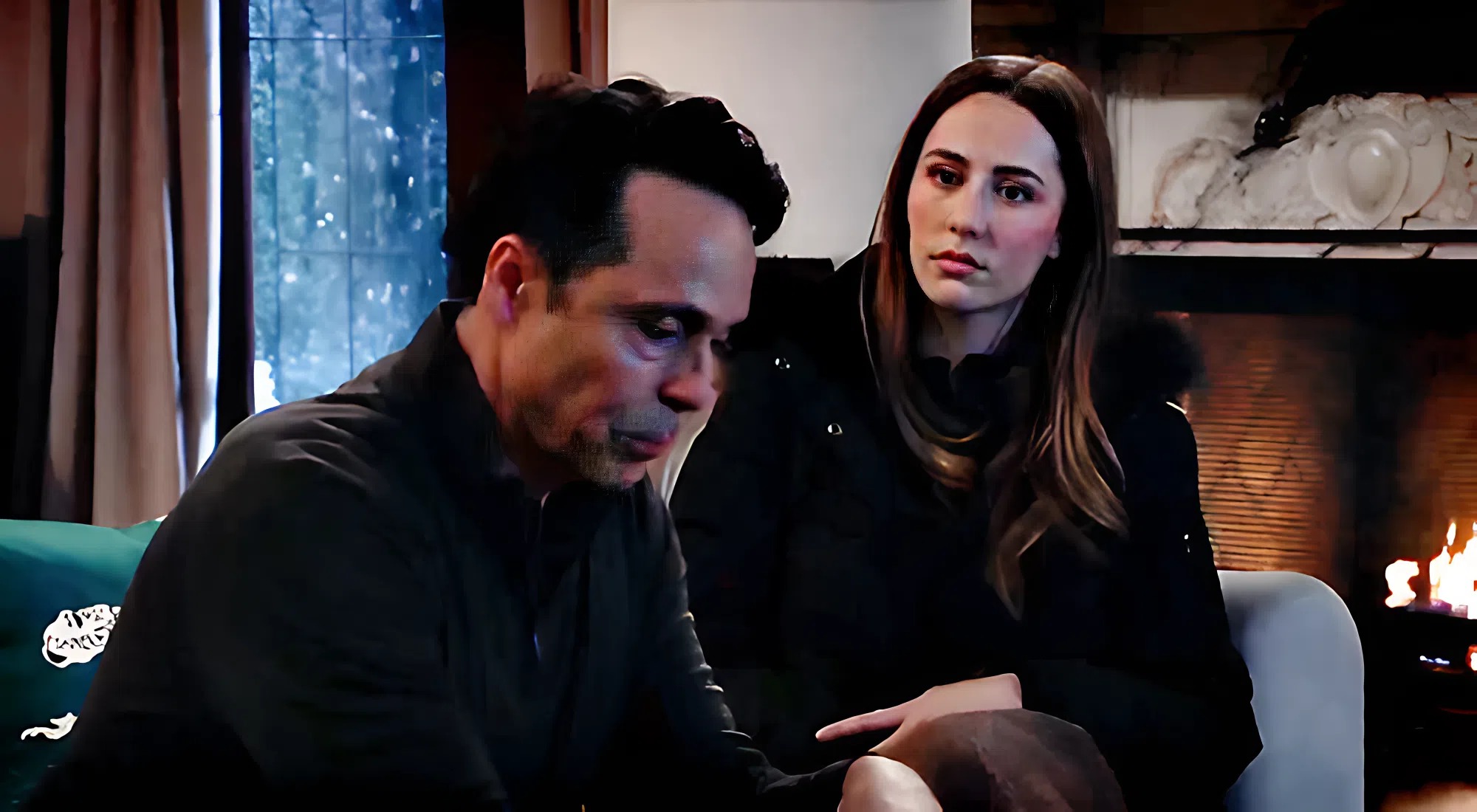
The Detail That Made Cullum Suspect Josslyn Was The One Who Pulled The Trigger. GH Spoilers
In a city where secrets rarely stay buried, General Hospital is once again building toward a revelation that could redefine one of its most complex young characters. What began as a violent confrontation has now evolved into a psychological chess match—one driven not by evidence, but by perception, memory, and a single overlooked detail that may put Josslyn Jacks directly in the line of fire.
At the center of the unfolding drama is Cullum, a man whose survival instincts are as sharp as his thirst for retribution. As he recovers from a near-fatal shooting, the fragments of his memory are returning—and with them, a suspicion that could have deadly consequences.
A Hospital Room That Changed Everything
The turning point in this storyline can be traced back to a tense and unsettling moment inside General Hospital itself. Cullum, barely conscious after emergency surgery, lay vulnerable and heavily sedated. It should have been a moment of recovery—a pause in the chaos.
Instead, it became something far more dangerous.
Josslyn’s presence in that hospital room was unexpected, and more importantly, unexplained. She wasn’t family. She wasn’t medical staff. And yet, she stood there, close enough to a man who had just survived a life-threatening attack.
What followed only deepened the mystery.
In a moment that shocked viewers, Josslyn appeared ready to finish what someone else had started. The implication was chilling: this was not panic or impulse—it felt calculated. If not for a last-second interruption, Cullum’s story might have ended right there.
That moment did not go unnoticed—especially not by Cullum himself.
Memory as a Weapon
As Cullum regains strength, so too does his memory. And in Port Charles, memory can be more dangerous than any weapon.
Piece by piece, he begins reconstructing the night he was shot. He remembers the docks. He remembers facing Jason. He remembers the tension of a standoff where every move could have been fatal.
But one detail refuses to align with the version of events he’s been told.
The shot that nearly killed him did not come from the man standing in front of him.
It came from behind.
That realization changes everything.
The Detail That Raises Suspicion
For Cullum, this is not a minor inconsistency—it is the key to unraveling the truth. Jason’s confession, while seemingly straightforward, no longer holds up under scrutiny. The trajectory of the bullet, the angle of impact, and the timing all suggest something else entirely.
Someone else was there.
Someone unseen.
And suddenly, Josslyn’s presence in his hospital room takes on a far more sinister meaning.
Why would she be there? Why would she approach him when he was at his weakest? And perhaps most importantly—what was she trying to ensure?
To a man like Cullum, these are not coincidences. They are patterns.
And patterns lead to conclusions.
Jason’s Confession: Protection or Deception?
Jason’s decision to take responsibility for the shooting initially appeared to be an act of accountability. But as Cullum revisits the details, the confession begins to feel less like truth—and more like strategy.
Why would Jason admit to a shooting that doesn’t match the physical evidence?
The answer, from Cullum’s perspective, is simple: he is protecting someone.
And the most obvious candidate is Josslyn.
This belief shifts the narrative in a dangerous direction. What once seemed like a closed case now becomes a cover-up. Jason is no longer just the shooter—he is a shield, standing between the truth and the person Cullum now believes is truly responsible.
Josslyn: Victim, Agent, or Something More?

Josslyn’s role in recent events has already been layered with complexity. Her intelligence, composure, and proximity to key moments have made her difficult to categorize. She is no longer just a bystander in Port Charles—she is a participant in its most dangerous games.
For Cullum, that ambiguity is enough to raise alarm.
And if his suspicions are correct—or even if he simply believes they are—Josslyn transforms from a peripheral figure into a primary threat.
The possibility that she is connected to the WSB only adds fuel to the fire. If her covert ties are exposed, it would validate every instinct Cullum has about her. In his mind, she would not just be involved—she would be responsible.
A Man Who Acts Before He Proves
Cullum is not a man who waits for certainty. His survival has always depended on acting quickly and decisively, often before all the facts are known.
That is what makes this situation so dangerous.
Once he convinces himself that Josslyn is the one who pulled the trigger, he may not seek confirmation. He may not investigate further. For him, suspicion alone is enough.
And in his world, the solution to a threat is simple: eliminate it.
A Silent War Begins
If Cullum moves against Josslyn, it will not be public. It will not be loud. It will be calculated, quiet, and precise.
This is not about confrontation—it is about control.
Josslyn, meanwhile, may not even realize she has become a target. Her focus remains on navigating the aftermath of the shooting, unaware that someone is already building a case against her in their mind.
But when the moment comes, she will be forced to respond—not as a civilian, but as someone trained to survive.
The Possibility of a Deeper Truth
Yet, as compelling as Cullum’s theory may seem, there is still one lingering question that refuses to fade:
What if he’s wrong?
The narrative hints at a deeper layer—one that suggests the real shooter may still be hidden in the shadows. The silence surrounding the truth feels deliberate, as though multiple people are protecting a secret too explosive to reveal.
If that is the case, then Josslyn is not the culprit—but the scapegoat.
And the longer that truth remains buried, the more dangerous her situation becomes.
The Cost of Silence
In Port Charles, silence is rarely protective. It delays the truth, distorts perception, and often places the wrong people in danger.
If those who know what really happened continue to stay quiet, they may unintentionally seal Josslyn’s fate. Cullum’s belief will harden into certainty. His suspicion will evolve into action.
And by the time the truth surfaces, it may be too late to undo the damage.
A Collision Course
What makes this storyline so compelling is not just the mystery of the shooting, but the emotional stakes behind it. Josslyn is not easily defined as hero or villain. She exists in the gray space that General Hospital thrives on—where choices are complicated, motives are layered, and consequences are rarely clean.
Cullum, too, is more than a simple antagonist. His actions are driven by logic as much as emotion, by survival as much as vengeance.
Their paths are now on a collision course.
And when they finally intersect, the outcome will not be determined by what is true—but by what is believed.
Final Thoughts
At its core, this storyline is about perception versus reality. One overlooked detail—the angle of a bullet—has set off a chain reaction that could cost lives. It has turned suspicion into certainty and transformed Josslyn into a target.
Whether she is guilty or not may ultimately matter less than whether Cullum believes she is.
Because in Port Charles, belief can be just as deadly as truth.
And if the silence continues, Josslyn may soon find herself fighting not just to clear her name—but to stay alive.