
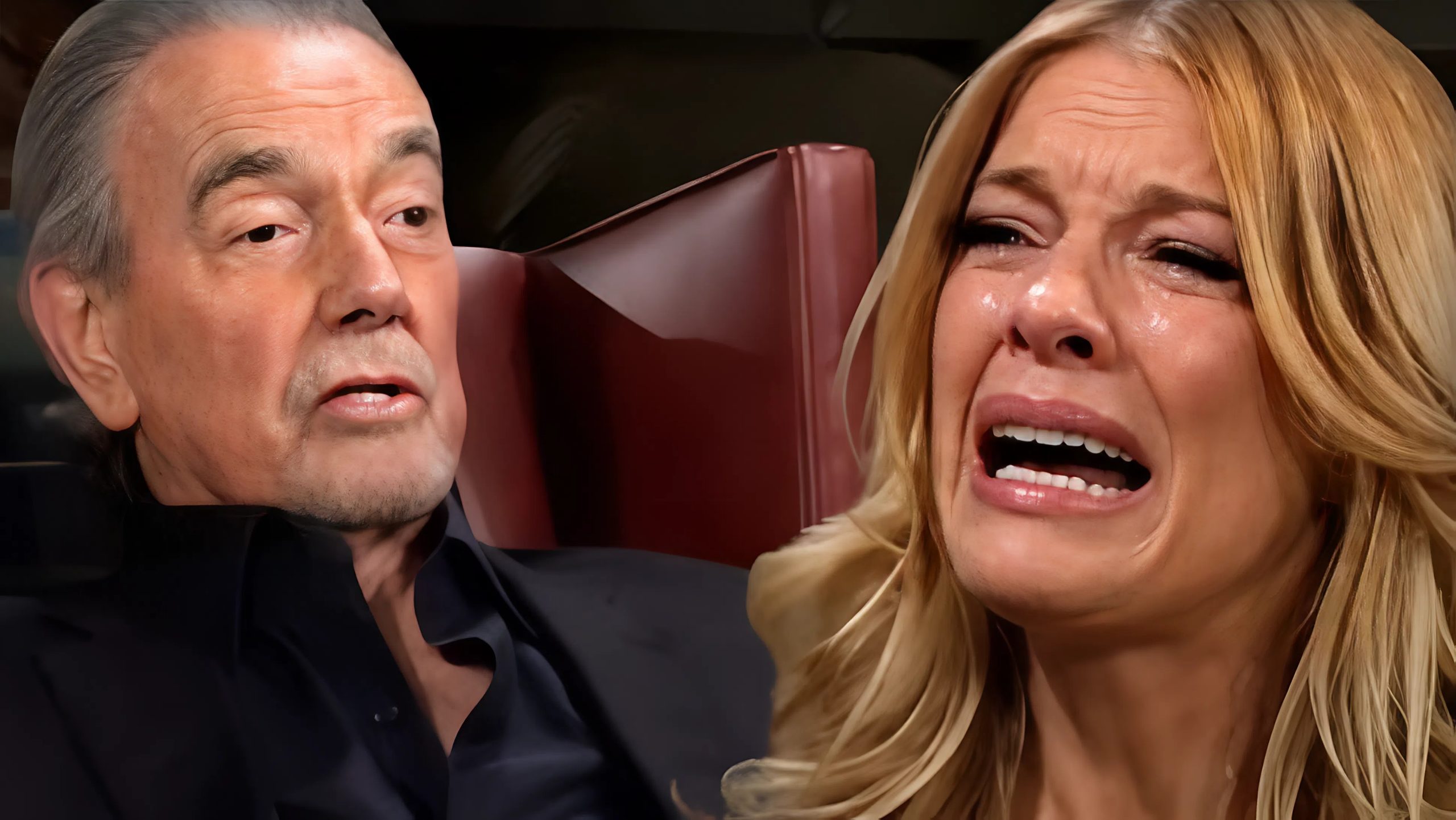
VICTOR DESTROYS EVERYTHING! PHYLLIS LOSES ARABESQUE?
A New Power Play in Genoa City Turns Into a Psychological Time Bomb
Genoa City is once again shifting under the weight of a Victor Newman power move—but this time, the fallout isn’t immediate destruction. It’s something far more dangerous: a slow-burning game of trust, ambition, and buried retaliation.
At the center of it all is Phyllis Summers, who finds herself handed an opportunity that looks like redemption on the surface… but feels like a trap underneath.
Victor Newman, never known for generosity without calculation, has unexpectedly placed Arabesque into Phyllis’ hands. For a woman who has spent years clawing her way back into relevance, the offer feels like a second chance at legacy-building.
But in Genoa City, second chances rarely come without strings.

Phyllis Summers Walks Into a Dream That Feels Too Perfect
For Phyllis, Arabesque represents more than a company—it represents control, identity, and the possibility of rebuilding everything she’s lost.
Once damaged and destabilized by Victor’s earlier corporate maneuvers, the company now sits in ruins. Yet instead of seeing failure, Phyllis sees potential. She sees a brand that can be reshaped, rebranded, and revived into something powerful enough to restore her standing in Genoa City’s elite business world.
What makes this moment so striking is not just the opportunity itself—but how it arrives.
Victor Newman, a man who rarely extends goodwill without expectation, steps forward and hands her ownership with an almost unsettling calm. No open hostility. No immediate demands. Just a quiet transfer of power that leaves more questions than answers.
Phyllis hesitates—but not for long.
The lure of rebuilding something meaningful proves stronger than her caution.
She accepts.
And in that single decision, she steps into a storyline that may define her future far more than she realizes.
Victor Newman’s Unusual Calm Raises Serious Questions
Those who know Victor Newman understand one truth: he does not give away leverage without a reason.
So when he appears almost indifferent—if not quietly approving—of Phyllis taking control of Arabesque, it immediately signals something deeper at play.
Victor’s behavior suggests a calculated patience rather than forgiveness. While Phyllis interprets the gesture as opportunity, Victor’s history suggests something far more strategic.
Even the gratitude he owes Phyllis for her role in saving Nick Newman’s life does not fully explain this sudden generosity. In Victor’s world, gratitude is acknowledged—but never allowed to override control.
This is what makes the situation so unstable.
The question hanging over Genoa City is not whether Victor has a plan—but when it will activate.
Arabesque: A Company Built on Ruins and Hidden Triggers
What Phyllis inherits is not a thriving enterprise, but a dismantled structure left behind after Victor’s earlier strategic dismantling.
Arabesque has been stripped of momentum, reputation, and financial stability. It is a shell of its former identity—fragile enough to rebuild, but vulnerable enough to collapse again with the right pressure.
That duality is exactly what makes it dangerous.
For Phyllis, the challenge is intoxicating. She sees herself not as a caretaker of a broken brand, but as its rebuilder—someone capable of transforming destruction into dominance.
Alongside Lauren Fenmore Baldwin, she begins forming a vision of revival: restructuring operations, restoring credibility, and reintroducing Arabesque into Genoa City’s competitive fashion and business landscape.
But ambition has a cost.
And in this case, the cost may be control itself.
Victor’s Long Game: A Slow-Burn Strategy or Genuine Truce?
Speculation is already spreading across Genoa City that Victor’s move may not be generosity at all—but delayed retaliation.
One theory suggests Victor could allow Arabesque to rise again under Phyllis’ leadership, only to destabilize it once it regains value. In that scenario, Phyllis would unknowingly invest time, energy, and reputation into restoring something designed to collapse at the right moment.
Another possibility is more subtle—and arguably more dangerous.
Victor may simply be waiting for the right trigger.
A single misstep. A strategic interference. A conflict involving his broader business interests.
Phyllis, known for her impulsive brilliance and willingness to challenge authority, is uniquely positioned to provide that trigger.
In Victor’s world, patience is often the most lethal weapon.
Phyllis Summers: Ambition Blinding Caution
What makes Phyllis so compelling in this storyline is not ignorance of danger—but willingness to ignore it.
She knows Victor Newman’s reputation. She understands the risks of accepting anything from him without scrutiny. Yet the opportunity to rebuild Arabesque taps directly into her defining trait: the need to create something lasting and powerful from chaos.
With Lauren Fenmore Baldwin at her side, Phyllis begins envisioning a comeback narrative that could redefine her standing in Genoa City’s corporate ecosystem.
A restored Arabesque means influence.
Influence means relevance.
And relevance, in Genoa City, means survival.
But ambition has a tendency to blur warning signs. And the most dangerous part of Phyllis’ journey is not Victor’s potential revenge—it’s her belief that she can outmaneuver it.
The Fragile Balance Between Gratitude and Control
Victor’s appreciation for Phyllis saving Nick creates a temporary emotional buffer between them—but it is not a shield.
In Genoa City, emotional debts are never simple. They coexist with power dynamics, past betrayals, and long memories.
This creates a fragile equilibrium: gratitude on one side, calculation on the other.
And Phyllis exists directly in the middle of that imbalance.
One wrong move could shift Victor from reluctant ally to calculated adversary in an instant.
That is the unspoken tension beneath every business decision now unfolding.
Arabesque Becomes the Epicenter of a Bigger Game
What initially appears to be a corporate revival story is quickly revealing itself as something much larger.
Arabesque is no longer just a company—it is becoming a battleground for influence between two of Genoa City’s most volatile forces.
Phyllis is building upward, driven by ambition and reinvention.
Victor is watching, calculating, and waiting.
Neither fully trusts the other.
And both understand that control—not success—is the real prize.
A Calm That Won’t Last Long
On the surface, Phyllis Summers appears to have secured a major victory. She has a company, a partner in Lauren, and a clear path toward rebuilding something meaningful.
But beneath that surface, the foundation is unstable.
Victor Newman does not move without long-term strategy. And Phyllis Summers does not accept opportunities without risk.
That combination guarantees one thing: escalation.
Whether Arabesque becomes Phyllis’ comeback story or Victor’s carefully timed reversal remains unknown. But in Genoa City, outcomes are rarely accidental—they are engineered.
And right now, the board is already in motion.
The only question is who realizes they are playing a game… and who discovers too late that they were the piece, not the player.