
Nina brings Willow down with one brutal decision, It’s all over! | General Hospital Spoilers
Port Charles is no stranger to emotional implosions, but the current storm surrounding Willow Tait has reached a level of intensity that feels less like a personal crisis and more like a slow-burning disaster about to consume everyone in its path. What once looked like a wounded woman trying to survive grief and guilt has now evolved into something far more disturbing—something calculated, controlled, and dangerously self-justified.
And at the center of it all stands Nina Reeves, a mother pushed to a breaking point where love and fear no longer coexist peacefully. In a shocking turn of events that could permanently reshape the lives of everyone involved, Nina makes a single devastating decision that sends Willow spiraling into collapse—and there may be no way back.
Willow’s Descent: From Broken Woman to Strategic Threat
For months, Willow has been framed as a deeply conflicted figure—torn between her past with Michael Corinthos, her emotional dependency on Drew Cain, and the fragile identity she has tried to rebuild as a mother to Wiley and Amelia. But beneath that surface-level grief, something darker has been taking shape.
What makes Willow’s current arc so unsettling is not just what she has done, but how she has begun to rationalize it. The betrayal of Michael was only the beginning. Her entanglement with Drew became less about love and more about control—control over perception, control over stability, control over the narrative of her life.
Now, as events escalate, Willow is no longer reacting emotionally. She is making decisions with chilling clarity.
Drew becomes a liability once he threatens exposure. Nina becomes a threat once she refuses to stay silent. Even those closest to her—people like Trina Robinson and Kai Taylor—are now viewed through the lens of risk assessment rather than human connection.
It is this transformation that changes everything. Willow is no longer simply “unwell” or “lost.” She is actively managing damage.
Nina Reeves Reaches Her Breaking Point
Nina Reeves has always been defined by emotional extremes—deep loyalty, fierce protectiveness, and a tendency to fight for the people she loves even when logic suggests she should walk away. But Willow pushes her into uncharted territory.
At first, Nina tries to protect her daughter. She rationalizes. She delays. She hopes this is a phase that will pass. But as more evidence surfaces—particularly Willow’s involvement in Drew Cain’s shooting and the carefully constructed attempt to redirect blame—denial becomes impossible.
The final fracture comes when Nina realizes Willow is no longer just hiding the truth… she is engineering it.
And worse, Nina understands that she herself is now part of that structure.
Faced with an unbearable choice, Nina makes a decision that changes everything: she goes to the authorities.
Not as a warning. Not as leverage. But as a direct, irreversible act of exposure.
It is not just betrayal—it is surrender. A mother turning in her own daughter because silence has become morally indefensible.
The Arrest That Shakes Port Charles
When law enforcement moves in, Willow is completely unprepared for the speed at which her world collapses. For someone who has carefully controlled information, relationships, and perception, the arrest is not just shocking—it is destabilizing.
But the real emotional blow comes moments later.
Nina Reeves is revealed as the source of the information that led to Willow’s downfall.
That revelation detonates something deeper than anger. It fractures Willow’s last remaining illusion of safety: that no matter what she did, her mother would remain on her side.
Instead, Willow is forced to confront a reality she has been avoiding—Nina is no longer protecting her. She is containing her.
And containment, in Willow’s mind, feels like abandonment.
The Trina and Kai Factor: Secrets Become Targets
One of the most dangerous consequences of Willow’s unraveling is her awareness that she is not alone in her knowledge. Trina Robinson and Kai Taylor now sit dangerously close to the truth about Drew’s shooting and Willow’s involvement.
In a healthier state of mind, Willow might see them as witnesses. But under increasing psychological strain, she begins to see them as variables—unpredictable elements that must be controlled.
This is where the tension escalates sharply.
Trina, with her strong moral compass and emotional intelligence, becomes especially vulnerable in this narrative web. She represents clarity in a storyline defined by distortion. Kai, meanwhile, represents proximity—someone who could unintentionally expose everything simply by saying the wrong thing at the wrong time.
What makes this dynamic so unsettling is that Willow does not need to act violently to cause harm. She only needs to manipulate perception, isolate individuals, or redirect suspicion.
In Port Charles, silence can be just as destructive as action.
Nina’s Choice: Protection or Punishment?
The most controversial development in this storyline is Nina’s next move after Willow’s arrest. While Willow spirals into anger and denial, Nina begins considering a far more drastic intervention.
To some, Nina’s actions may look like betrayal. But from her perspective, it is something far more complex: prevention.
Nina recognizes a pattern forming—one where Willow’s logic is increasingly detached from consequence. If left unchecked, Willow’s choices could escalate further, drawing in more victims and deepening irreversible damage.
This is where Nina’s decision becomes brutal.
Rather than simply waiting for the legal system to take its course, Nina begins exploring the possibility of psychiatric intervention—an attempt to stop Willow not through punishment, but through containment and treatment.
It is a choice rooted in love, but executed with devastating finality.
Because for Willow, it feels like erasure.
Mother vs. Daughter: The Emotional Collapse
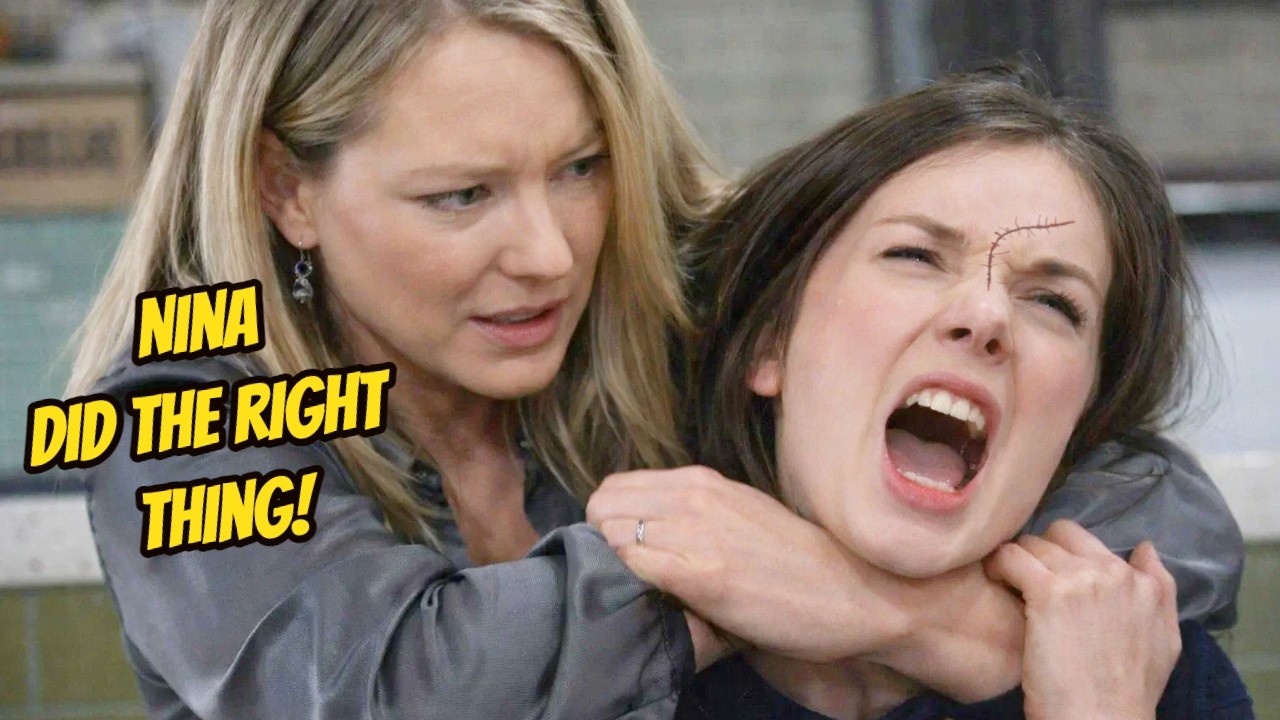
At the heart of this storyline is not a crime, but a relationship imploding under pressure. Nina and Willow are no longer operating within the same emotional reality.
Nina sees danger and intervention. Willow sees betrayal and abandonment.
What makes this dynamic so tragic is that both believe they are acting out of love.
Nina believes she is saving Willow from herself. Willow believes Nina has chosen the world over her.
And in Port Charles, that kind of misunderstanding rarely ends quietly.
Drew, Michael, and the Expanding Fallout
While Nina and Willow dominate the emotional center of the story, the ripple effects extend far beyond them.
Drew Cain remains a critical unresolved thread—his condition, his recovery, and his role as both victim and catalyst ensuring that this story cannot simply fade away.
Michael Corinthos, still processing Willow’s betrayal, is left caught between grief and disillusionment.
And as always in Port Charles, secrets rarely stay contained. The more Nina pushes forward with her decision, the more likely it becomes that other truths—about Drew, about manipulation, about who knew what and when—will begin to surface.
Conclusion: A Line Has Been Crossed
This is no longer a story about misunderstanding or emotional instability. It is about escalation. About what happens when love becomes control, when protection becomes destruction, and when silence becomes complicity.
Nina’s decision marks a point of no return.
Willow’s arrest may be the visible consequence—but the emotional consequences are far deeper. A mother and daughter have been torn apart not by distance or time, but by truth.
And in true General Hospital fashion, the question is no longer who is right or wrong.
It is how many lives will be permanently changed before the fallout finally stops spreading.
Because in Port Charles, once a secret breaks open… it never closes quietly again.