
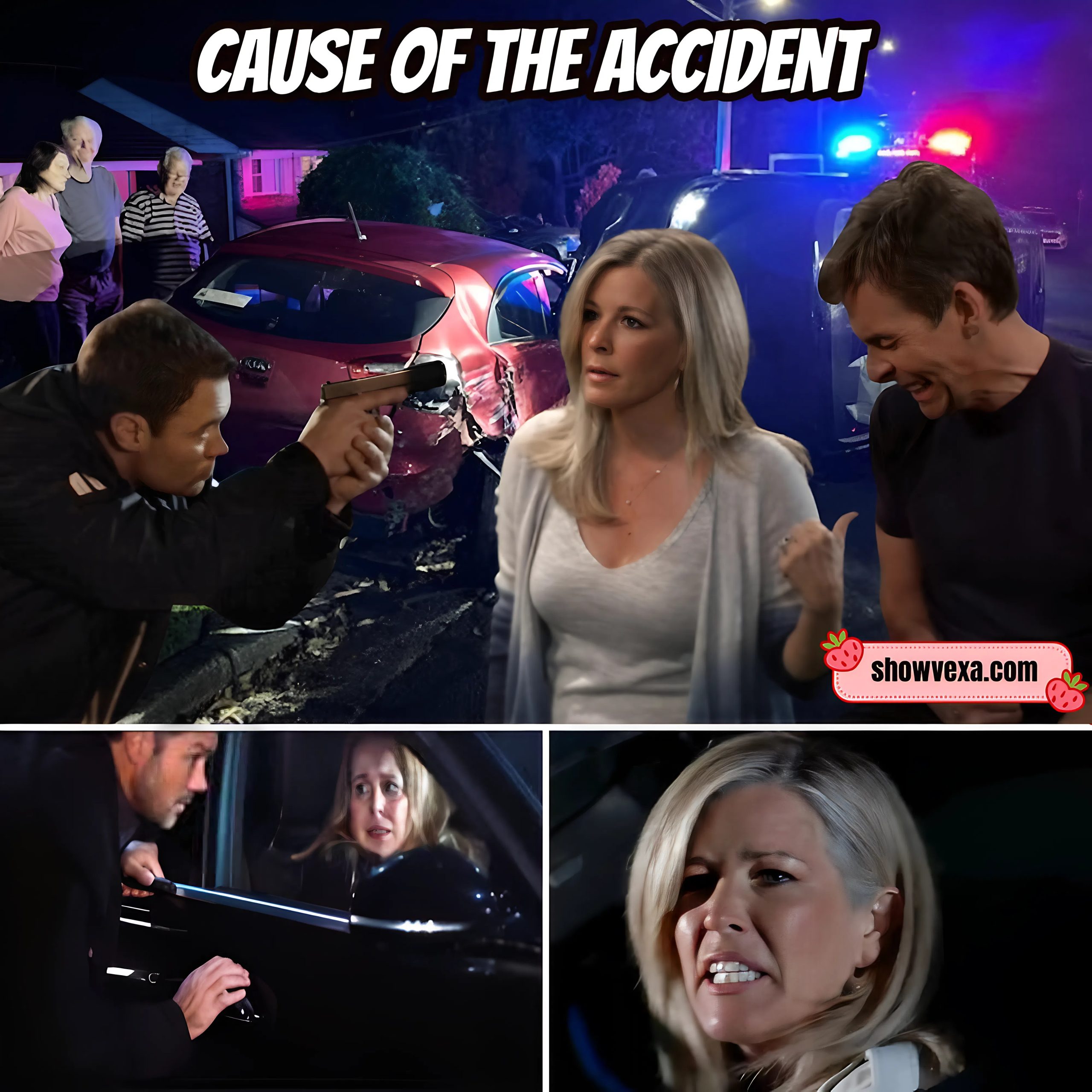
The Identity Of The Person Who Cut The Car’s Brakes, And What Will Happen Next. GH Spoilers
A devastating crash on General Hospital is shaping up to be far more than a sudden accident—it may be the opening move in a much larger and far more dangerous game unfolding in Port Charles. What initially appeared to be a shocking roadside emergency involving Jordan Ashford and Curtis Ashford is now fueling intense speculation that sabotage, betrayal, and hidden motives are driving the story toward one of the season’s most explosive turning points.
The crash itself arrived with classic soap-opera precision: Jordan and Curtis en route to what should have been an ordinary social event, tension simmering beneath the surface, when suddenly the vehicle loses control. The car swerves violently, strikes the curb, and chaos erupts in seconds. But for longtime viewers, this kind of moment rarely exists in isolation. In Port Charles, accidents almost never remain accidents for long.
What immediately made the sequence suspicious was how abrupt and unnatural the loss of control appeared. Jordan is not reckless. Curtis is equally composed under pressure. Neither character fits the profile of someone who would casually lose command behind the wheel. That has led many fans to believe the vehicle failure was engineered—specifically, that someone tampered with the brakes before the car ever reached the road.
If that theory proves true, then this incident is no longer a random emergency. It becomes attempted murder.
And in Port Charles, attempted murder is never simply about eliminating someone—it is about sending a message.
The possibility that someone deliberately targeted Jordan raises immediate questions because she has recently been navigating increasingly dangerous territory. Her involvement in sensitive information, shifting loyalties, and covert tensions has made her vulnerable in ways that few around her fully understand. If someone wanted her silenced, destabilized, or removed from the board entirely, sabotaging her vehicle would be an efficient method: subtle, difficult to trace, and capable of being dismissed as tragic misfortune.
Curtis’s presence in the car complicates everything further.
Whether he was intended as collateral damage or simply an unfortunate secondary victim could become one of the biggest mysteries moving forward. Curtis has his own connections, his own history of uncovering truths others would rather keep buried, and his own emotional ties to people now caught in widening conflict. His injury—or potential danger—instantly raises the emotional stakes because this is no longer just about Jordan’s choices. It becomes about who pays for them.
As the wreckage settles, the danger intensifies.
A damaged vehicle in daytime drama is rarely just twisted metal. Smoke begins rising from under the hood, slowly at first, then with frightening urgency. That image alone signals immediate peril: trapped passengers, possible unconsciousness, and the looming threat of fire or explosion. It is the kind of visual that transforms a crash into a countdown.
And then comes the unexpected twist: rescue arrives from the last people anyone would expect.
Carly Spencer and Valentin Cassadine reportedly appear at exactly the right moment, driving past the crash site and spotting the wreck before it becomes fatal.
On paper, the timing seems almost too convenient. In soap storytelling, coincidence often hides deeper design, and viewers are already questioning whether this encounter is truly accidental or whether unseen forces placed them there intentionally.
Still, Carly’s response fits perfectly with who she has always been. Faced with immediate danger, she acts first and thinks later. There is no hesitation when lives are at risk. Valentin, despite his layers of secrecy and survival instinct, is equally unlikely to leave people trapped in a burning car. Whatever his past, abandoning victims to die would cross a line even he is unlikely to accept.
Together, they pull Jordan and Curtis from the vehicle in what promises to be a frantic, adrenaline-driven rescue—smoke thickening, urgency rising, every second carrying life-or-death consequences.
But saving lives creates a new crisis almost instantly.
Valentin’s status makes his presence at the scene incredibly dangerous.
As a wanted man, being identified publicly could destroy whatever fragile protection he still has. One witness, one passing camera, one security feed catching his face—and everything changes. What begins as an act of heroism could instantly become evidence.
That leaves Carly and Valentin facing an impossible decision: remain at the scene and risk exposure, or disappear before authorities arrive.
The likely answer is the one that creates the most painful fallout—they leave.
Not out of cruelty. Not because they do not care. But because survival often forces brutal decisions in Port Charles.
The likely scenario is that after ensuring Jordan and Curtis are breathing, perhaps even placing an emergency call anonymously, Carly and Valentin vanish before police or paramedics arrive. In that moment, it probably feels rational. They have done enough to save lives while avoiding consequences that could trigger even greater chaos.
But in modern Port Charles, disappearing is never clean.
Traffic cameras exist. Nearby surveillance exists. Cell phones exist. Someone almost always sees something.
And once partial footage emerges—two figures removing victims from a crash scene before fleeing—the narrative can shift instantly.
Instead of being viewed as rescuers, Carly and Valentin risk becoming suspects.
Why were they there?
Why did they leave?
Why avoid authorities unless there was something to hide?
For Carly, this becomes especially dangerous because telling the full truth means exposing Valentin. Protecting him means silence. Silence, however, creates suspicion.
That tension could place Carly in a devastating legal and emotional trap: accused not because she caused harm, but because she cannot fully explain her actions without creating even greater consequences.
Valentin, by contrast, knows how to disappear.
He has survived by understanding timing, concealment, and retreat. If pressure intensifies, he can vanish again.
Carly cannot.
She remains visible, rooted in Port Charles, vulnerable to public judgment and legal fallout.
Yet even that drama may be secondary to the larger question: who sabotaged the car?
At the center of speculation is Jens Sidwell.
Sidwell’s name continues to surface because the motive fits too well to ignore. If he has learned—or even strongly suspects—that Jordan has betrayed him, retaliation through calculated sabotage would align perfectly with his style. Direct confrontation is not always his preferred weapon. Precision is.
Cutting brakes would be a chillingly efficient move: minimal exposure, maximum damage, and plausible deniability.
It is violence executed through machinery rather than confrontation.
That detachment makes it even more frightening.
Jordan’s growing involvement in dangerous territory has already placed her on unstable ground, and if Sidwell believes she compromised him, he may see this as a warning—or punishment.
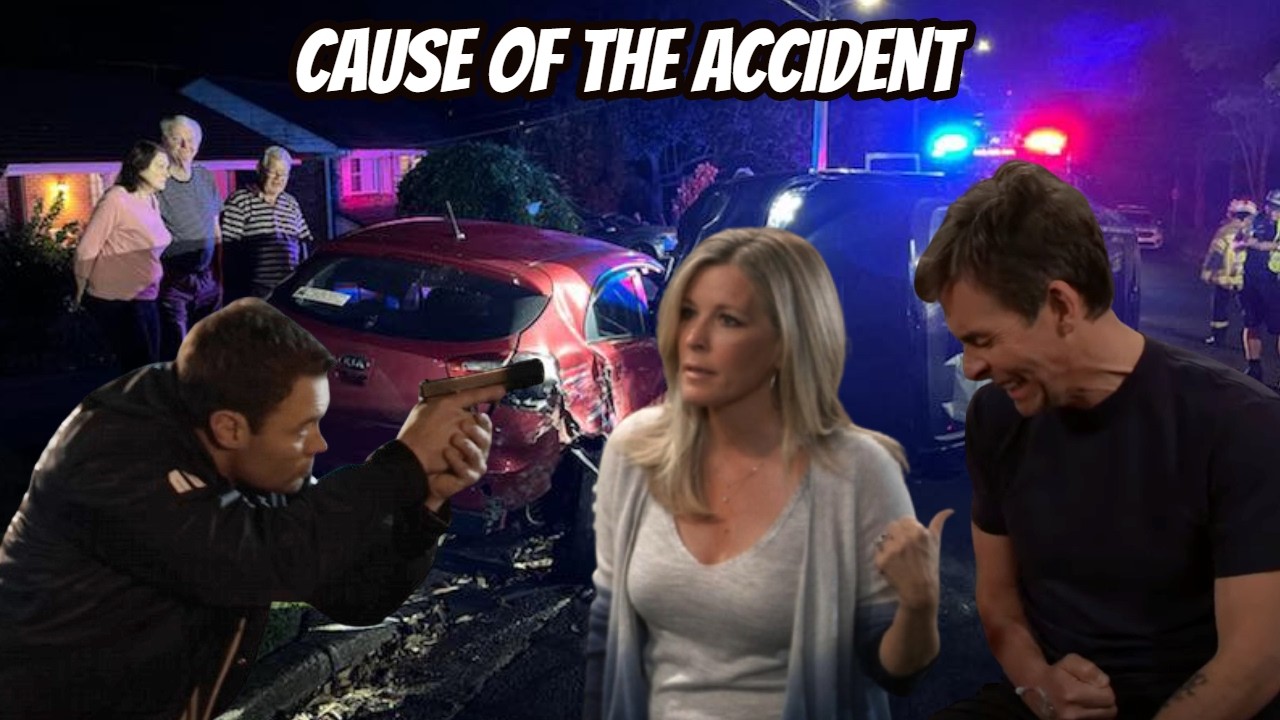
Curtis then becomes tragic collateral, another innocent dragged into consequences created by hidden war.
Still, some viewers believe another hand may be involved.
Could there be a second enemy? Someone with access, technical ability, and motive to remove both Jordan and Curtis simultaneously?
Port Charles rarely reveals its full deck immediately. A visible suspect often hides a deeper architect.
If the brakes were cut, the crash becomes more than a dramatic incident—it becomes the first spark in a chain reaction.
Jordan and Curtis survive, but wake to uncertainty.
Carly faces suspicion.
Valentin risks exposure.
And the real culprit remains free, watching the consequences unfold from a distance.
That may be the cruelest part of all: the villain may not need another move because the damage has already begun spreading on its own.
Every decision made in the aftermath creates new fractures.
Jordan must decide what truths to reveal.
Curtis must understand why he became part of the target zone.
Carly must weigh honesty against protection.
Valentin must determine whether helping was worth the danger.
And somewhere behind it all, whoever cut those brakes may already be planning what happens next.
Because in Port Charles, the crash is never the ending.
It is only the beginning. 🔥🚗💥