
Wiley witnessed Willow poisoning Jacinda, Michael sought revenge General Hospital Spoilers
Port Charles is bracing for yet another seismic shift as General Hospital pushes one of its darkest and most emotionally charged storylines to the forefront. In a shocking development that threatens to fracture the Corinthos family beyond repair, young Wiley becomes the accidental witness to a moment that could destroy everything—Willow allegedly poisoning Jacinda. What follows is a chain reaction of fear, rage, and vengeance, as Michael Corinthos is pushed toward a dangerous breaking point.
This is no longer a simple custody conflict or emotional misunderstanding. It is a story of perception, betrayal, and irreversible consequences.
Wiley becomes the silent witness to a devastating act
At the center of the unfolding chaos is Wiley Corinthos, a child whose innocence places him in the worst possible position at the worst possible time. According to spoilers, Wiley unintentionally witnesses Willow in a moment that will permanently alter the trajectory of the family—allegedly administering poison to Jacinda.
The implication alone sends shockwaves through the narrative. Children in Port Charles are often used as emotional anchors in adult conflicts, but rarely do they become direct witnesses to criminal acts. Wiley’s presence transforms this storyline from private desperation into public catastrophe waiting to erupt.
What makes this development so devastating is not just what Wiley sees—but what it does to him. A child’s interpretation of trauma is fragmented, emotional, and immediate. Whether he fully understands what he witnessed or not, the memory itself becomes a ticking emotional time bomb.
Willow’s psychological collapse reaches a critical point
Willow’s transformation has been gradual but increasingly unsettling. Once defined by empathy and moral clarity, she now exists in a space dominated by fear, control, and protective instinct pushed beyond reason.
Jacinda’s growing influence in Michael’s life—and by extension, the children’s lives—has become the central source of Willow’s instability. What begins as suspicion evolves into fixation, and eventually into a belief that drastic action is the only way to preserve her role as a mother.
The alleged poisoning of Jacinda represents a devastating moral rupture. Whether driven by panic, desperation, or distorted logic, Willow’s actions signal a collapse of the boundaries she once fought to maintain.
In her mind, she is not committing an act of harm—she is eliminating a threat. But in Port Charles, intention rarely shields consequence.
Jacinda’s knowledge makes her a dangerous target
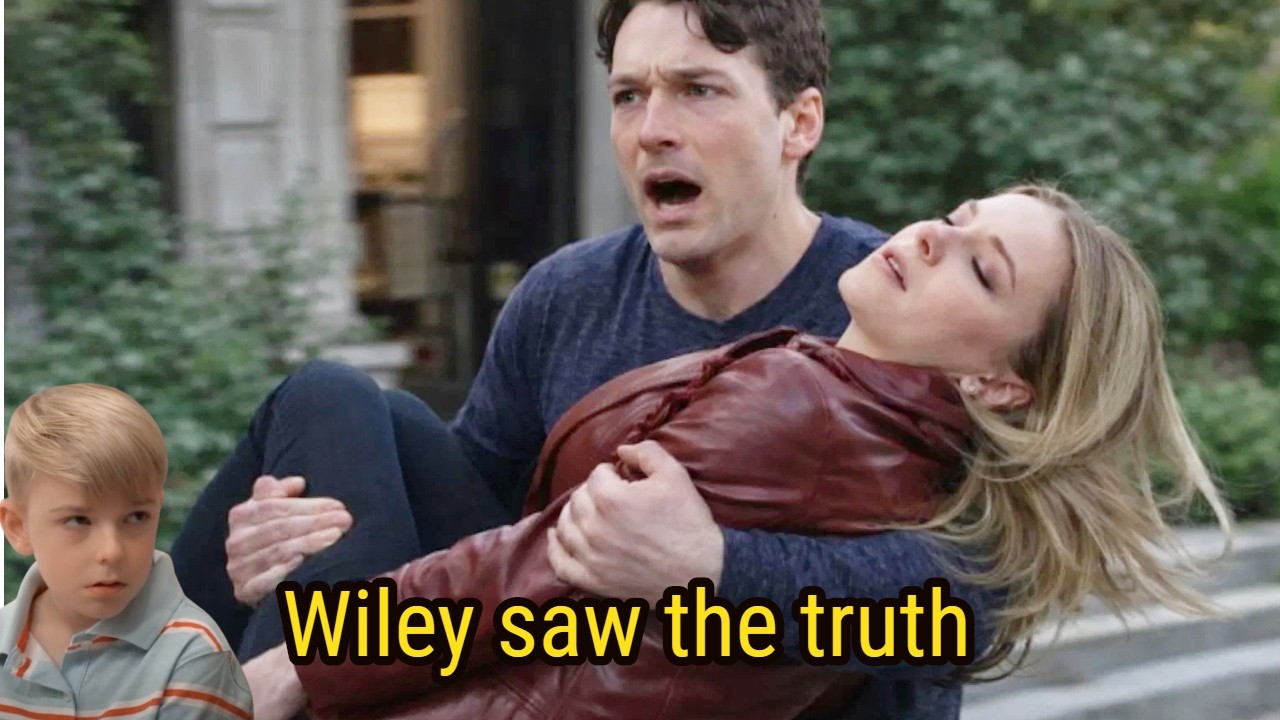
Jacinda has never positioned herself as an adversary, yet she finds herself at the center of escalating hostility. As someone who holds critical information about recent events and shifting loyalties, she becomes increasingly dangerous simply by knowing too much.
In soap opera storytelling, knowledge is rarely passive—it is explosive. And Jacinda’s awareness of the underlying tensions surrounding Willow, Michael, and the custody battle places her in direct danger.
The alleged poisoning attempt underscores how far the situation has escalated. Jacinda is no longer just a participant in family dynamics—she is now a target within them.
Michael Corinthos moves from protector to avenger
Perhaps the most dramatic shift in this storyline belongs to Michael Corinthos himself. Known for his measured approach and desire to preserve stability, Michael is now forced into an emotional space he has long avoided: vengeance.
The moment Wiley’s testimony—or emotional disclosure—reaches him, everything changes. The idea that the mother of his child may have harmed Jacinda, especially with Wiley as a witness, shatters any remaining sense of neutrality.
Michael is no longer weighing options. He is reacting to a threat against his family’s safety and his child’s psychological well-being. And in Port Charles, that kind of emotional rupture rarely leads to restraint.
Spoilers suggest Michael’s response will not simply be legal or procedural—it will be deeply personal, driven by anger, betrayal, and a need for accountability.
The father-son dynamic becomes the emotional core
Wiley’s role as witness introduces one of the most emotionally complex dynamics in the storyline. Michael must now navigate not only the accusation against Willow but also the psychological impact on his son.
What does it mean for a child to witness something so disturbing involving a parent? And how does Michael process that truth without further traumatizing Wiley?
This dual burden—protecting his son while confronting the woman he once trusted—places Michael in an impossible position. Every decision he makes carries long-term consequences, not just legally, but emotionally within his family structure.
Willow’s actions fracture every relationship around her
As the accusation spreads, Willow’s world begins to collapse from all sides. Her relationship with Michael is pushed to the brink, her credibility is questioned, and her role as a mother is scrutinized under a harsh new light.
Even those who once defended her now face difficult questions. Was this an isolated moment of panic, or the culmination of a deeper psychological shift?
In Port Charles, reputations are fragile—but trust is even more so. Once broken, it rarely returns in its original form.
Jacinda becomes the catalyst for retaliation
Jacinda’s condition following the alleged poisoning becomes the immediate trigger for retaliation and investigation. Her survival—or lack thereof—will determine the severity of Michael’s response and the legal consequences that follow.
But even beyond physical harm, Jacinda now represents something larger in the narrative: the point at which fear turned into irreversible action.
Her presence forces every character to confront uncomfortable truths about control, obsession, and the limits of protection.
A family war begins to take shape
With Wiley as witness, Willow as accused, Jacinda as victim, and Michael as avenger, the Corinthos family finds itself on the edge of internal collapse.
What was once a struggle over trust and custody now escalates into a full-scale emotional and moral war. No relationship is untouched. No alliance remains stable.
And in true General Hospital fashion, every attempt to resolve the situation only deepens the divide.
Conclusion: innocence, truth, and irreversible consequences
This storyline is no longer about suspicion or misunderstanding—it is about irreversible exposure.
Wiley’s witness account transforms private fear into public crisis. Willow’s alleged actions redefine her place in the narrative. Jacinda becomes the spark that ignites accountability. And Michael steps into a role he never sought but may no longer be able to avoid.
At its core, this is a story about how quickly love can turn into conflict when trust is shattered—and how one moment, seen through the eyes of a child, can change everything.
As Port Charles braces for fallout, one truth becomes increasingly clear:
Nothing in this family will ever be the same again.