
Rocco’s Fever Allowed Cullum To Secretly Remove The Breathing Tube. General Hospital Spoilers
Port Charles is rarely quiet for long, but the current crisis surrounding Rocco Falconeri feels different. It is not simply another medical emergency unfolding at General Hospital—it is a slow-burning convergence of illness, hidden guilt, and a potentially deadly act of revenge waiting to erupt in the most vulnerable place imaginable: a hospital room.
At first glance, Rocco’s condition appears to be a straightforward medical emergency. A fever that refuses to break, an infected wound that worsens instead of healing, and the growing risk of neurological complications all point toward a critical but familiar hospital storyline. Yet beneath the clinical urgency lies something far more unstable. Every symptom seems to push the narrative closer to emotional exposure—forcing buried truths, fragile loyalties, and dangerous assumptions into the open.
A Medical Crisis That Feels Too Timed to Be Coincidental
Rocco’s worsening infection is not just a physical setback. It creates isolation, dependency, and urgency—all narrative conditions that heighten emotional stakes across multiple characters. His fever leaves him vulnerable not only to medical complications but to the decisions of those around him, particularly his mother Lulu Spencer.
Lulu’s role in this unfolding crisis is increasingly complex. While she presents as protective and composed, there is a growing sense that she is carrying knowledge she has not fully revealed. Whether this silence is driven by fear, denial, or calculated protection remains unclear. What is certain, however, is that her choices are shaping the trajectory of this crisis in ways that may become irreversible.
As Rocco’s condition escalates, so does the pressure on Lulu to act decisively. The introduction of potential seizures marks a critical turning point, transforming what might have been a contained illness into a situation requiring immediate escalation. Yet even then, hesitation lingers—an unsettling pause that raises questions about what is being delayed, and why.
Isaiah’s Role: Stability or Strategic Delay?
Dr. Isaiah’s involvement initially appears to represent stability—an attempt to manage Rocco’s condition outside the chaotic environment of emergency intervention. His presence suggests control, caution, and medical restraint.
However, as Rocco’s symptoms worsen, the decision to delay hospitalization becomes increasingly significant. Whether intentional or circumstantial, this delay creates a fragile window where the situation remains partially hidden from broader scrutiny.
Once Rocco transitions into hospital care, that privacy disappears. Exposure becomes inevitable. And with exposure comes risk—not just medically, but narratively. Because in Port Charles, visibility often triggers consequences far beyond the clinical realm.
The Hospital Shift: Where Privacy Ends and Danger Begins
The moment Rocco enters the hospital setting, the story fundamentally changes. He is no longer shielded by the controlled environment of home care. Instead, he becomes part of a system where observation is constant—and where unintended interactions can shift entire outcomes.
One such moment stands out: Rocco offering a simple gesture of kindness to Ross Cullum, handing him a pillow during what appears to be a brief, quiet interaction. On the surface, it is a humanizing detail—a reminder of Rocco’s empathy even in illness.
But that moment quickly transforms when Cullum notices Rocco’s injured arm.
What might appear to others as a healing wound is, in Cullum’s perception, something far more loaded: a clue.
Cullum’s Realization: When Observation Becomes Intent
From that instant forward, Cullum’s behavior shifts into something colder and more deliberate. He does not confront Rocco immediately. He does not escalate publicly. Instead, he observes.
This is where the tension becomes most dangerous.
Cullum is not portrayed as impulsive. Instead, his threat lies in calculation. He processes information slowly, methodically, building internal certainty rather than seeking immediate validation. Once he notices inconsistencies—the wound, Rocco’s behavior, and the timing of events surrounding the shooting—he begins assembling a private narrative.
And in Port Charles, private narratives are often more dangerous than legal ones.
Because belief alone can become justification.
The Two Possible Trajectories of Escalation
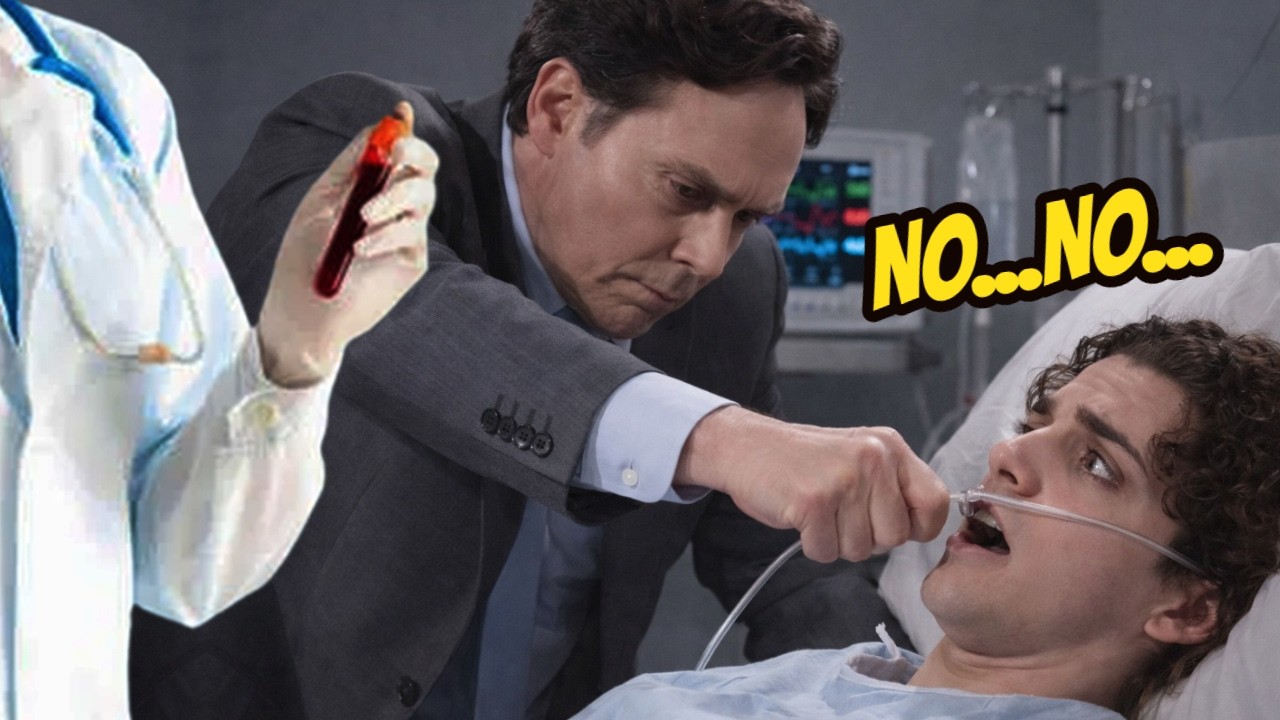
At this stage, the storyline appears to split into two distinct possibilities, each carrying significant consequences.
The first is confrontation. In this version, Cullum eventually pressures Rocco into answering questions during a moment of vulnerability—perhaps during recovery, perhaps when Lulu is absent, perhaps when pain lowers emotional defenses. Under such pressure, Rocco may break. The emotional burden he carries could spill over into confession, especially if he feels cornered or responsible for escalating danger.
If that occurs, the fallout would be immediate and severe: legal exposure, fractured relationships, and irreversible reputational damage. Lulu, in turn, would face her own reckoning—not only for protecting Rocco but for what she may have chosen to conceal.
But the second possibility is far more unsettling.
A Silent Decision With Irreversible Consequences
Rather than seeking truth, Cullum may instead seek resolution.
If he becomes convinced that Rocco is responsible for his suffering, he may reject formal justice entirely. In his mind, the system may already feel insufficient. That belief creates a dangerous psychological shift—one where accountability is replaced by personal judgment.
In that scenario, the hospital setting itself becomes the stage for something far more sinister.
A quiet room. Medical equipment humming. A vulnerable patient dependent on machines. And a man who believes the truth has already been revealed—not through confession, but through evidence and conviction.
The implication is chilling: a moment where control over life-support systems could be used not as treatment, but as retribution.
If that line is crossed, Rocco’s illness is no longer the central crisis. It becomes the cover for something intentional.
Lulu’s Breaking Point: Protection or Collapse
For Lulu, the emotional consequences would be devastating. If she loses Rocco under such circumstances, the loss would carry multiple layers—medical, moral, and psychological.
Grief would not be her only burden. Guilt would likely follow, especially if she begins to recognize that earlier decisions—silence, hesitation, protection—may have contributed to the chain of events that allowed danger to escalate unchecked.
That guilt could transform her character trajectory entirely. Protective instincts may shift into something far more volatile: a need for accountability, possibly even retaliation.
In Port Charles, grief rarely remains passive.
Rocco’s Possible Survival: A Different Kind of Trauma
Yet there remains another possibility—one that may ultimately prove more complex than death.
If Rocco survives an attempted act of harm, the narrative changes again. Survival introduces witness testimony, trauma, and truth that cannot be erased.
Rocco would no longer be defined solely by illness or guilt over the shooting. He would carry the psychological weight of knowing that someone attempted to silence him permanently.
That shift would make him central to multiple conflicting agendas—protection, suppression, and truth-seeking—all while he remains emotionally fragile and physically recovering.
A Story Built on Pressure, Not Just Plot
What makes this arc compelling is not a single event, but the accumulation of pressure across multiple characters. Lulu’s secrecy. Rocco’s vulnerability. Cullum’s growing certainty. Isaiah’s limited intervention. And the ever-present question of whether truth will surface before consequences become irreversible.
The hospital is no longer just a setting. It is a pressure chamber.
And every decision made inside it carries consequences that extend far beyond medical charts or diagnoses.
Conclusion: The Real Danger Beneath the Fever
At its core, this storyline suggests something deeper than illness or injury. Rocco’s fever is not the true threat—it is the catalyst. A condition that exposes hidden truths, intensifies emotional fractures, and creates the conditions for irreversible decisions.
Whether Cullum acts on revenge, whether Rocco confesses under pressure, or whether Lulu’s silence finally collapses under the weight of consequence, one truth remains consistent:
In Port Charles, vulnerability is never temporary.
It is an opening.
And once that opening appears, it rarely closes without cost.