
🔥 DAYS Star Stephen Schnetzer Reveals the Broadway Moment That Changed EVERYTHING!
In Hollywood, careers are often imagined as carefully plotted blueprints—step-by-step climbs from small roles to stardom, engineered with precision and patience. But as veteran actor Stephen Schnetzer is now reminding fans, the truth behind a lasting career in entertainment is far less controlled—and far more chaotic.
Sometimes, the biggest turning point isn’t planned at all. It’s a single decision made in a moment of uncertainty that quietly rewrites everything that comes after.
For longtime viewers of Days of Our Lives, Schnetzer is a name tied to legacy. After decades away from Salem, his recent return as Steve Olsen, the charming and complicated brother of Julie Williams, has reignited nostalgia among fans. His appearance at the emotional memorial for Doug Williams was more than just a cameo—it felt like a full-circle moment, connecting decades of soap history in a single storyline.
But according to Schnetzer himself, none of this would have been possible if he hadn’t once walked away from the very place that helped launch his career.
And that decision, made more than 40 years ago, began with a phone call.
🎭 The Crossroads: Salem Stability vs. Broadway Risk
It was 1980. Schnetzer was working steadily on Days of Our Lives, still early in his television journey after training at the prestigious Juilliard School and building a foundation in classical theater. He wasn’t unhappy—but he wasn’t locked into a long-term contract either.
Then came the offer that changed everything.
A role in a Broadway production of “Filumena”, a stage play with a powerful creative pedigree and originally associated with legendary director Franco Zeffirelli. But by the time the project reached New York, Zeffirelli had stepped away, and the production had taken on an even more intimidating new force behind it: Sir Laurence Olivier.
For any young actor, that name alone would be enough to cause hesitation—or obsession.
Schnetzer suddenly found himself standing at a career crossroads: remain in the relative stability of daytime television, or gamble everything on the unpredictable intensity of Broadway under one of the greatest theatrical minds in history.
Looking back, his reasoning was simple.
“I decided to take the riskier one,” Schnetzer has said, reflecting on the choice that sent him out of Salem and back to New York.
It wasn’t dissatisfaction. It wasn’t conflict. It was instinct.
And instinct, in this case, changed everything.
🎬 A Short Run With Long Shadows
On paper, the decision looked questionable. The Broadway production of Filumena ran for just 32 performances—a blink in theater terms. There was no guarantee of acclaim, longevity, or even financial stability.
But Schnetzer insists the value was never in the run itself.
It was in who was watching.
Working in that environment exposed him to casting directors, stage legends, and industry gatekeepers who would later shape his career in ways Salem alone never could have.
One connection in particular—casting director Mary Jo Slater—proved pivotal. That meeting led to an opportunity on One Life to Live, which then opened the door to Schnetzer’s defining role as attorney Cass Winthrop on Another World in 1982.
That role would span years, returning repeatedly until the show’s final episode in 1999.
Without Broadway, that entire trajectory simply doesn’t exist.
No Cass Winthrop. No decades-long daytime legacy. No later return to Salem as a seasoned veteran.
Just a very different career timeline—one never fully realized.
🎭 High Art, Soap Opera—and the False Divide
One of the most striking aspects of Schnetzer’s reflection is his refusal to accept the traditional hierarchy that separates theater, film, and daytime television.
In industry conversations, Broadway is often framed as “prestige,” while soap operas are unfairly dismissed as “routine television.” Schnetzer rejects that entirely.
To him, both worlds demand the same core skill: performance under pressure.
He speaks with admiration about working alongside stage giants such as Anthony Hopkins and Michael Redgrave, and about the discipline required in classical theater. But he just as easily describes soap opera production as a kind of relentless creative marathon—fast-paced, emotionally demanding, and technically unforgiving.
In fact, he often compares the two directly.
A Shakespearean soliloquy and a multi-page soap dialogue? Same job. Different rhythm.
That perspective reframes his entire career not as a series of genre shifts, but as a continuous exercise in adaptability.
🔄 The Return to Salem: A Full-Circle Moment
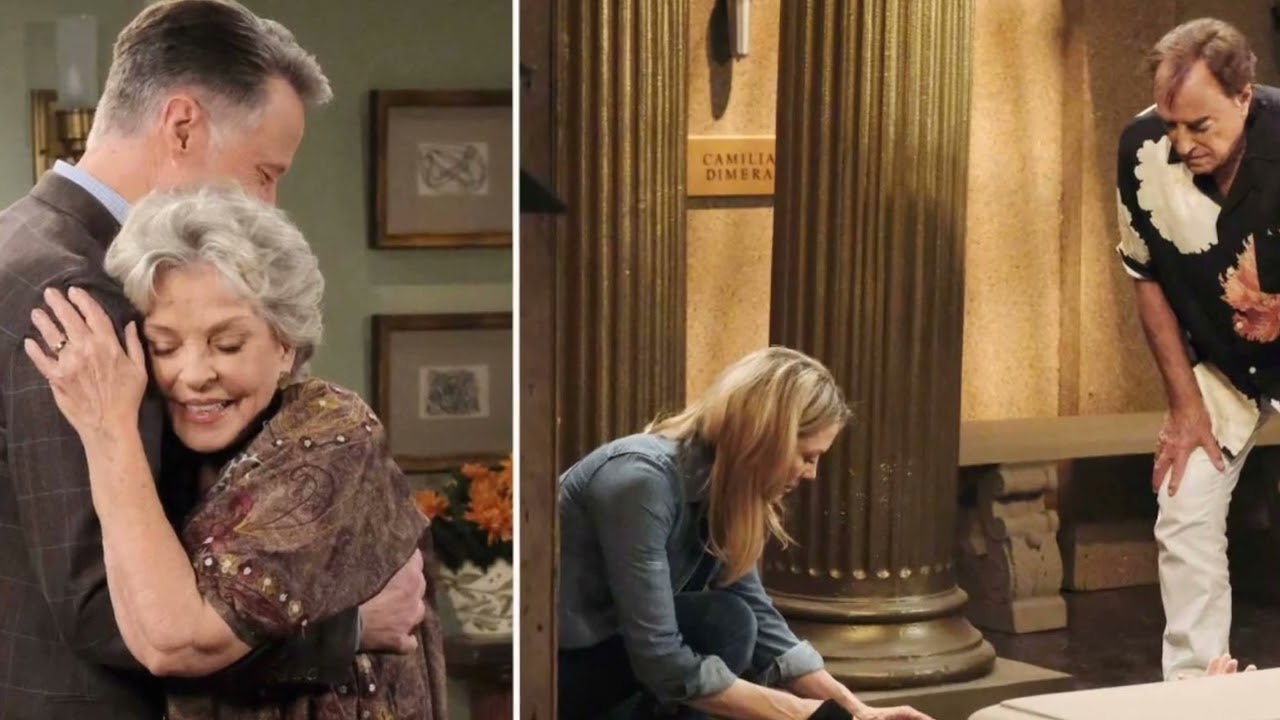
When Schnetzer returned to Days of Our Lives decades later, the emotional weight of the experience wasn’t lost on him—or on longtime fans.
He stepped back into a world shaped by familiar faces, honoring legacy characters like Bill Hayes, Francis Reid, and Marlena Evans’ long-standing emotional history. Reuniting with Susan Seaforth Hayes, he described the experience as instinctive, almost effortless.
Like riding a bicycle—just with decades of accumulated memory behind it.
But he was also candid about his early days on set in the 1980s, admitting that he was far less polished then. Theater training had taught him projection and precision, but television demanded subtlety and technical awareness he hadn’t yet mastered.
Over time, that gap closed.
Broadway sharpened him. Daytime television refined him. Years on Another World solidified him.
By the time he returned to Salem, he wasn’t the same actor who had left.
He was something far more rare in daytime television: a performer with deep stage discipline, long-form storytelling experience, and decades of emotional range built into every line.
🔥 The Bigger Lesson: Risk Over Routine
In an industry increasingly driven by branding, algorithms, and long-term career strategy, Schnetzer’s story feels almost rebellious.
He didn’t map out a perfect trajectory. He didn’t optimize his choices for visibility or longevity.
He simply followed the work that felt creatively alive.
Sometimes that meant leaving stability. Sometimes it meant taking roles with no guarantees. Sometimes it meant stepping into unfamiliar worlds guided only by instinct and opportunity.
And that philosophy—unintentional as it may have been—created a career that has lasted more than four decades.
Not because it was carefully engineered.
But because it was flexible enough to evolve.
🎬 Why His Story Still Matters Today
As Stephen Schnetzer returns once again to Days of Our Lives, his journey carries a resonance that goes beyond nostalgia. It speaks to a truth often forgotten in modern entertainment culture: careers are not built in straight lines.
They are built in detours.
In risks that don’t immediately make sense.
In decisions that look questionable at the time—but later reveal themselves as pivotal.
His Broadway gamble in 1980 wasn’t just a career move. It was the spark that reshaped his entire professional identity.
And in doing so, it reminds both fans and aspiring performers of something essential:
Sometimes, the safest path isn’t the one that leads home.
The riskiest one is.