
Rip Wheeler Steps Into A New Leadership Role As Yellowstone Spin-Off Expands Its Focus On Legacy And Control
As the Yellowstone universe continues to evolve beyond its original series, new attention is turning toward Rip Wheeler, a character long defined by loyalty, silence, and unwavering devotion to the Dutton family. With the upcoming Dutton Ranch project moving closer to release, recent developments suggest that Rip’s role is set to expand significantly—placing him in a position that challenges not only his identity, but the very foundation of his character.
For years, Rip existed as the enforcer—the man who carried out difficult decisions without hesitation. Now, he may be forced to become something else entirely: a leader.
From Enforcer To Decision-Maker
Rip Wheeler’s transformation represents one of the most significant character shifts currently unfolding within the Yellowstone franchise. In the original series, his role was clearly defined—he was the protector of the ranch, operating under John Dutton’s authority and executing orders with absolute loyalty.
However, with the changing structure of the Dutton legacy, that hierarchy no longer exists in the same form. As a result, Rip is no longer shielded by someone else’s decisions. Instead, he is being positioned as someone who must make those decisions himself.
This shift introduces a new layer of complexity to the character. Leadership requires a different kind of strength—one that involves uncertainty, accountability, and the ability to navigate consequences rather than simply enforce outcomes.
A Different Kind Of Power
Unlike traditional authority figures within the Yellowstone universe, Rip Wheeler has never sought power. His influence has always come from presence, reputation, and action rather than title or position.
In Dutton Ranch, that dynamic appears to change.
Early reports indicate that Rip will be required to engage more directly with external pressures, including land disputes, business negotiations, and regional conflicts. These are areas where physical dominance alone is not enough, requiring a more strategic and measured approach.
This transition raises an important question: can Rip adapt to a form of power that relies less on force and more on negotiation?
The Balance Between Loyalty And Independence
One of the defining traits of Rip Wheeler’s character has always been his loyalty—first to John Dutton, and then to Beth. However, as the franchise moves into a new phase, that loyalty may be tested in unexpected ways.
Without a central authority figure like John, Rip’s decisions will carry more personal responsibility. This creates the potential for conflict, particularly if his instincts do not align with Beth’s increasingly strategic approach to power.
Rather than operating as a unified force, the two characters may find themselves navigating differences in perspective, even as they remain deeply connected.
This dynamic introduces a new level of tension into their relationship—one that goes beyond external threats and into internal disagreement.
A More Complex Relationship With Beth Dutton
The relationship between Rip Wheeler and Beth Dutton has long been one of the emotional pillars of the Yellowstone universe. Built on shared trauma and mutual loyalty, their bond has traditionally been portrayed as unbreakable.
However, the transition into Dutton Ranch suggests that their relationship may be entering a more complex phase.
As Beth continues to operate with strategic intensity, focusing on long-term control and influence, Rip’s more instinct-driven approach may create friction. Their methods differ, even if their goals remain aligned.
This does not necessarily indicate a breakdown in their relationship, but rather an evolution—one where partnership requires negotiation rather than assumption.
External Threats Continue To Shape His Role
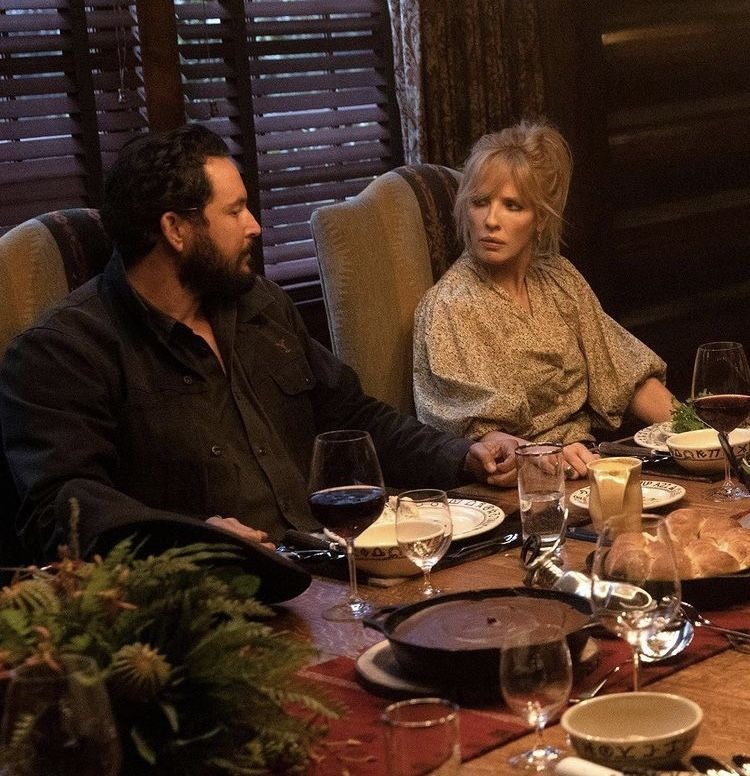
While internal dynamics are shifting, external pressures remain a constant force shaping Rip’s character arc. The expansion of the Yellowstone universe into new regions introduces unfamiliar challenges, including new rivals, business interests, and legal frameworks.
Unlike the conflicts in Montana, where Rip operated on familiar ground, these new environments may require him to adapt quickly to situations where his reputation alone does not carry the same weight.
This change adds another layer of vulnerability to the character, forcing him to operate without the same level of control he once maintained.
Emotional Depth Beneath The Surface
Despite his reputation for stoicism, Rip Wheeler has always been a character defined by deeply internalized emotion. His actions are often driven by a sense of duty, belonging, and protection rather than overt expression.
In the upcoming developments, this emotional foundation is expected to play a more visible role. As leadership responsibilities increase, so too does the emotional cost of decision-making.
Every choice carries consequences—not only for himself, but for Beth and the future they are attempting to build together.
This shift allows the character to move beyond his traditional role, offering a more nuanced exploration of what it means to carry responsibility in a world defined by conflict.
A Symbol Of The Old Yellowstone In A Changing World
Within the broader context of the expanding franchise, Rip Wheeler represents continuity. His character embodies the values and methods that defined the original Yellowstone series—direct action, personal loyalty, and a willingness to operate outside conventional systems.
However, as the universe evolves, those methods are increasingly challenged by new forms of power and influence.
This positions Rip as both a symbol of the past and a participant in the future, creating a narrative tension between tradition and adaptation.
Conclusion: A Character At A Crossroads
Rip Wheeler’s evolving role in the Yellowstone spin-off era marks a significant turning point for both the character and the franchise as a whole. No longer confined to the role of enforcer, he is being pushed into a position that requires leadership, strategy, and emotional resilience.
As Dutton Ranch prepares to explore this next chapter, Rip’s journey will likely reflect the broader transformation of the Yellowstone universe itself—moving from clear hierarchies into more complex and uncertain structures.
The question is no longer whether Rip can protect what matters.
It is whether he can lead it.