
Yellowstone Universe Enters Uncertain New Era As Multiple Spin-Offs Reshape The Dutton Legacy
The Yellowstone franchise is continuing its dramatic transformation as new spin-off developments and character-driven story expansions signal a major shift in how the Dutton legacy will be told moving forward. With Dutton Ranch moving closer to production milestones and Marshals deepening its serialized storytelling, the once singular narrative world has now become a multi-layered universe defined by fragmentation, reinvention, and escalating stakes.
Industry observers note that this expansion marks one of the most ambitious restructuring efforts in modern television drama, as the franchise moves beyond a single family saga into a broader ecosystem of interconnected but increasingly independent stories.
A Franchise No Longer Defined By One Center
The original Yellowstone series was built around a clear structural core: John Dutton and his control over land, legacy, and family power. With that central figure no longer driving the narrative, the universe has shifted into a distributed storytelling model.
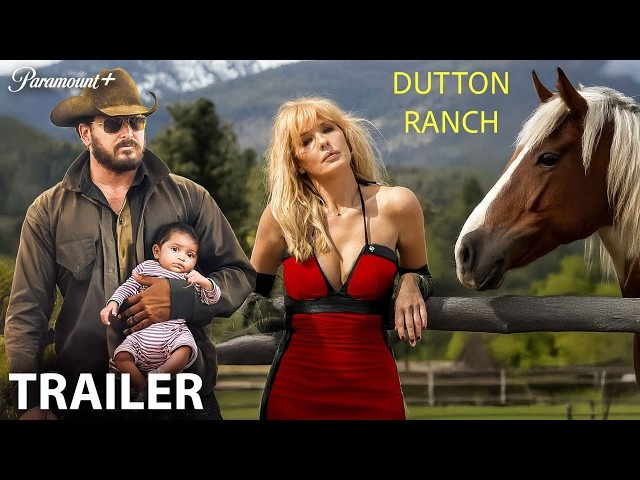
Instead of one dominant storyline, multiple spin-offs now explore different aspects of the same world. Marshals focuses on law enforcement and moral conflict through Kayce Dutton, while Dutton Ranch extends the story of Beth Dutton and Rip Wheeler into a new phase of life beyond constant warfare.
This structural change has fundamentally altered how the franchise operates, replacing a single narrative direction with multiple overlapping trajectories.
Kayce Dutton’s Journey Reflects A More Fragmented World
In Marshals, Kayce Dutton’s character continues to evolve in response to a world that is increasingly unstable and morally ambiguous. His transition from ranch life to federal enforcement has become less about adaptation and more about internal fragmentation.
The character is now defined by competing identities—soldier, rancher, lawman, and father—all of which pull him in different directions. This tension has intensified as external threats continue to escalate, forcing Kayce into decisions that blur the line between professional duty and personal instinct.
The result is a character arc shaped less by resolution and more by accumulation of pressure, where each choice adds another layer of complexity.
Beth Dutton And Rip Wheeler Represent A Different Kind Of Transition
While Kayce’s story unfolds within institutional conflict, Beth Dutton and Rip Wheeler’s narrative in Dutton Ranch moves in a different direction—toward reconstruction.
Their storyline centers on attempting to build stability after years of violence and territorial conflict. However, early production details suggest that this stability is far from guaranteed.
Instead of escaping the consequences of the past, the characters appear to be carrying them into a new environment where different types of power structures still exert influence over their lives.
This positions their story not as an ending, but as a continuation of unresolved tension in a different form.
The Expansion Of Power Structures Within The Franchise
One of the most significant developments in the Yellowstone universe is the evolution of how power is portrayed. In earlier seasons, power was primarily physical and territorial. Control of land defined survival, and conflict was direct and immediate.
In the current spin-off structure, power is becoming more layered and indirect. Legal systems, economic influence, and institutional authority now play a larger role in shaping outcomes.
This shift reflects a broader change in storytelling tone, where conflicts are no longer resolved solely through confrontation, but through negotiation, manipulation, and long-term strategy.
As a result, the universe feels less contained and more expansive, with consequences extending far beyond individual characters or locations.
A More Complex Emotional Landscape For Core Characters
Despite the structural changes, the emotional foundation of the franchise remains intact. Themes of loyalty, trauma, identity, and survival continue to define the core of each storyline.
However, these themes are now being explored in more fragmented emotional environments. Characters are no longer reacting to a single unified threat, but to multiple overlapping pressures that affect them differently depending on context.
This creates a more psychologically complex viewing experience, where emotional resolution is less frequent and internal conflict plays a larger role than external resolution.
Audience Response To The Franchise Evolution
Audience reaction to the expanding Yellowstone universe has been mixed but highly engaged. Many viewers continue to follow the spin-offs closely, drawn by the depth of character development and the continuation of familiar storylines.
At the same time, there is ongoing discussion about whether the fragmentation of the narrative risks diluting the intensity that defined the original series.
Some viewers appreciate the expanded world-building and character focus, while others prefer the more centralized storytelling structure of earlier seasons.
Despite these differences in opinion, overall interest in the franchise remains strong, indicating sustained relevance in the competitive television landscape.
A Franchise At A Structural Turning Point
The current phase of the Yellowstone universe represents a clear structural turning point. The transition from a single narrative to a multi-series ecosystem has opened new creative possibilities while also introducing new challenges in maintaining cohesion.
Each spin-off now operates with greater independence, yet all remain connected through shared history and thematic continuity.
This balance between separation and connection is becoming the defining characteristic of the franchise’s new identity.
Conclusion: A Legacy That Continues To Expand, Not End
As Yellowstone moves further into its spin-off era, it is clear that the story of the Dutton family is no longer confined to a single narrative path. Instead, it is evolving into a broader universe shaped by multiple perspectives, shifting power structures, and ongoing emotional consequences.
Kayce Dutton, Beth Dutton, and Rip Wheeler each represent different directions this legacy is taking—law, survival, and rebuilding—but all remain tied to the same foundational history.
In this new era, the Yellowstone universe is no longer defined by endings. It is defined by continuation, transformation, and the constant reshaping of what legacy means in a world where nothing stays fixed for long.