
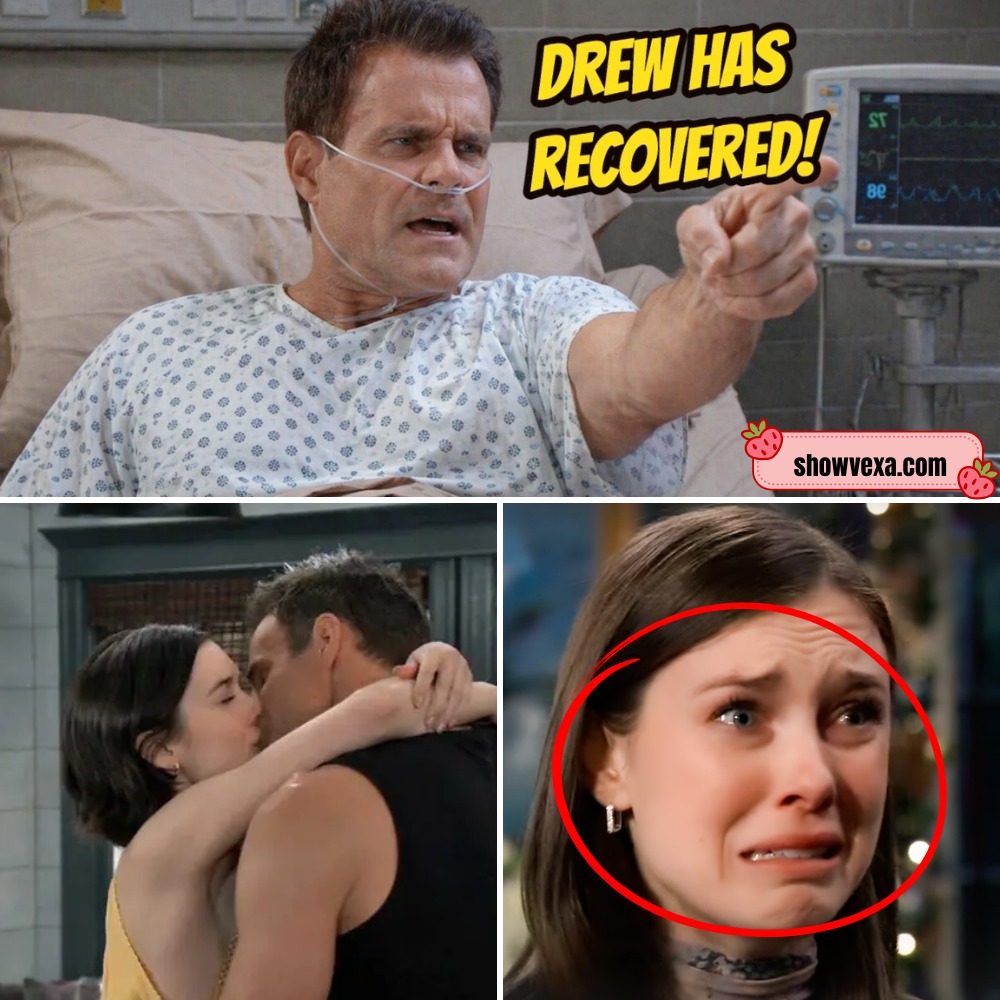
Drew saved from death teaches Willow the most painful lesson of her life | General Hospital Spoilers
Port Charles is no stranger to life-altering crises, but the latest developments on General Hospital are striking a particularly emotional chord as Drew Cain’s fight for survival evolves into a harrowing test of conscience, loyalty, and truth. What begins as a medical emergency quickly spirals into a deeply unsettling storyline—one that not only threatens Drew’s life, but also forces Willow Corinthos into a reckoning that could change her forever.
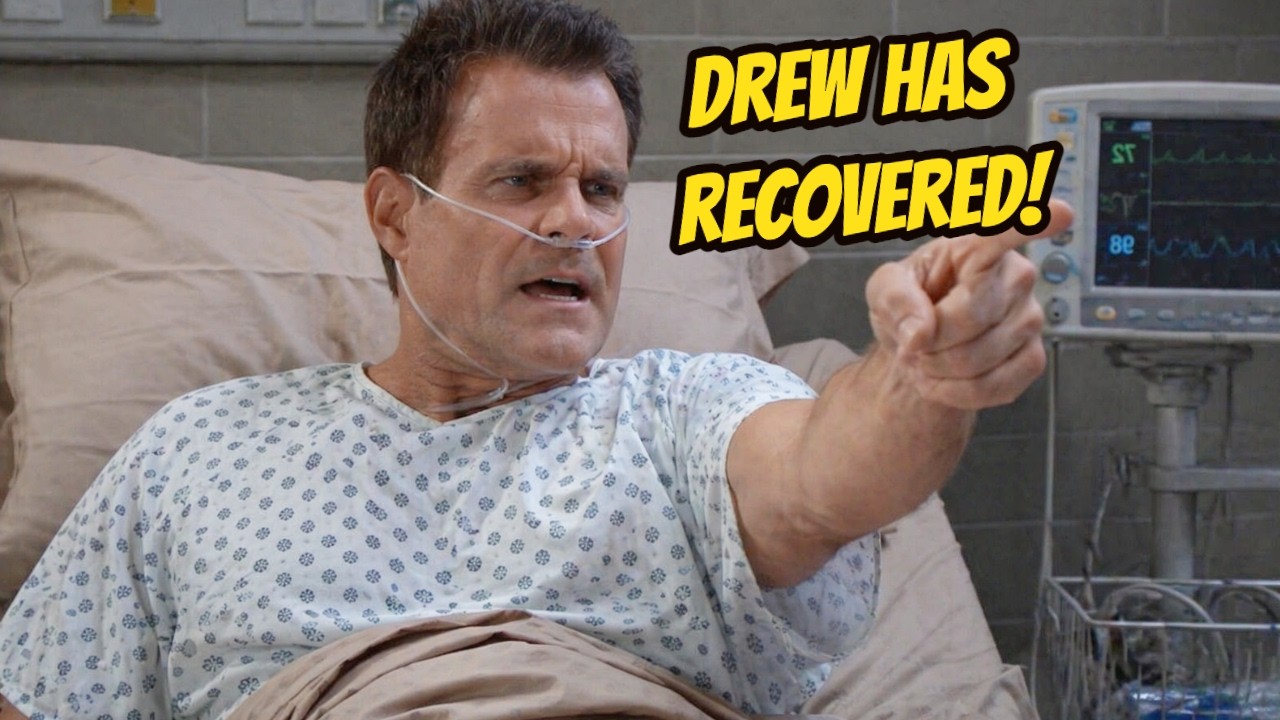
At the center of this unfolding drama is Drew, a man whose past is marked by resilience, military discipline, and moral complexity. Now, however, he finds himself in a state of terrifying vulnerability—physically immobilized, unable to speak, yet fully aware of the danger surrounding him. In a twist that blends psychological tension with emotional depth, Drew is essentially trapped inside his own body, his only means of communication reduced to blinking—an act that soon proves to be far more significant than anyone initially realizes.
The chilling nature of Drew’s condition is amplified by the subtle clues he desperately tries to send. Drawing on his past as a Navy SEAL, Drew uses Morse code—blinking deliberately to signal distress. It’s a detail that underscores both his training and his will to survive. Yet, in a hospital filled with people who assume he is unresponsive, his silent cries for help go largely unnoticed—until Elizabeth Baldwin enters the room.
Elizabeth, a veteran nurse and one of Port Charles’ most empathetic figures, immediately senses that something is wrong. Her instincts, honed by years of experience and personal hardship, alert her to the possibility that Drew is not as incapacitated as he appears. In a quiet but pivotal moment, she begins to recognize the pattern in his blinking—a realization that could ultimately save his life.
This turning point places Elizabeth in a morally charged position. While others, including Willow and Nina Reeves, appear confident that Drew is receiving proper care, Elizabeth’s suspicions suggest a far darker reality. The question quickly becomes: is Drew being deliberately kept in this state? And if so, by whom—and why?
For Willow, the implications are devastating.
Already under immense pressure as she balances her role as a congresswoman with her personal life, Willow finds herself at the center of a storm she may not fully understand. Her connection to Drew—both emotional and circumstantial—places her in a precarious position. As Elizabeth begins to question the circumstances surrounding Drew’s condition, Willow is forced to confront the possibility that her own decisions, or those made in her orbit, may have contributed to his suffering.
The emotional weight of this storyline lies not just in Drew’s physical plight, but in the ethical dilemmas it exposes. If Drew is indeed being silenced—whether for political, personal, or strategic reasons—then those closest to him must reckon with their roles in allowing it to happen. For Willow, this could mean facing a painful truth: that in trying to maintain control and protect her carefully constructed world, she may have overlooked—or even enabled—something deeply wrong.
Adding to the tension is Nina Reeves, whose complicated history with both Willow and Drew introduces another layer of intrigue. A preview moment in which Nina appears to taunt Drew—suggesting that no one is coming to save him—raises serious questions about her involvement. Whether this is a moment of emotional manipulation or something more sinister remains to be seen, but it undeniably heightens the stakes.
As the narrative unfolds, the hospital itself becomes a battleground—not of physical confrontation, but of perception, truth, and timing. Elizabeth’s potential discovery could expose a web of secrets that extends far beyond Drew’s hospital room. If she chooses to act on her instincts, she may not only save Drew, but նաև trigger a chain reaction that reshapes multiple relationships across Port Charles.
For Drew, survival is no longer just about physical recovery—it’s about being heard. His blinking becomes a symbol of resistance, a quiet rebellion against those who may be trying to suppress him. It’s a haunting reminder that even in silence, the truth has a way of demanding attention.
Meanwhile, Willow’s journey is poised to take a dramatic turn. As more information comes to light, she may be forced to reevaluate everything she thought she knew—about Drew, about Nina, and about herself. The lesson awaiting her is not just painful—it’s transformative. It challenges her to look beyond appearances, to question authority, and to take responsibility in ways she may have never anticipated.
This storyline also reflects a broader shift in General Hospital’s storytelling. Rather than offering clear-cut heroes and villains, the show is embracing moral ambiguity, placing its characters in situations where right and wrong are not easily defined. It’s a direction that adds depth and realism, inviting viewers to engage not just with the drama, but with the underlying human dilemmas.
As fans watch Drew’s fate hang in the balance, one thing becomes clear: this is more than a medical crisis—it’s a turning point. The choices made in the coming days will have lasting consequences, not just for Drew and Willow, but for the entire canvas of Port Charles.
Will Elizabeth act in time to decode Drew’s desperate message? Will Willow confront the truth before it’s too late? And if Drew does survive, what revelations will he bring with him?
In true General Hospital fashion, the answers promise to be as emotionally charged as they are unpredictable. For now, viewers are left with a powerful image: a man blinking for his life, and a town on the brink of discovering just how much has been hidden in plain sight.