
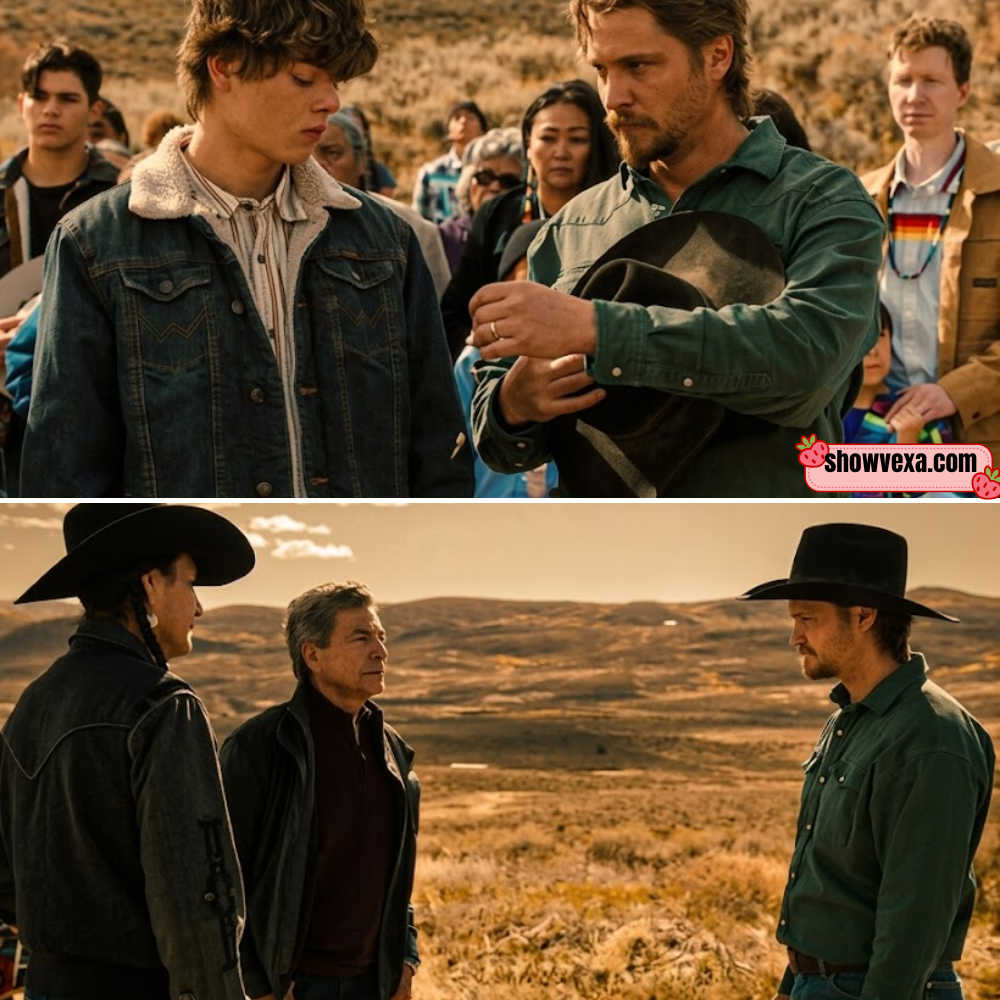
6 Episodes In… Marshals Is Finally Hitting Its Stride 🤠🔥
With six episodes now behind us, Marshals is no longer feeling like just another Yellowstone spin-off searching for identity. Instead, it’s beginning to carve out something distinct—something sharper, more emotional, and increasingly confident in its own voice.
What started as a cautious extension of a familiar universe is now evolving into a grounded, character-driven crime drama with real weight behind every decision, every case, and every consequence.
And at the center of it all is Kayce Dutton—once a man defined by the ranch, now a man trying to survive everything beyond it.
Kayce Dutton: A Man Between Two Worlds
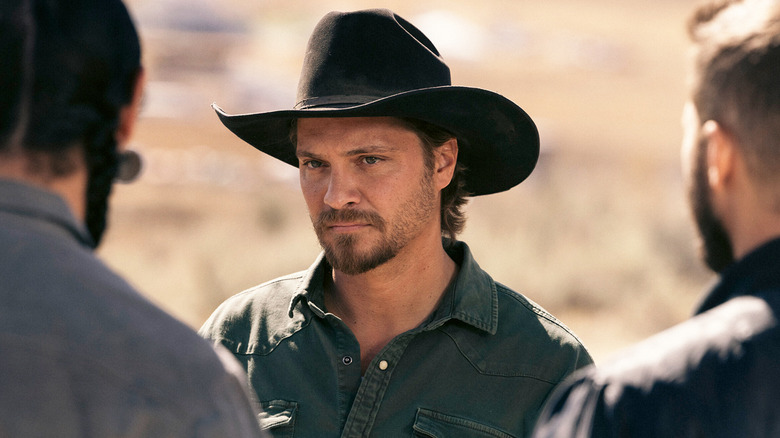
One of the biggest strengths of Marshals so far is how it repositions Kayce Dutton.
He is no longer just the quiet son of John Dutton or the reluctant ranch hand torn between duty and family. In this series, he is being reshaped into something more complex—a federal marshal forced to operate in a world where moral clarity rarely exists.
Every case he touches seems to pull him further away from certainty.
Every decision carries emotional weight.
And every victory comes with a cost.
Whether it’s the trauma of failed leads, the burden of lost lives, or the constant pressure of leadership in the field, Kayce is slowly being pushed into a version of himself that feels more fractured—but also more human.
The Emotional Core: Tate and the Ghosts of the Past
While the action and investigations drive the plot forward, the emotional heartbeat of the series remains rooted in Kayce’s relationship with Tate.
Their dynamic continues to be one of the most important threads in the show—not because it’s loud or dramatic, but because it’s quiet, fragile, and constantly shifting.
Tate is no longer just the son trying to understand his father. He’s becoming someone who sees more than Kayce realizes. There’s a growing sense that their relationship is built on unspoken truths, lingering grief, and a shared history that neither of them can fully escape.
And that tension gives the series its emotional depth.
Every moment between them feels like it matters.
Not because of what is said—but because of what is left unsaid.
Broken Rock and the Expanding Stakes
Beyond the Dutton family, Marshals continues to expand its connection to Broken Rock, weaving in familiar names and political tension that fans of the Yellowstone universe will instantly recognize.
Thomas Rainwater’s presence brings stability and authority, but also a reminder that nothing in this world exists in isolation. Every case, every investigation, every disappearance ties back—directly or indirectly—to land, history, and power.
The show is slowly revealing that its cases are not just random crimes.
They are symptoms of something larger.
Something deeper.
Something unresolved.
And that’s where Marshals begins to feel more ambitious than expected.
A Team That’s Starting to Feel Real
Another reason the show is gaining traction is the way it treats its ensemble cast.
This isn’t a team built for easy chemistry or simple procedural structure. Instead, each member feels shaped by their own emotional baggage, professional instincts, and personal limits.
There is tension.
There is hesitation.
And there are moments where trust is clearly still being built.
But that’s exactly what makes it work.
Rather than presenting a perfect, unified unit from episode one, Marshals allows relationships to evolve naturally—sometimes awkwardly, sometimes painfully, but always believably.
The Tone Shift That Changed Everything
Early episodes of Marshals carried the pressure of expectation. As a Yellowstone spin-off, it had to prove it could stand on its own while still honoring its roots.
But around the halfway point, something changes.
The series begins leaning less on its connection to Yellowstone and more on its own emotional identity.
The action remains intense, but it’s no longer the main focus.
Instead, the show starts prioritizing consequence over spectacle.
Grief over adrenaline.
Silence over explanation.
That shift is what’s allowing it to finally breathe.
Why the Second Half Could Be Even Bigger
Now that the foundation is set, the second half of the season has room to escalate—not just in terms of plot, but in emotional stakes.
Loose threads are still unresolved.
Relationships are still forming.
And the underlying mystery driving the season hasn’t fully revealed its hand yet.
That combination creates anticipation that feels intentional, not accidental.
Because if the first six episodes were about building the world…
the next seven are about testing it.
And not everything built in this world is designed to survive pressure.
Final Thoughts
At this point, Marshals is no longer just “the Yellowstone spin-off.”
It’s becoming its own story.
A story about identity, responsibility, and the emotional cost of carrying justice in a world that rarely offers clean answers.
It’s about Kayce Dutton trying to redefine who he is without the ranch.
About a team learning to trust each other under pressure.
And about a universe that keeps expanding its moral complexity with every episode.
Six episodes in, the show has found its rhythm.
Now the real question is simple:
Can it keep building without breaking?
Because if the first half is any indication…
the second half might be where Marshals truly becomes unforgettable. 🤠🔥