

The Bold and The Beautiful Spoilers: Sheila’s HORRIFIC ACCIDENT Causes Taylor and Deacon GUILT!
The latest episodes of The Bold and the Beautiful deliver an emotional gut-punch that has left fans reeling, as Sheila Carter’s devastating accident triggers a chain reaction of guilt, heartbreak, and impossible choices for Taylor Hayes and Deacon Sharpe. What unfolds is not just another soap opera twist—it is a tragic, slow-burning collapse of love, morality, and consequence that redefines every relationship involved.
At the center of the storm is the fractured triangle between Deacon, Taylor, and Sheila. What began as a forbidden romance quickly spirals into a psychological and emotional battlefield, where every decision carries irreversible weight. Deacon and Taylor finally reach what seems like a fragile moment of peace, only for it to be shattered by a catastrophic turn of events involving Sheila that changes everything.
The tension begins at Il Giardino, where Deacon and Sheila finalize the end of their marriage. The scene is stripped of melodrama and instead drenched in silence and emotional heaviness. Sheila, usually portrayed as calculating and dangerous, appears uncharacteristically fragile as she signs away the last remaining bond she has with Deacon. The moment is haunting, not because of what is said, but because of what is left unsaid. Her trembling hand over the pen signals not just the end of a marriage, but the collapse of her emotional stability.
Almost immediately after, Sheila’s emotional spiral intensifies. Overwhelmed by rejection and heartbreak, she turns to alcohol, and the show presents a version of her rarely seen—vulnerable, unsteady, and unraveling. This portrayal reframes Sheila not as an untouchable villain, but as a deeply broken woman whose identity has been dangerously tied to the man she loved. As she stumbles out into the night, intoxicated and emotionally shattered, the stage is set for disaster.
That disaster arrives in the form of a horrific car accident—violent, chaotic, and symbolic. The wreckage left behind is not just physical destruction, but a visual representation of Sheila’s inner collapse. The mangled vehicle becomes a metaphor for a life spiraling completely out of control. It is a moment that marks the end of one version of Sheila Carter and the beginning of something unknown and potentially more dangerous—or more innocent.
The emotional impact intensifies when the narrative sharply shifts to Deacon and Taylor, who are briefly allowed a moment of happiness. Their scenes are warm, soft, and filled with hope, as if they are finally stepping into a future free from chaos. Deacon looks at Taylor with genuine devotion, and for a fleeting moment, it feels like redemption is within reach.
But that illusion is violently shattered when the phone rings.
News of Sheila’s accident arrives like a thunderbolt, instantly draining all joy from the room. Deacon’s expression shifts from relief to horror in an instant, marking the precise moment where happiness collapses under the weight of consequence. The storytelling here leans heavily into contrast—love and tragedy colliding in real time, leaving both characters emotionally exposed and unprepared for what comes next.
At the hospital, Taylor is forced into a psychological battle with herself. As a psychiatrist, she is trained to analyze trauma and emotional breakdowns—but nothing prepares her for being at the center of one. Sheila’s condition forces Taylor to confront a terrifying possibility: that her relationship with Deacon may have contributed to the destruction of another human being.
Her guilt becomes almost suffocating. Every decision she replays in her mind leads her deeper into uncertainty. Was her love for Deacon a catalyst for this tragedy? Could she have prevented it? The show refuses to offer easy answers, instead allowing Taylor to sit in the uncomfortable space of responsibility and emotional ambiguity.
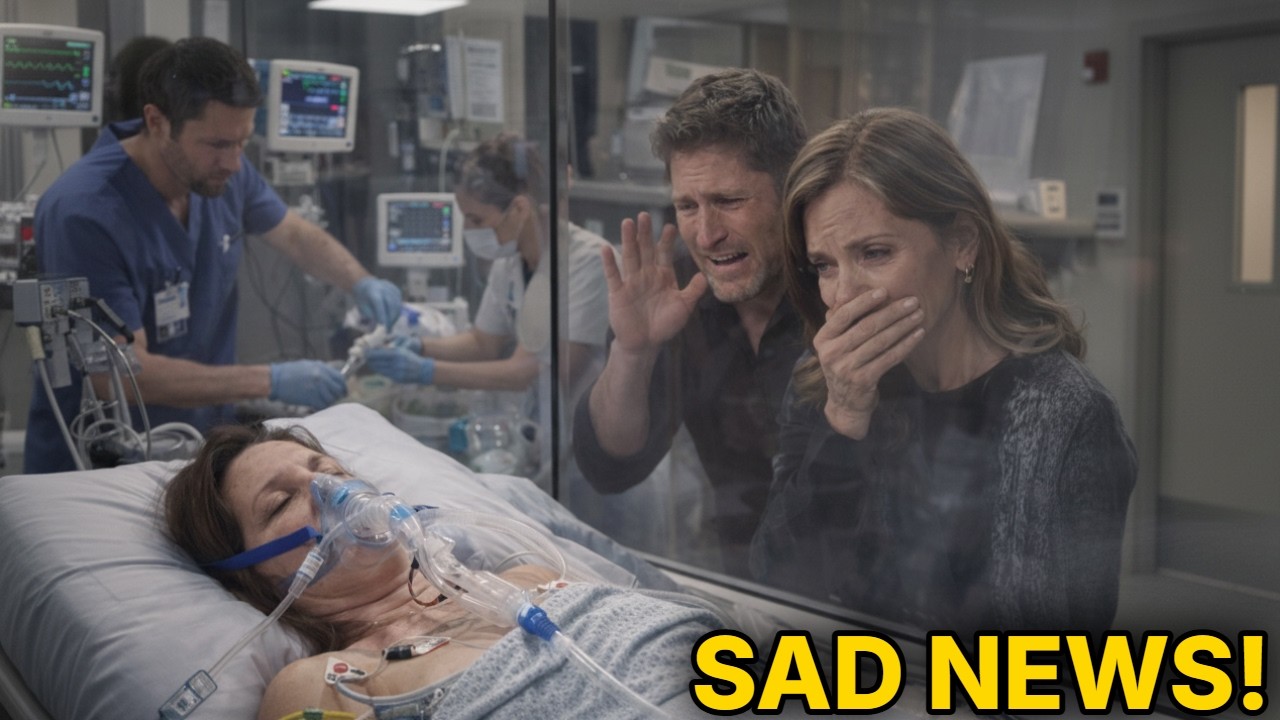
Meanwhile, Deacon stands outside Sheila’s hospital room in a state of emotional paralysis. He is neither fully present nor fully detached, caught between the woman he once promised to protect and the woman he now loves. His silence speaks louder than any outburst could. Inside him, a war rages between loyalty and desire, between redemption and self-preservation.
The situation takes an even more dramatic turn when Sheila awakens—only to reveal that she has lost her memory.
The amnesia twist instantly reshapes the entire storyline. Gone is the calculating, vengeful Sheila Carter. In her place is a frightened, confused woman with no recollection of her past or the damage she has caused. Her blank stare and innocent confusion introduce a chilling new dynamic: Deacon is now responsible for a woman who does not even know who she is.
This development traps Deacon in an emotional prison. Walking away would feel like abandonment, yet staying means sacrificing his future with Taylor. The writers effectively transform his guilt into a form of psychological captivity, forcing him into a role he never anticipated—caretaker to the very person whose collapse may have destroyed everything.
This leads to one of the most heartbreaking decisions in recent Bold and the Beautiful history: Deacon’s breakup with Taylor.
The scene is quiet, restrained, and devastating. There are no explosive arguments, only the heavy weight of inevitability. Deacon, overwhelmed by guilt and responsibility, chooses to stay by Sheila’s side, believing that abandoning her now would be morally unforgivable. In doing so, he breaks Taylor’s heart while simultaneously breaking his own.
Taylor’s reaction is layered with pain and understanding. As much as she is devastated, she cannot ignore the moral complexity of the situation. Her compassion prevents her from fighting for a love that is now entangled in trauma and obligation. The tragedy is not a lack of love between them—it is the overwhelming presence of conscience.
Finally, Steffy Forrester steps into the emotional aftermath as the stabilizing force for her mother. At the cliff house, she provides comfort and clarity, urging Taylor to see Deacon’s decision as painful but ultimately necessary. Steffy’s protective instincts are on full display as she rejects the chaos Sheila represents and defends her mother’s right to peace and stability.
Yet even in her reassurance, a deeper emotional truth lingers: Taylor’s heartbreak cannot be so easily rationalized away. Love and loss do not obey logic, and Steffy’s comfort only highlights the magnitude of what has been lost.
As the dust settles, the storyline leaves viewers with more questions than answers. Will Sheila regain her memory and unleash vengeance once again? Will Deacon’s guilt evolve into resentment or self-destruction? Can Taylor recover from a love that ended not because it failed, but because it was morally unsustainable?
What is clear is that The Bold and the Beautiful has entered a powerful new emotional chapter—one defined by consequence, sacrifice, and psychological depth. This is not just romance; it is tragedy unfolding in real time, where every character is both victim and participant in an unfolding storm of heartbreak.
And as the fallout continues, one thing remains certain: nothing in Los Angeles will ever be the same again.