
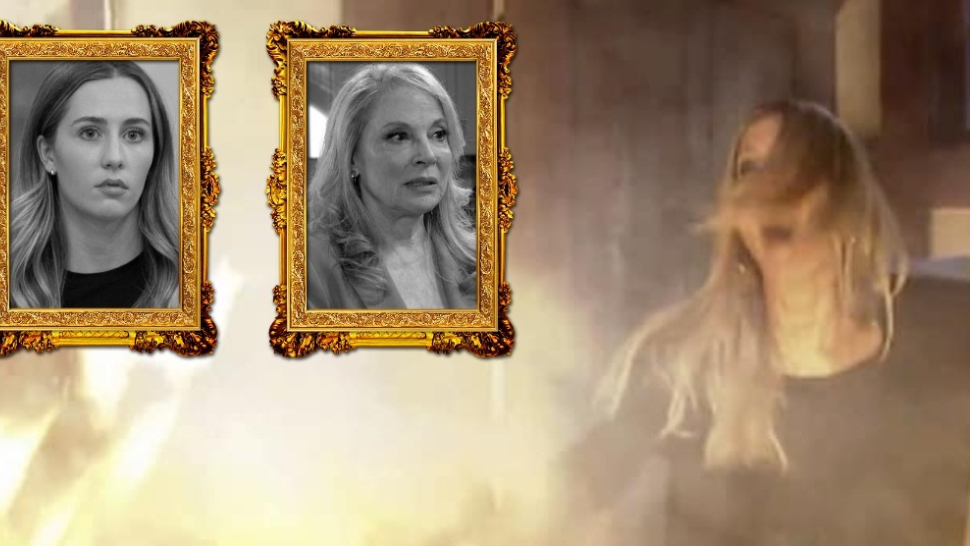
The devastating explosion at Wyndemere – Carly couldn’t save Joss and Liesl General Hospital
Port Charles fans were left breathless in the latest General Hospital episode as the long-feared nightmare on Spoon Island reached a catastrophic climax. The Windemere estate, home to the notorious Ross Cullum, erupted in a deadly explosion, leaving Carly Spencer (Laura Wright) powerless to save Josslyn Jacks (Eden McCoy) and Liesl Obrecht (Kathleen Gati). This was not just an action sequence—it was a dramatic masterstroke that fused family stakes, psychological terror, and the raw reality of mortality.
The Inferno Begins
From the very first frame, the tension was palpable. The night sky over Spoon Island glowed a menacing orange as the WSB’s intricate operations and Ross Cullum’s dangerous experiments collided with fate. Months of meticulously layered tension exploded—literally—into a fiery spectacle that signaled a turning point for multiple storylines.
Carly and Lucas Jones (Ryan Carnes) breached Windemere under cover of darkness, fully aware of the danger but unprepared for the scale of devastation awaiting them. The camera focused tightly on Carly’s reaction as she first detected smoke, capturing a masterful performance that communicated terror, maternal instinct, and determination in one powerful gaze. It was immediately clear that stealth had given way to survival.
Carly’s Maternal Fury

Carly’s response to the inferno was a visceral reminder of why she remains the beating heart of General Hospital. She is not a trained WSB operative, yet her love for her daughter drove her to confront danger head-on. In a scene that sent chills through viewers, Carly clawed at first responders’ protective gear, screaming Josslyn’s name as sparks and debris rained down around her.
This moment encapsulated the pure, unfiltered emotion of a mother facing the impossible: a blazing fortress she could not penetrate, and a child trapped within. Carly’s desperation was brilliantly grounded in reality; there was no last-minute heroics or miraculous breakthroughs. Just raw emotion, fear, and the crushing weight of helplessness.
Lucas Steps Into the Fire
Lucas Jones, often a calm, stabilizing presence, was thrust into a harrowing role. As Carly lunged toward the flames, Lucas physically restrained her, dragging her back from the collapsing portico just as sparks ignited around them. This scene illustrated the profound sibling bond between Lucas and Carly, balancing the narrative’s high-octane danger with deeply human stakes. The agony on Lucas’s face mirrored Carly’s own, emphasizing the impossibility of their task: to save lives from an uncontrollable inferno.
The Dungeon of Doom
While the exterior chaos consumed Carly and Lucas, the narrative shifted to the claustrophobic interior of Windemere, where Josslyn and Liesl were trapped. The cinematography here was exceptional—tight framing, oppressive smoke, and the suffocating shadows of the dungeon created a sense of psychological horror rarely seen in daytime television.
Josslyn, displaying courage under unimaginable pressure, fought against the rising smoke and iron-barred confinement. Her bravery, coupled with raw fear, captured the essence of a young woman tested to her limits. Liesl Obrecht, meanwhile, embodied a contrasting form of resilience. Having survived decades of manipulation, violence, and personal betrayal, Liesl confronted mortality with quiet, stoic fear, a stark reminder of the human vulnerability even seasoned survivors face.
The interaction between Josslyn and Liesl added a rich, intergenerational dimension to the storyline, highlighting the contrasting approaches to survival: youthful defiance versus seasoned endurance.
The Failure of Rescue
Critics and fans alike have debated the decision to have Carly fail in her rescue attempt. Many initially felt frustrated that the mother-daughter reunion did not occur. Yet, this narrative choice amplifies the stakes in ways a “happy ending” could not. By denying Carly a miraculous save, the writers reinforced the tangible threat posed by Ross Cullum and the WSB’s machinations. The danger became real, uncompromising, and emotionally devastating.
The destruction of Cullum’s laboratory also carried profound narrative weight. Cold fusion prototypes melted, crucial files and research destroyed, and the moral landscape of Port Charles shifted. Even if Josslyn and Liesl survive, proving Cullum’s crimes becomes exponentially more difficult, forcing the city’s heroes to rely on ingenuity, alliances, and courage rather than straightforward evidence.
Carly’s Psychological Collapse
Laura Wright’s portrayal of Carly’s emotional breakdown outside the inferno was heartbreaking. Dropping to her knees, clutching her hair, and staring at the blazing estate, Carly’s grief was raw and tangible. This was not a polished, cinematic Hollywood cry but a visceral, soul-wrenching depiction of a mother who feels she has failed her child. The scene resonated deeply because it mirrored real human despair—powerless, exposed, and overwhelmed.
The sound design amplified this devastation. The roar of the flames became a monstrous presence, while sirens faded into the background, isolating Carly’s anguish in a terrifying audio bubble that drew viewers directly into her experience.
Implications for Port Charles
The fallout from Windemere’s explosion is poised to reverberate across Port Charles. Sonny Corinthos, currently embroiled in a violent conflict with Jen Sidwell, is likely unaware of the tragedy unfolding on Spoon Island. Valentin Cassadine, en route to Geneva, faces his own set of moral and logistical dilemmas, highlighting the global stakes of this local disaster.
The destruction of the castle, symbolic as it is, also signals a potential narrative cleansing. The estate, a site of decades of Cassadine intrigue, Faison’s terror, and now Cullum’s experiments, is finally leveled—not just physically but emotionally and narratively—allowing new conflicts, alliances, and story arcs to emerge from the ashes.
A Tragic Masterpiece of Soap Opera Storytelling
What makes this episode stand out is the seamless blending of action, horror, and deep emotional resonance. The show forced its characters into a crucible, exposing limits, testing loyalties, and redefining relationships under extreme pressure. Carly’s maternal heroism, Lucas’s sibling loyalty, Josslyn’s courage, and Liesl’s survival instincts were all elevated by the catastrophic environment, creating a tapestry of human drama against the backdrop of a literal and metaphorical firestorm.
The writing, direction, and acting converge to make the Windemere explosion not just a plot point, but a defining moment for General Hospital. It challenges characters’ morality, highlights the consequences of past choices, and reshapes the emotional landscape of Port Charles.

As Port Charles reels from the destruction, fans are left to wonder: Will Josslyn and Liesl survive physically and psychologically? How will Carly and Lucas process their inability to save them? What new power dynamics will emerge as Ross Cullum’s secrets and the WSB’s influence crumble in the blaze?
The answers to these questions promise months of suspense, heartbreak, and compelling drama. General Hospital has proven yet again that daytime television can deliver cinematic, emotionally charged storytelling that pushes boundaries and challenges viewers to confront the human cost of danger, obsession, and familial devotion.
The Windemere explosion is more than a spectacle—it is a narrative crucible, reshaping characters, relationships, and the very soul of Port Charles. For fans, it is a reminder that even in a world of schemes, betrayals, and relentless chaos, GH remains fearless in exploring the raw, devastating, and utterly human heart of its stories.