
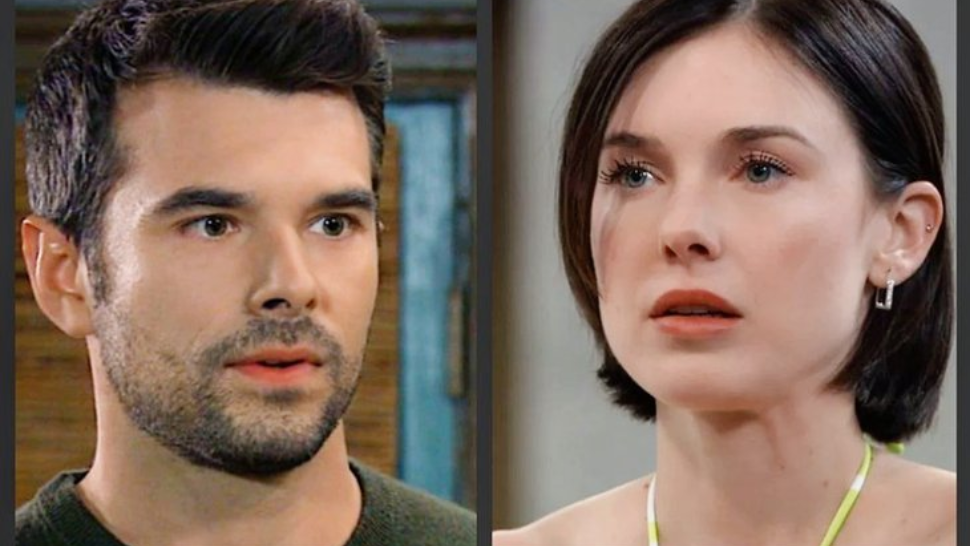
Chase Turns The Tables – Was All The Protection Given To Willow Just A Trap? GH Spoilers
A Living Room Scene That Changed Everything Without Saying A Word
The latest General Hospital episode has sparked intense debate among fans, and for good reason. What initially looked like a chaotic emotional breakdown between three key players may have actually been something far more calculated—and far more dangerous.
At the center of the storm is Harrison Chase, whose behavior in the recent mansion confrontation is now being re-examined under a very different lens. While viewers were focused on emotional exchanges between Brook Lynn Quartermaine and Willow Tait, subtle details suggest that Chase may have been operating on an entirely separate agenda.
What if everything we thought we saw—especially his unwavering protection of Willow—was never emotional at all, but tactical?
The Real Clue Was Never The Dialogue—It Was Chase’s Silence
In soap operas, truth often hides in reaction rather than action. And in this case, Chase’s stillness may be the loudest statement of all.
During the tense mansion sequence, the camera repeatedly emphasized emotional volatility between Brook Lynn and Willow. Yet Chase remained unusually composed. His posture, his controlled breathing, and most importantly—his tight grip on his police badge—suggest a man not losing control, but actively containing it.
Rather than reacting like a husband caught in emotional collapse, Chase appeared more like a seasoned investigator maintaining restraint under pressure.
This has led fans to question whether his so-called “blind loyalty” to Willow has been misinterpreted from the start.
The Theory: Chase Isn’t Being Manipulated—He’s Running A Long Game
For weeks, Chase has appeared to abandon logic in favor of defending Willow at every turn, even as tensions escalated within his personal life. On the surface, this has made him look compromised, emotionally conflicted, and potentially manipulated.
But a growing theory suggests a much more strategic reality: Chase may be intentionally embedding himself within Willow’s orbit to observe her behavior up close.
As an experienced law enforcement officer, Chase would be trained to recognize inconsistencies, behavioral shifts, and patterns of deception. Instead of confronting them directly, he may have chosen a more dangerous approach—proximity.
By positioning himself as Willow’s strongest defender, he gains something far more valuable than suspicion: access.
Psychological Warfare: How Trust Becomes A Weapon
If this theory holds, Chase’s behavior becomes less about emotional betrayal and more about controlled psychological positioning.
By publicly defending Willow—even against mounting accusations—he may be encouraging her to relax her guard. When a subject believes they are fully trusted, they tend to expose more than they intend.
This would also explain Chase’s growing distance from Brook Lynn. What appeared to be marital strain may actually be part of a deliberate separation strategy designed to maintain credibility in Willow’s eyes.
In this interpretation, Brook Lynn’s emotional isolation is not an accident—it is collateral damage.
Brook Lynn’s Role: Unwitting Catalyst In A Larger Plan
Much of this speculation gains weight when considering Brook Lynn’s recent actions.
Brook Lynn’s involvement in the hit-and-run fallout and her attempts to redirect suspicion toward Willow have created chaos across multiple storylines. Her emotional decisions—particularly regarding evidence manipulation and accusations—have intensified scrutiny around Willow at precisely the right time.
But if Chase is indeed building a case from within, Brook Lynn’s interference may have unintentionally strengthened it.
Every accusation, every confrontation, and every public outburst adds pressure to Willow’s psychological state. And pressure, in investigative strategy, often leads to mistakes.
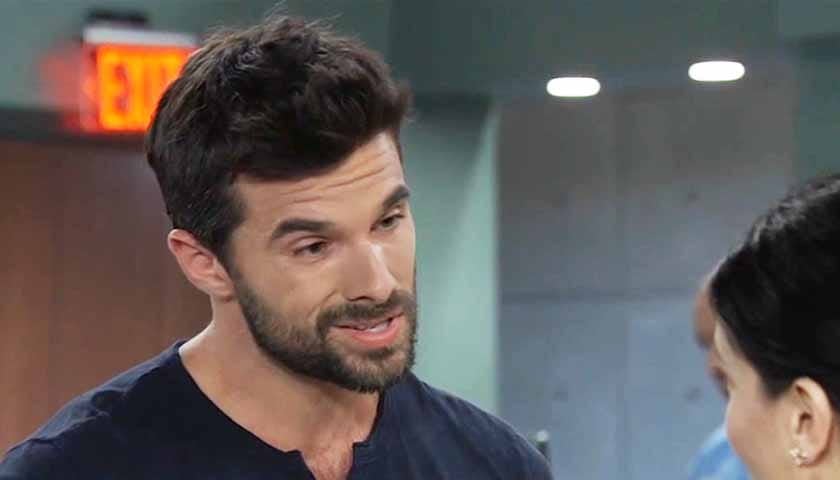
The Hit-And-Run Case: A Carefully Constructed Pressure Point
The central criminal thread remains the hit-and-run involving Jordan Ashford, played by Jordan Ashford.
What initially appeared to be a straightforward framing attempt against Willow is now being reconsidered as a key pressure trigger within Chase’s broader strategy.
If Chase suspected inconsistencies early on, Brook Lynn’s framing attempt may have served as confirmation rather than revelation. In other words, the accusation itself becomes evidence of deeper manipulation within the case.
This shifts the entire dynamic: Willow is no longer just a suspect or victim of false accusations—she becomes the focal point of a controlled investigative scenario.
The Badge As A Symbol: Why Chase’s Identity Still Matters
One of the most discussed visual elements from the episode is Chase’s police badge, which he repeatedly grips throughout tense exchanges.
In storytelling terms, this detail is critical. The badge represents authority, discipline, and moral obligation—but also restraint.
Rather than emotionally reacting, Chase appears to anchor himself through his role as an officer. This suggests that every decision he makes is filtered through procedure, not passion.
If this interpretation is correct, then Chase is not acting as a conflicted husband—but as an officer executing a long-term, evidence-driven plan.
Scenario Breakdown: Two Possible Endgames For Chase’s Strategy
As speculation intensifies, two dominant theories have emerged regarding how Chase’s arc could ultimately unfold.
Scenario One: The Public Takeover
In this version, Chase allows Willow to continue believing she is in control until a public moment of exposure.
At a high-profile gathering, possibly involving Tracy Quartermaine, Michael Corinthos, and other key figures, Chase would shift tone dramatically.
Instead of defending Willow, he would present compiled evidence—digital records, witness statements, and forensic inconsistencies—revealing her involvement in both obstruction and manipulation.
The shock would not just be legal—it would be social, dismantling Willow’s carefully constructed image in real time.
Scenario Two: The Private Reveal
The second theory is far more psychologically intense.
In this version, Chase waits until he is alone with Willow before revealing the truth. No audience. No witnesses. No external validation.
Instead, he calmly outlines everything he has observed, every contradiction he documented, and every moment he allowed her to believe she was safe.
This version reframes Chase not as a betrayed husband or reactive officer—but as someone executing a controlled psychological collapse designed to force full confession or exposure.
The emotional impact in this scenario would be significantly more devastating on a personal level, even if less public.
Brook Lynn’s Emotional Fallout: The Hidden Cost Of The Plan
Regardless of which scenario plays out, Brook Lynn’s emotional arc is positioned for significant fallout.
If Chase has been operating undercover within emotional proximity to Willow, then Brook Lynn has unknowingly been part of a larger sacrifice. Her belief that she was losing her marriage may have been false—but the pain she experienced was real.
The eventual truth would force her to reconcile two conflicting realities: relief that Chase did not abandon her, and distress over the extent of deception required to maintain his cover.
This emotional duality is likely to become a major turning point in her storyline moving forward.
Willow Tait: Confidence On The Edge Of Collapse
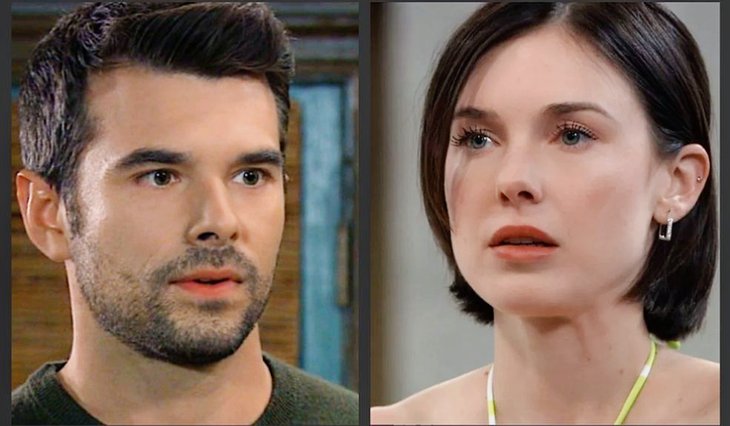
For Willow, the greatest danger may not be immediate arrest—it may be overconfidence.
Believing she has successfully influenced Chase, she may begin making decisions with reduced caution. That false sense of control is often where soap opera collapses begin.
If Chase is truly documenting her behavior, every slip, every inconsistency, and every strategic move could be compiled into a comprehensive case file designed to dismantle her defense completely.
And in Port Charles, overconfidence rarely goes unpunished.
A Master Plan Hidden In Plain Sight?
What makes this storyline so compelling is its ambiguity. Chase could be a man torn between duty and emotion—or he could be one of the most quietly strategic players in recent General Hospital arcs.
Either interpretation reshapes everything viewers thought they understood about loyalty, marriage, and justice in Port Charles.
One thing is clear: nothing in the mansion confrontation was accidental.
Whether Chase is protecting Willow, trapping her, or something in between, the truth is slowly tightening around her from all sides.
And when it finally closes in, it may not come as a shock—but as a realization that the real game was never visible at all.