
Yellowstone Franchise Expands With New Storylines, Cast Developments, And Shifting Narrative Direction
The Yellowstone television universe continues to evolve through multiple interconnected productions, as the franchise transitions into a new phase following the conclusion of its flagship series. Recent developments across spin-off projects and production updates indicate a strategic expansion of the narrative world, focusing on different timelines, character arcs, and genre approaches within the same thematic framework of land, legacy, and law enforcement.
Industry observers note that the franchise is currently undergoing one of its most significant structural shifts since its inception, with new series positioning themselves to explore both contemporary and frontier-era perspectives of the Dutton family legacy.
Expansion Of The Franchise Into Multiple Storylines
Following the conclusion of the main Yellowstone series, the franchise has moved into a broader multi-series structure. Rather than continuing a single linear narrative, the universe is now being developed across several parallel productions, each focusing on different characters and thematic directions.
One of the key ongoing projects is Marshals, a law enforcement-driven spin-off centered on Kayce Dutton. The series follows his transition from ranch life into federal service, presenting a narrative that combines procedural crime storytelling with personal and emotional conflict.
Production sources indicate that the series is designed to separate itself tonally from the original show, focusing less on ranch ownership conflicts and more on federal jurisdiction cases, moral decision-making, and internal psychological struggles.
Character Transitions And Narrative Adjustments
In Marshals, the character of Kayce Dutton is positioned at the center of a significant personal transformation. The storyline explores his adaptation to a structured law enforcement environment after years of operating in the informal and often violent context of ranch life.
Writers have emphasized themes of loss, duty, and identity, showing a character increasingly divided between institutional responsibility and personal history. This shift represents a broader narrative trend within the franchise, where legacy characters are being redefined in new professional and emotional environments.
The series also introduces new supporting characters within law enforcement agencies, expanding the narrative beyond the Dutton family while maintaining thematic continuity with the original series.
Production Context And Industry Changes
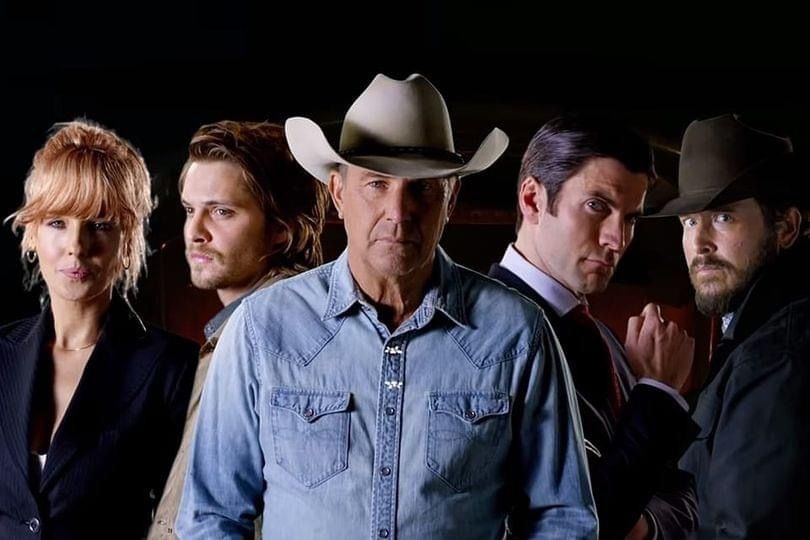
Recent reports from entertainment industry outlets highlight that the expansion of the Yellowstone universe is also influenced by broader production and licensing considerations. As the franchise moves across different platforms and production companies, adjustments to character arcs and continuity have become necessary to accommodate contractual and creative frameworks.
These changes have resulted in narrative restructuring across multiple projects, allowing spin-offs to function more independently while still referencing the original storyline where appropriate.
Industry analysts suggest that this approach reflects a growing trend in modern television franchises, where shared universes are managed through semi-independent storytelling branches rather than tightly connected episodic continuity.
Development Of The Dutton Ranch Project
Another major component of the franchise expansion is Dutton Ranch, a series that continues the story of Beth Dutton and Rip Wheeler. Set after the events of the original series, the production focuses on their attempt to establish a stable life away from previous conflicts, while still confronting external pressures tied to land ownership and regional power structures.
Casting announcements for the series indicate the introduction of several new characters, suggesting that the storyline will extend beyond the original Montana setting into broader regional conflicts. Industry sources describe the tone of the series as a continuation of the franchise’s dramatic themes, with an increased emphasis on long-term consequences of past decisions.
While official plot details remain limited, the series is expected to explore the challenges of rebuilding identity and stability after prolonged periods of conflict and instability.
Thematic Continuity And Shifting Focus
Despite the diversification of storylines, the Yellowstone universe continues to maintain consistent thematic elements. Central ideas such as land ownership, family legacy, and institutional power remain present across all productions, even as narrative formats evolve.
However, the shift toward multiple spin-offs has introduced a broader interpretive framework. Instead of focusing solely on a single family’s control over land, the franchise is now examining how different individuals and institutions interact with the same socio-political environment from varying perspectives.
This approach allows for expanded storytelling possibilities, while also reflecting the changing landscape of serialized television production, where long-running franchises increasingly rely on modular narrative structures.
Audience Response And Future Outlook
Audience response to the franchise’s expansion has been mixed but engaged. While many viewers continue to follow new developments closely, there is ongoing discussion regarding the fragmentation of the original narrative and the challenge of maintaining continuity across multiple series.
Nevertheless, the franchise remains one of the most prominent examples of modern television world-building. With additional projects in development and potential crossovers under consideration, the Yellowstone universe is expected to continue evolving over the coming years.
Television analysts suggest that the success of this strategy will depend on the ability of each series to maintain strong individual identities while still contributing to a coherent overarching narrative.
Conclusion
The Yellowstone franchise is entering a new phase characterized by expansion, diversification, and structural redefinition. Through projects such as Marshals and Dutton Ranch, the universe is moving beyond its original format into a multi-layered storytelling model that explores different aspects of its established themes.
As production continues, the franchise’s future will likely be shaped by how effectively it balances narrative continuity with creative independence. For now, the Dutton legacy remains central—but its expression is becoming increasingly complex, distributed, and open to reinterpretation within a growing television universe.