
Florida Faces Tornado Risk as Severe Storms Move Across the State
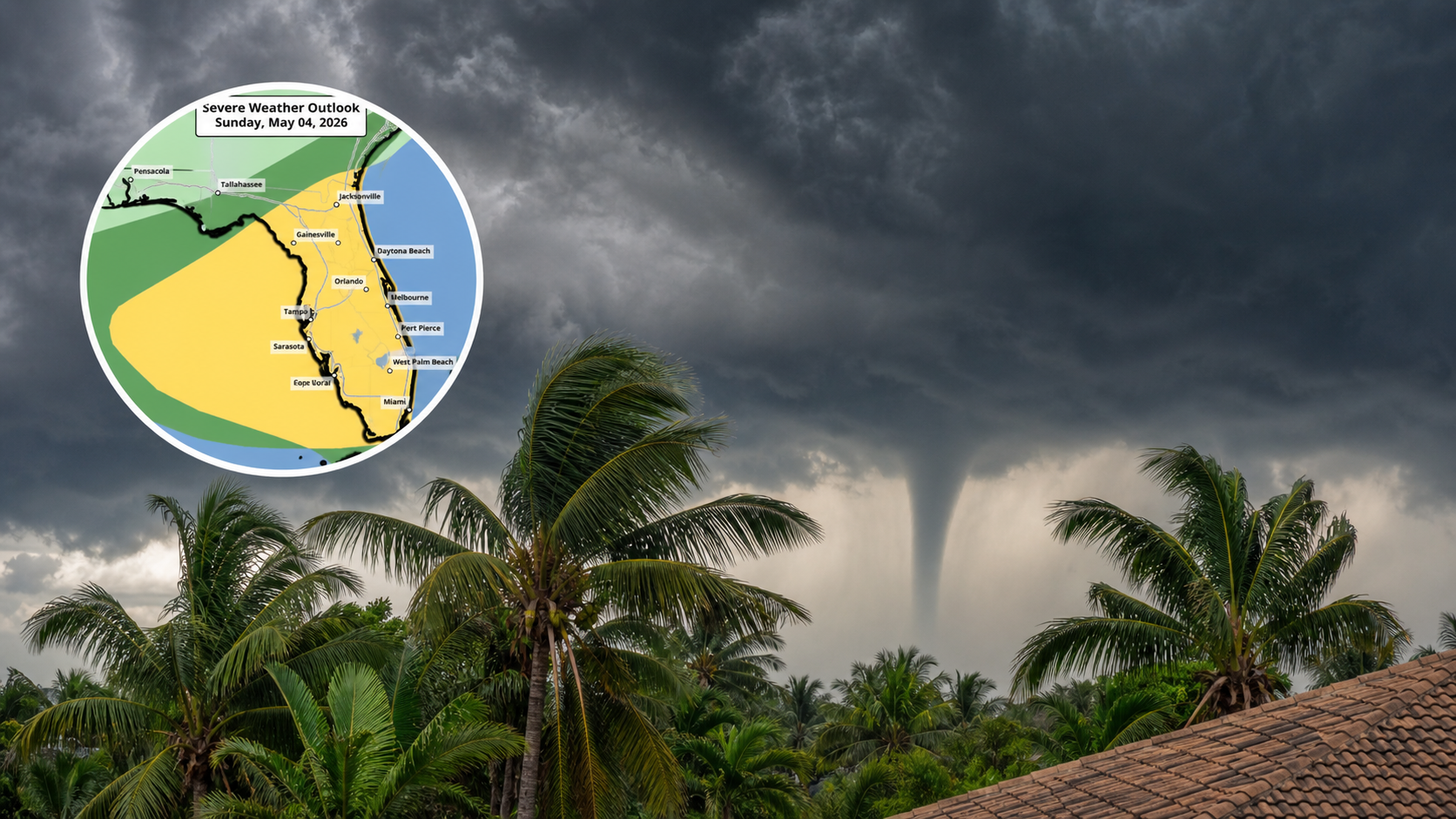
Florida is preparing for a line of severe thunderstorms that could bring damaging winds, heavy rainfall and isolated tornadoes to parts of the state, according to the source material citing U.S. weather forecasters.
The threat is expected to affect parts of northern and central Florida as a storm system moves eastward across the southeastern United States. Forecast maps from the National Weather Service and the Weather Prediction Center identify northern Florida and areas near the eastern Gulf Coast as locations of concern.
The main hazards include strong wind gusts, heavy rain, frequent lightning and a limited risk of tornadoes. The report said the storms are expected to move from west to east, with northern Florida and nearby parts of southern Georgia among the areas being monitored.
Severe Weather Risk Comes as Florida Battles Drought
The incoming rain could provide some relief for parts of Florida that have been dealing with dry conditions and increased wildfire danger. According to the source material, drought conditions in northeast Florida and some inland areas have been classified as extreme or exceptional, the two most severe categories on the U.S. Drought Monitor scale.
Dry vegetation, low rainfall and low relative humidity have raised concerns that wildfires could spread quickly in affected areas. Fire weather alerts have remained in place across several counties, the report said.
AccuWeather senior meteorologist Tyler Roys told Newsweek that widespread rainfall of 1 to 4 inches would help reduce wildfire risk, but would not end the drought. He also noted that some areas are more than a foot below their historical average rainfall for the year, and that some fire-prone zones may not receive meaningful rain from this storm system.
Rain May Help, But It May Not Solve the Problem
Forecasters and officials cited in the source material said the storm system could temporarily reduce fire danger by wetting dry vegetation and other fuels. However, they also cautioned that one rainfall event is unlikely to reverse drought conditions that have built up over several months.
The report noted that broader drought recovery would likely require multiple widespread rain events, not just a single round of storms. After the system passes, sunshine, warmer temperatures and gusty winds could dry out grasses and underbrush again, allowing fire danger to return.
Where Tornadoes and Strong Storms Are Possible
According to the source material, the National Weather Service office in Jacksonville warned that storms could produce frequent lightning, strong wind gusts and brief tornadoes, especially within a squall line moving through northern Florida.
The Storm Prediction Center upgraded areas south of Waycross, Georgia, to a “Slight Risk,” or level 2 out of 5, for severe storms on Saturday, according to an NWS Jacksonville post cited in the report. The main concern was damaging wind gusts, while the risk of tornadoes and hail was described as low.
The expected timing was Saturday morning for southeast Georgia and Saturday afternoon into evening for northeast Florida, according to the same cited forecast.
For international readers, Florida is a southeastern U.S. state bordered by the Atlantic Ocean and the Gulf of Mexico. Its warm, humid climate can support strong thunderstorms, especially when a cold front interacts with unstable air. While Florida tornadoes are often shorter-lived than the large tornadoes associated with the U.S. Plains, they can still cause damage, particularly when they form quickly inside fast-moving storms.
Flooding and Safety Concerns
The Weather Prediction Center analysis cited in the source material said some areas could receive enough rain to cause localized flooding. Dry ground can sometimes struggle to absorb heavy rainfall quickly, increasing the chance of water pooling on roads or in low-lying areas.
Emergency managers urged residents to stay alert and have more than one way to receive weather warnings. The source material mentioned smartphone alerts and NOAA Weather Radio as examples.
People in manufactured homes or flood-prone areas were advised to review severe weather plans. The report also said residents should avoid outdoor burning during periods of elevated fire danger.
Florida’s Tornado Frequency in Context
The source material cited The Weather Channel as reporting that Florida averages 46 tornadoes each year, based on data from 2003 to 2022. By comparison, Texas recorded the highest annual average in that period, with 124 tornadoes.
The figures help explain why tornado risk in Florida is taken seriously, even when the forecast calls for isolated or brief tornadoes rather than a widespread outbreak.
What Happens Next
As of Friday afternoon in the source report, no severe thunderstorm or tornado watches or warnings were in effect for the region. However, forecasters were continuing to monitor the developing storm system.
The broader concern is that Florida is facing overlapping hazards: severe thunderstorms in the short term and wildfire danger linked to longer-running drought conditions. Rain from the storm system may help reduce immediate fire risk in some areas, but the report indicates that the state will need more sustained rainfall to meaningfully improve drought conditions.
For residents, the key message is to stay aware of official weather updates, prepare for rapidly changing conditions and remain cautious even after the storms move through.