
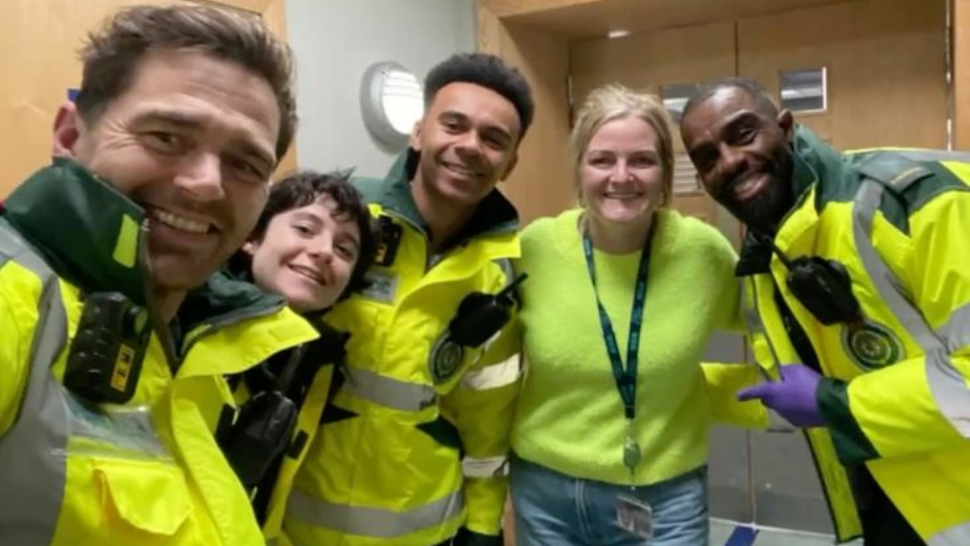
Casualty’s Teddy Gowan Story Reveals The Hidden Trauma Behind The Heroics Of Emergency Work
The most difficult moments in Casualty are not always the ones shown during the emergency.
Sometimes, the real story begins afterwards.
When the sirens stop.
When the patient has been handed over.
When the uniform is removed and the person underneath is left alone with everything they have witnessed.
That emotional reality sits at the heart of Teddy Gowan’s latest storyline in Lethal Legacy, as the paramedic finds himself struggling under the weight of a particularly traumatic shift.
On paper, Teddy does exactly what he has always done.
He responds.
He helps.
He remains professional.
But beneath that calm exterior, something is beginning to change.
The Cost Of Being The Person Who Arrives First
Paramedics are often the first people present during someone’s worst moment.
They see accidents before anyone else.
They meet families during moments of panic.
They witness situations most people will never experience.
For Teddy, that responsibility has always been part of who he is.
He understands the pressure.
He accepts the unpredictability.
But the latest episode explores an important question.
What happens when the person always helping others quietly begins to struggle himself?
A Shift That Becomes Impossible To Forget
Teddy’s difficult day begins with a violent incident involving a woman who suffers a serious injury.
The call requires immediate action and complete concentration.
There is no time to process what has happened.
No opportunity to reflect.
Only the next decision.
Only the next patient.
Later, another emergency pushes Teddy even further when he attends a mother suffering a cardiac arrest in front of her child.
The situation carries a different kind of emotional weight.
Medical emergencies are familiar territory for Teddy.
Seeing the impact on a family is something much harder to leave behind.
The Difference Between Coping And Surviving

One of the most powerful elements of Teddy’s storyline is that he never appears unable to do his job.
That is precisely the point.
People experiencing emotional exhaustion often continue functioning.
They complete tasks.
They meet expectations.
They appear fine to everyone around them.
The struggle happens internally.
Casualty explores that reality with impressive restraint.
Teddy is not portrayed as someone who suddenly breaks down.
He is portrayed as someone gradually carrying more than he can comfortably hold.
Jacob Sees What Others Miss
Among Teddy’s colleagues, Jacob Masters is one of the first people to recognise that something has changed.
It is not because Teddy has failed.
It is because Jacob understands him.
Years of working alongside emergency professionals have taught Jacob that trauma does not always announce itself.
Sometimes it appears in silence.
A shorter answer.
A distant expression.
A refusal to discuss what happened.
Jacob notices those signs immediately.
The Conversation Teddy Avoids
Perhaps the most heartbreaking part of Teddy’s journey is the moment where he almost opens up.
Jacob gives him the opportunity.
The door is open.
Support is available.
For a brief moment, Teddy appears ready to admit that the shift has affected him.
But then he chooses the familiar option.
He returns to work.
He focuses on the next responsibility.
He avoids the conversation waiting for him.
It is a reaction many viewers will recognise.
Sometimes staying busy feels easier than facing emotions that have been pushed aside for too long.
The Pressure To Stay Strong
Teddy’s reluctance to ask for help reflects a wider issue within emergency services.
Many frontline workers are admired precisely because they remain calm during chaos.
But that same strength can become a burden.
The expectation to always cope can make vulnerability feel like failure.
Teddy’s storyline challenges that idea.
Needing support does not mean someone is weak.
It means they are human.
Why Teddy’s Story Matters
In a television landscape filled with dramatic twists and shocking revelations, Teddy’s storyline stands out because of its realism.
There is no single villain.
No easy solution.
No quick emotional recovery.
Instead, there is a professional trying to understand his own limits.
That makes the story deeply relatable.
Many people, regardless of profession, know what it feels like to keep going when they are exhausted.
To say “I’m fine” because it feels easier than explaining why they are not.
A Different Kind Of Hero

Teddy has always been heroic because he runs towards situations others would run away from.
But Lethal Legacy suggests there is another form of courage.
Admitting when something has affected you.
Allowing someone else to help.
Accepting that even the strongest people need support.
That may prove to be Teddy’s biggest challenge yet.
The Future For Teddy Remains Uncertain
As the current boxset moves toward its conclusion, Teddy’s emotional journey raises important questions.
Will he continue hiding behind his work?
Will he finally accept the support Jacob is offering?
Or will the weight of everything he has experienced eventually become impossible to ignore?
Whatever happens next, Teddy’s storyline has already achieved something important.
It has reminded viewers that the heroes who save lives are still people with feelings, fears and breaking points of their own.
Because in the world of Casualty, survival is not only about the patients being rescued.
Sometimes, it is about making sure the rescuers are cared for too.