

Dark Past Resurfaces: Flynn Byron’s Secret Scandal Explodes in Casualty — “This Isn’t the First Time, Is It?”
Just as tensions inside the Emergency Department begin to settle, a shocking new storyline threatens to tear open old wounds as surgeon Flynn Byron is forced to confront a secret from his past—one that could destroy his reputation and shake the trust of everyone around him in Casualty.
Played by Olly Rix, Flynn has quickly established himself as a confident, highly skilled, yet often polarising presence within the ED. His sharp clinical instincts and no-nonsense attitude have earned both admiration and criticism—but now, it seems there is far more beneath the surface than anyone realised.
A Familiar Name Triggers Alarm
The storyline ignites when a new patient is admitted under unusual circumstances. At first, nothing appears out of the ordinary—until Flynn sees the patient’s name.
His reaction is immediate and unmistakable.
He freezes.
For a brief moment, the confident surgeon loses composure, raising suspicion among colleagues who have never seen him hesitate before. When questioned, Flynn dismisses it as fatigue—but the damage is already done. People have noticed.
Among them is Stevie Nash, who begins quietly observing Flynn’s behaviour, sensing that something is not right.
Cracks in the Perfect Exterior
As the shift progresses, Flynn becomes increasingly distracted. His decisions, usually precise and decisive, start to carry an edge of urgency that feels personal rather than clinical.
Meanwhile, Jodie Whyte—already navigating her own emotional struggles—picks up on the change almost instantly. Their already complicated dynamic adds another layer of tension, as she begins to question whether Flynn is hiding something that could affect patient care.
Her suspicions deepen when she overhears part of a tense phone call Flynn takes in a quiet corridor. The words are fragmented, but the tone is unmistakable—defensive, urgent, and filled with something close to fear.
“You Said This Was Over”
Later in the episode, the truth begins to surface in a confrontation that leaves Jodie shaken.
“You said this was over,” she tells him, her voice tight with disbelief.
Flynn’s response is evasive at first, but it becomes clear that the patient is not just someone from his past—they are connected to a previous case that ended badly. Very badly.
While details remain deliberately vague, early hints suggest that Flynn may have been involved in a controversial clinical decision in another hospital—one that resulted in serious consequences, possibly even a patient fatality under disputed circumstances.
A Reputation on the Line
Back inside the ED of Casualty, whispers begin to spread. Information travels quickly in high-pressure environments, and it doesn’t take long for fragments of Flynn’s past to reach other staff members.
Some defend him, arguing that every doctor has cases they regret. Others are less forgiving, questioning why such a significant incident was never disclosed.
For the first time since his arrival, Flynn’s authority is no longer unquestioned.
Stevie Demands the Truth
The situation escalates when Stevie Nash confronts Flynn directly. Unlike others, she does not rely on rumours—she wants facts.
“This isn’t about gossip,” she tells him firmly. “It’s about whether I can trust you in my department.”
The confrontation forces Flynn into a corner. For a moment, he considers continuing to deflect—but something shifts. The weight of the past, combined with the pressure of the present, finally becomes too much to ignore.
He admits that there was an incident.
But he insists it was not what people think.
The Line Between Mistake and Negligence
What follows is a carefully layered revelation. Flynn explains that the case in question involved a high-risk procedure performed under extreme time pressure. Like the tamponade incident that recently shook the ED, it was a moment where hesitation could have cost a life.
He made a call.
And the outcome was devastating.
However, whether that decision was a justified risk or a catastrophic misjudgment remains unclear. Official records reportedly closed the case without formal disciplinary action—but the emotional and professional fallout followed Flynn long after.
“This isn’t the first time, is it?” Stevie asks quietly.
The question hangs in the air—less an accusation, more a recognition of pattern.
Jodie Caught Between Trust and Doubt
For Jodie Whyte, the revelation is deeply personal. Already struggling with her own hidden burdens, she now faces a different kind of uncertainty: can she trust someone who may not have been fully honest about their past?
Her connection to Flynn becomes strained, caught between empathy for his situation and fear of what it might mean for the future.
Their dynamic shifts once again—not into open conflict, but into something far more fragile.
Distance.
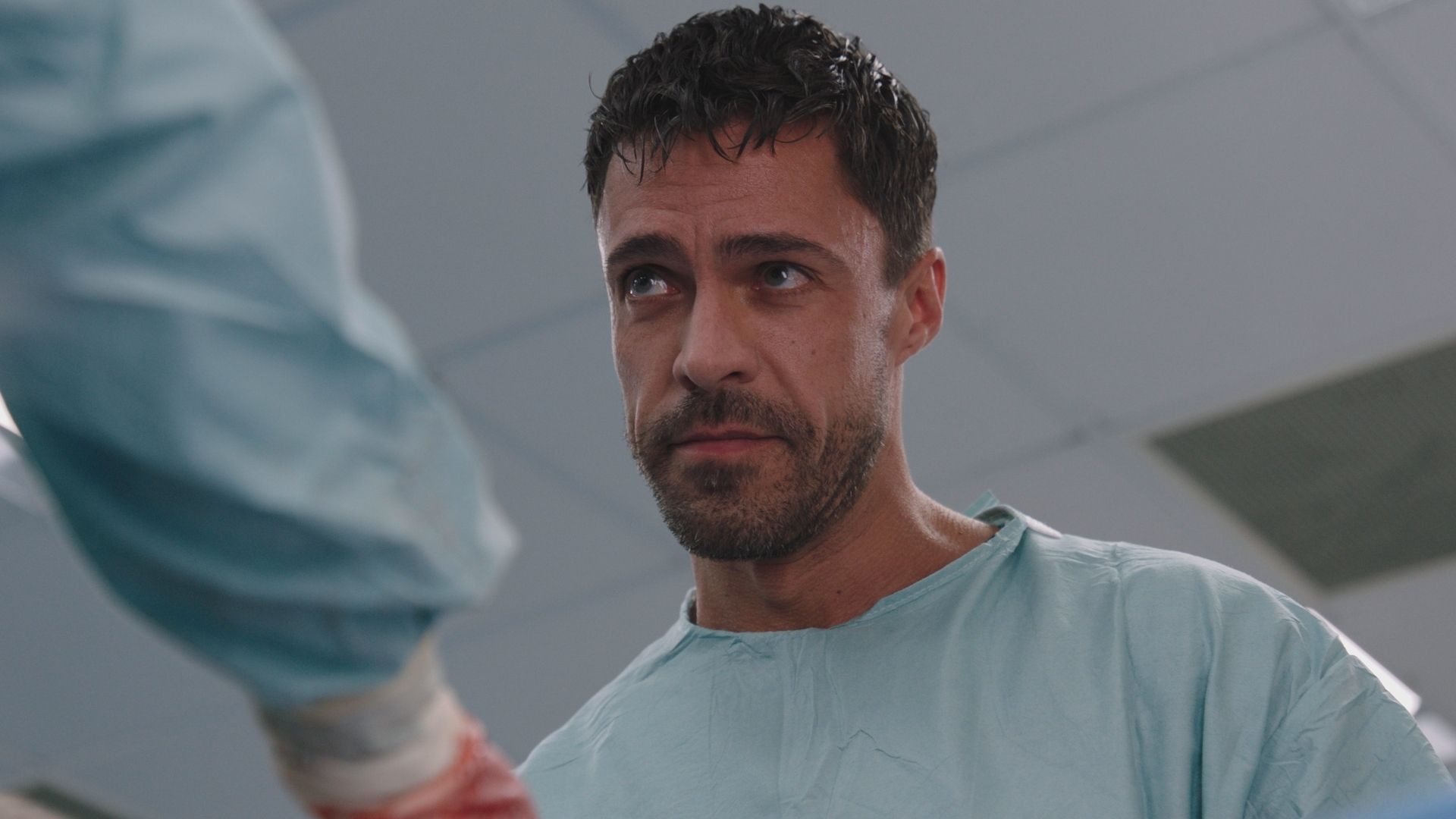
A Department Already on Edge
Inside Casualty, the timing of Flynn’s secret could not be worse. With the ED already under scrutiny from inspections, internal reviews, and growing staff division, the last thing the department needs is another layer of uncertainty.
Faith Dean and Rida Amaan both express concern that the cumulative pressure on staff is reaching unsustainable levels. The idea that key figures within the department may be carrying unresolved professional trauma only adds to the instability.
The Final Twist: A Case Reopened?
Just as Flynn begins to regain some control over the narrative, a final twist sends shockwaves through the episode.
It is revealed that the past case connected to the patient may not be as closed as he believed.
New information—possibly linked to the patient’s current condition—suggests that what happened before may need to be re-examined.
For Flynn, this changes everything.
His past is no longer behind him.
It’s back—and this time, it’s happening inside the walls of Casualty.
What Happens Next?
As the episode closes, Flynn is left standing alone in the operating theatre, staring at his reflection in the glass.
The confident surgeon is still there.
But now, so is the weight of a past he can no longer outrun.
And in a department where every decision is already under scrutiny, one question becomes impossible to ignore:
How many second chances does a doctor really get?