
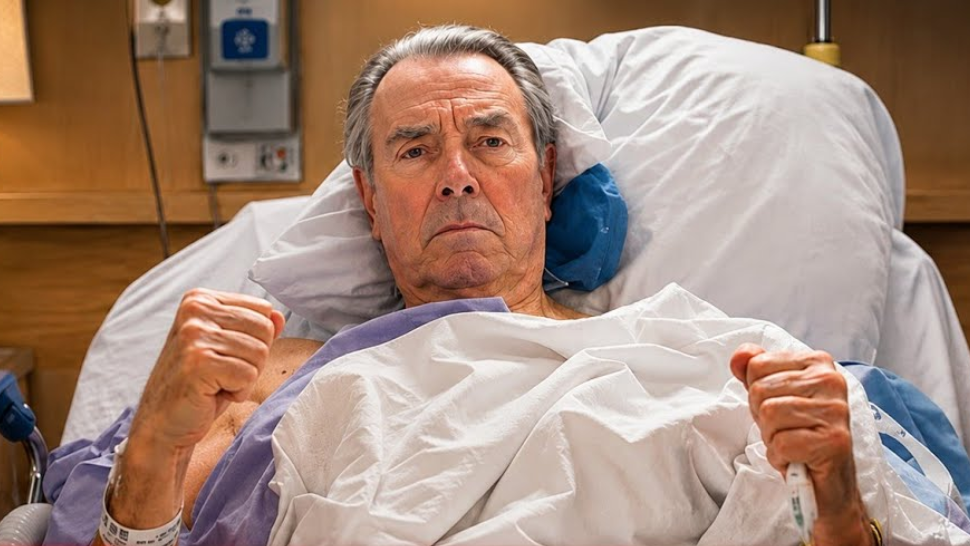
Eric Braeden Delivers Victor Newman’s Most Emotional Performance Yet
A Mogul Confronts Vulnerability
For decades, Victor Newman has been the undisputed titan of Genoa City—a man whose name alone commands fear and respect. Portrayed by the legendary Eric Braeden, Victor has become synonymous with power, ruthlessness, and strategic mastery. Yet in recent episodes of The Young and the Restless, audiences witnessed a side of Victor rarely seen: a man grappling with deep vulnerability and personal fear.
This week, Braeden’s portrayal has earned him widespread acclaim and recognition from daytime TV insiders, showcasing Victor not as the unyielding mogul fans expect, but as a husband confronting the possible loss of his lifelong partner, Nikki Newman. It is a performance layered with emotional nuance, blending tenderness, despair, and quiet heroism—a reminder that beneath Victor’s iron exterior beats a profoundly human heart.
Nikki Newman’s Life on the Line
The catalyst for this emotional tour de force is Nikki Newman’s shocking medical diagnosis. Melody Thomas Scott’s character, a longtime cornerstone of the series, has been discovered to have a mass in her brain, threatening both her vision and her life. The news shatters the stability of the Newman household, forcing Victor into a position he rarely occupies: powerless, uncertain, and deeply afraid for someone he loves.
Nikki, as ever, attempts to shoulder the burden alone, initially withholding her condition from Victor. Their relationship, fraught with tension over Victor’s controlling tendencies and his penchant for corporate domination, complicates matters further. Nikki’s reluctance reflects both fear and her protective instinct; she does not want Victor to intervene out of guilt, pity, or obligation. This dynamic sets the stage for one of Braeden’s most emotionally charged performances, highlighting Victor’s struggle to balance authority, love, and helplessness.
A Confrontation Steeped in History
The emotional tension reaches a peak in Nikki’s hotel suite at the Genoa City Athletic Club, where Victor confronts her about her symptoms. The beauty of this interaction lies in the depth of their shared history. Over decades of storytelling, Victor and Nikki have built a relationship of unparalleled intimacy, making deception nearly impossible. Each glance, gesture, and tone carries decades of subtext.
Victor, aware that Nikki’s vision has been deteriorating—information gleaned through their granddaughter, Claire—presses gently, offering her access to the best medical care available. His concern is genuine, yet it is filtered through the lens of his controlling nature. Braeden expertly conveys this duality: a man of immense power, trying to restrain his instinct to dominate while simultaneously confronting the fragility of the woman he loves.
The Emotional Complexity of a Silent Vigil
One of the most compelling aspects of Braeden’s performance occurs when Nikki is admitted to the hospital. Victor remains outside her room, silently observing her, conveying devastation and fear without uttering a single line. The subtlety of this moment—Victor standing by, powerless to intervene directly—demonstrates Braeden’s masterful command of physical storytelling. Every furrowed brow, clenched jaw, and glance conveys the inner turmoil of a man who rarely experiences vulnerability.
Victor’s heroism emerges not through action but through presence. He coordinates with medical professionals, including Dr. Stephanie Simmons and Nate Hastings, and even arranges for a specialist to fly in from New York City. This blend of wealth, influence, and genuine care underscores why audiences are so invested in Victor and Nikki’s enduring love story: his power is vast, but it is guided by devotion and loyalty.
The Interplay of Power and Fear
Eric Braeden’s performance captures a rarely seen dimension of Victor Newman: a man haunted by his own past. Throughout the episode, subtle references to his childhood—being left at an orphanage on Christmas Eve—illuminate the vulnerability lurking beneath the mogul’s bravado. As Victor faces the possibility of losing Nikki, that childhood fear of helplessness resurfaces, infusing the character with a depth of emotion rarely explored in daytime television.
This blending of personal trauma with the high-stakes drama of Genoa City creates a rich narrative texture. Victor is not just reacting to a medical emergency; he is confronting long-buried fears, moral responsibilities, and the potential collapse of the life he has meticulously built. Braeden conveys all of this with remarkable precision, transforming a seemingly straightforward hospital storyline into an intense psychological and emotional study.
The Power of Nonverbal Storytelling
Perhaps the most memorable scenes are those in which Victor is present but not directly interacting with Nikki. Standing outside her hospital room, he monitors updates from Victoria and Clare, coordinating logistics while silently grappling with fear. The absence of dialogue allows Braeden to communicate vulnerability through expression alone: a mixture of dread, hope, and helplessness that resonates with viewers on a visceral level.
This mastery of nonverbal acting elevates the storyline, allowing audiences to experience Victor’s inner life. Each small gesture—a subtle shift in posture, a fleeting glance at a hospital corridor, the tightening of a hand on a ring—tells a story of a man confronting the limits of his control, a theme central to Victor’s character arc.
Victor as Both Mogul and Husband
What makes this week’s performance stand out is the seamless interplay between Victor’s corporate persona and his role as a husband. While viewers are accustomed to seeing him dominate boardrooms and manipulate rivals, Braeden presents a Victor who must negotiate powerlessness, vulnerability, and ethical urgency. From coordinating Nikki’s surgery to navigating his complex family dynamics, Victor’s actions underscore the depth of his commitment without sacrificing the complexity of his personality.
The juxtaposition of authority and vulnerability highlights a recurring theme in The Young and the Restless: even the most powerful figures are not immune to the human experience of fear, loss, and devotion. Braeden’s performance captures this tension with remarkable authenticity.
The Impact on Genoa City Storylines
Victor’s emotional journey in response to Nikki’s health crisis has ripple effects throughout Genoa City. His interactions with Victoria, Clare, Lily, and medical professionals demonstrate a rare collaborative side of Victor, contrasting sharply with his usual solitary control over Newman Enterprises. The stakes of Nikki’s condition extend beyond their marriage, influencing decisions at every level—from hospital logistics to corporate maneuvering.
For fans, the resonance of Victor’s emotional vulnerability enhances the dramatic tension of the series. It reminds viewers why Victor and Nikki’s relationship remains central to The Young and the Restless, balancing high-stakes corporate intrigue with deeply personal storytelling.

A Performance for the Ages
Eric Braeden’s portrayal of Victor Newman this week is nothing short of masterful. From tender moments of vulnerability to calculated displays of power and coordination, Braeden elevates a high-stakes storyline into a profound exploration of love, fear, and human resilience. His ability to convey complex emotion without dialogue, paired with the enduring chemistry between Victor and Nikki, cements this as one of the most compelling performances in daytime television this year.
As Nikki undergoes surgery and Victor navigates the precarious intersection of fear, love, and control, viewers are reminded that even Genoa City’s most formidable mogul is not invincible—but his devotion, courage, and emotional depth make him a hero in the truest sense.
The Young and the Restless continues weekdays on CBS, delivering drama, romance, and suspense at the heart of Genoa City. With performances like Braeden’s, the series proves that even long-running daytime dramas can reach new heights of emotional storytelling.