
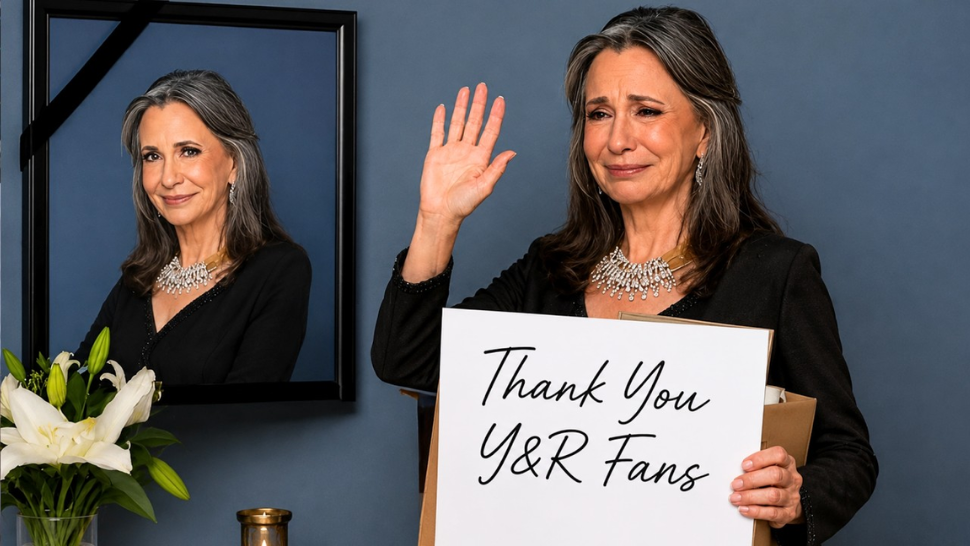
“Jill Abbott FINAL Goodbye!” Leaves Genoa City Forever — Shocking Exit Confirmed! | Young & Restless
A Vixen Reimagined: Jess Walton’s Transformative Legacy
For over four decades, Jill Abbott has not merely existed in The Young and the Restless—she has dominated, redefined, and reshaped Genoa City’s very DNA. When Jess Walton first stepped into Jill’s high heels on June 19, 1987, she inherited a character made iconic by Brenda Dickson. Yet Walton didn’t just fill the role—she sprinted, tumbled, and conquered it, transforming Jill from a stereotypical man-eating manicurist into a multi-layered powerhouse whose cunning, vulnerability, and tenacity captivated audiences for decades.
Walton’s Jill wasn’t just a schemer; she was a survivor. Every decision, every affair, and every calculated move traced back to a woman who grew up on the margins, yearning for a seat at the table of Genoa City’s elite. Her aggression, ambition, and relentless drive were underpinned by a raw, emotional hunger to belong, a complexity Walton made palpable in every scene.
The Psychological Core of Jill Abbott

What set Walton’s performance apart was her understanding of Jill’s psychology. Beneath the glamorous veneer was a woman shaped by insecurity, abandonment, and a life spent clawing her way from the shadows into power. Walton portrayed Jill’s scheming and sometimes ruthless behavior not as shallow villainy, but as a defense mechanism—a shield against the world that repeatedly overlooked her.
Jill’s obsession with status and survival made her a character that viewers could both love and fear. Each romantic entanglement, from John Abbott to Victor Newman, reflected her inner conflict: the struggle between desire and security, passion and pragmatism. Her affair with Jack Abbott, controversial as it was, underscored her self-destructive streak—a pattern driven not by malice but by a profound, sometimes painful need for control and validation.
A Rivalry for the Ages: Jill vs. Katherine
No discussion of Jill Abbott’s legacy would be complete without Katherine Chancellor, the woman who became her lifelong rival. Their feud—sparked by Jill’s affair with Philip Chancellor II and the complex web surrounding Phillip III—was more than drama; it was a masterclass in character dynamics. The tension between Jill and Katherine was not merely about power, money, or men—it was a collision of two women defined by their ambition, resilience, and need for love.
Walton and Jeanne Cooper’s performances elevated this rivalry to legend. Every scene crackled with unpredictability; the audience never knew whether confrontation would explode into verbal warfare or a fleeting moment of tenderness. The revelation that Jill and Katherine were mother and daughter—though later altered—shook the foundation of their enmity, allowing the actresses to explore vulnerability, forgiveness, and the messy reality of love and legacy.
Romance, Power, and Self-Sabotage
Jill’s romantic history mirrored her complicated psyche. Her marriage to John Abbott represented stability and respectability, yet her impulses often led to heartbreak. Her desire for Victor Newman represented ambition and the allure of power—a reminder that Jill never chased love without strategy or calculation. Colin Atkinson offered a rare equilibrium, accepting Jill’s flaws and embracing her spirit, yet even that ultimately fell victim to betrayal and conflicting loyalties.
Through these arcs, Walton demonstrated the breadth of Jill’s humanity. She was a woman driven by love, lust, ambition, and fear—a mosaic of contradictions that made every triumph, every failure, and every decision compelling to watch.
Emotional Depth and Emmy-Winning Performance
Walton’s skill was recognized formally with a Daytime Emmy in 1997, a win that surprised even veteran creator Bill Bell. She earned acclaim not through over-the-top plots, but through subtle, emotionally rich performances that brought nuance to everyday soap moments. Jill’s quiet glances, her measured expressions, and her instinctive responses to betrayal and triumph became a master class in acting.
Off-screen, Walton’s friendship with Cooper enriched their on-screen chemistry, lending authenticity to decades of rivalry. Their mutual respect translated into scenes that were not only iconic but deeply believable, with humor and humanity interwoven into every conflict.

The Final Chapter: Jill’s Exit and Legacy
As The Young and the Restless approaches Jill Abbott’s next milestone, viewers are bracing for an emotional farewell. Walton’s portrayal has made Jill a symbol of survival, ambition, and complexity. Her impending exit is not simply the departure of a character—it is the closing of a chapter in Genoa City’s history that has influenced countless storylines and shaped the soap’s cultural landscape.
Jill’s farewell is expected to reflect the qualities that defined her life: courage, cunning, and the relentless pursuit of agency in a world that constantly sought to define her. Her influence will resonate in the legacies of the Abbott and Chancellor families, in the schemes she leaves behind, and in the hearts of viewers who have followed her triumphs and failures.
Passing the Torch: Jill Abbott’s Impact on Genoa City
Beyond the drama and the scandals, Jill Abbott’s true legacy lies in her evolution from outsider to matriarch. She demonstrated that power could coexist with vulnerability, that ambition could be tempered by humanity, and that soap operas could convey profound psychological truth alongside high-stakes entertainment.
Her decades-long presence on The Young and the Restless has set the stage for future generations. Characters influenced by Jill’s actions, decisions, and moral complexities will carry forward her ethos: survival, cleverness, and unyielding resilience.
A Legend Leaves, But the Story Lives On
Jill Abbott’s story is the story of ambition, reinvention, and survival. Jess Walton didn’t just replace a character—she deepened it, creating a woman whose flaws made her relatable, whose strength made her iconic, and whose journey became a defining element of daytime television.
As Genoa City prepares to bid a final farewell, the emotional and narrative impact of Jill Abbott will linger long after the curtains close. From her formative struggles as a housekeeper’s daughter to her fierce rivalries, complex romances, and eventual rise to matriarchal authority, Jill has been the heartbeat of The Young and the Restless. Her exit is a moment to celebrate not just a character, but an era—a testament to storytelling, performance, and the power of television to capture the human experience in all its messy, compelling glory.