

Nathan Is Alive, And The Imposter’s Fate Has Taken A Turn. General Hospital Spoilers
Port Charles is reeling from one of the most shocking revelations in recent memory, as General Hospital delivers a storyline that reshapes identity, loyalty, and the very definition of truth.
A Return That Felt… Off
When Liesl Obrecht stepped back into Port Charles, longtime viewers immediately sensed something was different. It wasn’t dramatic or overtly suspicious—there were no explosive confrontations or grand declarations. Instead, it was subtle. A hesitation. A lack of eye contact. A quiet emotional distance that seemed profoundly unlike her.
For a character known for her sharp instincts and unapologetic presence, Liesl’s subdued demeanor raised more questions than answers. Her interactions—particularly her cold dismissal of familiar faces like Felicia—hinted at something deeper beneath the surface.
What Liesl brought back from New Zealand, it soon became clear, was not just a secret. It was a truth powerful enough to destabilize everything.
The Impossible Truth: Nathan Is Alive
In a twist that has left Port Charles—and its audience—reeling, Liesl reveals that Nathan West is alive.
Long believed dead and mourned by those closest to him, Nathan’s survival is not framed as a miracle, but as something far more unsettling. According to Liesl, she discovered him barely alive, hidden away as though someone had deliberately tried to erase him from existence.
This revelation reframes years of grief and closure. What was once accepted as tragic finality is now exposed as a carefully maintained illusion.
But the most disturbing question quickly follows: if Nathan has been alive all this time… then who has been living his life in Port Charles?
Enter Cassius: The Man Who Became Nathan
The answer lies in one of the most psychologically complex antagonists the show has introduced in years—Cassius.
Revealed to be Nathan’s previously unknown twin brother, Cassius’ existence alone is enough to shake Liesl to her core. Believed to have died at birth, his survival opens a Pandora’s box of unanswered questions. Who raised him? Where has he been? And most importantly—what drove him to assume his brother’s identity?
Cassius didn’t merely impersonate Nathan. He became him.
He studied his mannerisms, relationships, and emotional patterns with chilling precision. This was not a spontaneous deception—it was a long-term, calculated infiltration. Every interaction, every connection, was built on a lie so seamless that no one questioned it.
And that is what makes this storyline so deeply unsettling: the deception didn’t rely on grand manipulation, but on subtle consistency. Small details that felt “right enough” to go unnoticed.
A Twisted Psychology: Villain Or Victim?
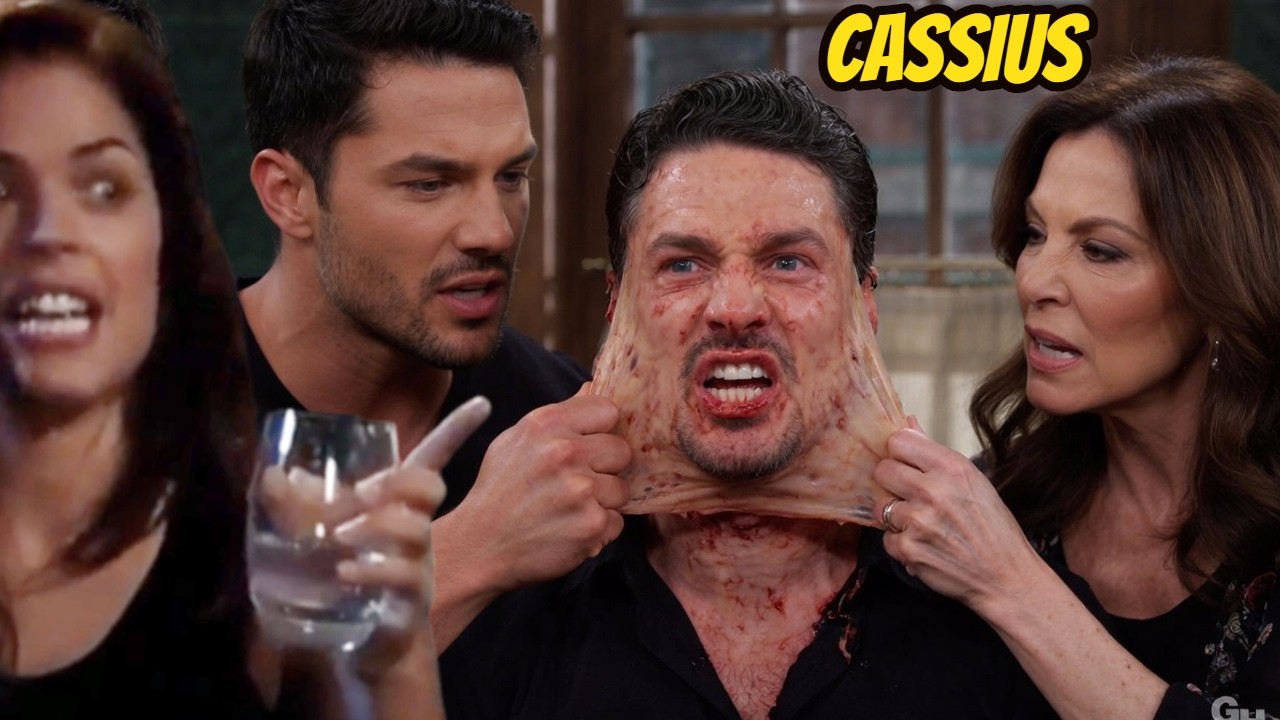
Cassius’ motivations add another layer of complexity. While his actions are undeniably destructive, the narrative resists painting him as a one-dimensional villain.
There are strong implications that his life has been shaped by abandonment, isolation, and a deep-seated belief that something fundamental was taken from him. From his perspective, assuming Nathan’s identity may not have been theft—it may have felt like reclamation.
This psychological ambiguity is where the storyline finds its emotional weight. Cassius is dangerous, yes—but he is also a product of circumstances that may have pushed him toward this extreme path.
It raises a chilling question: if Cassius had lived the life Nathan did, would any of this have happened?
Liesl’s Impossible Choice
At the center of this emotional storm stands Liesl, caught between two sons—one she raised, and one she never knew existed.
Her initial decision not to immediately expose Cassius adds another layer of tension. Rather than confronting the truth head-on, she attempts to manage it, contain it, perhaps even protect both men in her own way.
But in Port Charles, secrets rarely stay contained.
Liesl’s hesitation, however understandable, allows the situation to spiral further. By the time the truth begins to surface, the damage is already done.
Her journey becomes one of impossible choices: justice versus protection, truth versus emotional survival. And ultimately, there is no path that spares her from loss.
The Confrontation: “You Are Not Me”
The inevitable collision between Nathan and Cassius delivers one of the most emotionally charged moments of the storyline.
When Nathan finally stands face-to-face with the man who stole his life, the confrontation is not explosive—it is quiet, controlled, and devastating.
“You are not me.”
With those words, Nathan reclaims his identity. But the moment does not feel like victory. It feels like fracture.
Because reclaiming what was taken does not erase the violation. It does not restore lost time, broken trust, or emotional damage.
Justice Without Closure
Nathan’s decision to turn Cassius in marks a turning point—but not a resolution.
While it brings a sense of justice, it also introduces a new emotional burden. Sending his own brother to prison is not a clean act, even if it is the right one. The psychological weight of that decision is likely to follow Nathan long after the immediate crisis has passed.
And Cassius, notably, does not appear defeated.
His final moments suggest something unresolved—an unsettling indication that his story may not be over. There is no sense of closure in his expression, only a lingering intensity that hints at future consequences.
The Aftermath: A Family Divided
In the wake of these revelations, Liesl is left to grapple with the fallout.
In many ways, she has lost both sons—one to the justice system, the other to a trauma that cannot be undone. The guilt she carries is palpable, raising questions about how this experience will reshape her moving forward.
Nathan, meanwhile, must rebuild a life that was interrupted and distorted. The process of reclaiming his identity is not just external—it is deeply internal.
Who is he now, after everything that has happened?
A Story Far From Over
Perhaps the most intriguing element of this storyline is the lingering sense that there is more yet to be revealed.
Was Cassius acting alone?
How was Nathan kept hidden for so long?
And are there still unseen forces at play behind the scenes?
General Hospital has long thrived on layered storytelling, and this arc appears to be no exception. The idea that Cassius may have been guided—or even manipulated—opens the door to a much larger conspiracy.
Final Thoughts: Identity, Truth, And The Cost Of Deception
This storyline stands as one of the most psychologically rich arcs in recent General Hospital history. It is not simply about a shocking return or a dramatic reveal—it is about identity, perception, and the fragile nature of truth.
In Port Charles, deception is nothing new. But rarely has it been executed with such precision—or such devastating emotional consequences.
As the fallout continues to unfold, one thing remains clear: the truth may finally be out, but its impact is only just beginning.
Because in a world where someone can live another person’s life undetected…
How can anyone truly be certain of what is real?