
“Nick’s 5 SHOCKING Words Trigger Sharon’s Breakdown — She KIDNAPS Him!”
Genoa City has seen its fair share of explosive confrontations, but the latest storyline on The Young and the Restless delivers a psychological and emotional shockwave that has left viewers stunned. What began as a deeply personal conversation between Nick Newman and Sharon Collins quickly escalated into a disturbing breakdown, culminating in an act no one saw coming—Sharon kidnapping Nick in a moment of complete psychological collapse.
At the center of this harrowing arc are five words that changed everything: “You are not safe anymore, Sharon.”
A sentence meant to protect. A warning born from concern. But in the fractured emotional state Sharon is struggling with, those words land like a weapon.
A Conversation That Became a Breaking Point
From the outside, Nick’s concern is understandable. Over recent weeks, he has watched Sharon deteriorate in subtle but undeniable ways. Sleepless nights, emotional withdrawal, disjointed conversations, and a growing sense that she is slipping further from reality have all contributed to his increasing worry.
Nick is not acting out of suspicion or control—he is acting out of fear. Fear for someone he still deeply cares about. Fear that something is happening beneath the surface that neither of them fully understands. And ultimately, fear that he is losing her in real time.
But emotional truth is rarely interpreted cleanly in moments of psychological instability. What Nick sees as protection, Sharon begins to interpret as threat.
Five Words That Changed Everything
When Nick tells Sharon she is “not safe anymore,” he believes he is grounding her in reality. Instead, it becomes the final push that fractures her perception completely.
In Sharon’s mind, the warning does not come from love—it comes from suspicion. From control. From an unseen force she already believes is closing in on her. And once that interpretation takes hold, logic no longer has a place in the conversation.
This is where the storyline shifts from emotional drama into psychological crisis.
Sharon begins to view Nick not as an ally, but as part of the danger she feels surrounding her. Every attempt he makes to reassure her only deepens her mistrust. Every gentle explanation becomes, in her perception, further evidence of manipulation.
The Illusion of Calm Before the Collapse
What makes this storyline so chilling is its restraint. Sharon doesn’t immediately lash out. Instead, she does something far more unsettling—she invites Nick closer.
At first, it feels like progress. A fragile opportunity for understanding. Sharon’s tone is calm, even gentle. Nick allows himself to hope that this is the moment things begin to stabilize. That maybe, somehow, they can talk through what is happening.
But beneath the surface, something is deeply unstable.
Sharon listens, but she does not absorb. She watches, but she does not interpret reality as Nick intends it. Every word he speaks is filtered through a distorted lens of fear and suspicion.
And then, without warning, the situation escalates.
The Kidnapping: When Fear Replaces Reality
In a sudden and shocking turn, Sharon’s behavior shifts from emotional withdrawal to physical control. Without a traditional buildup or warning, she restrains Nick—an act driven not by malice, but by overwhelming psychological distress.
Nick is caught completely off guard. What makes the moment even more disturbing is his hesitation to fully resist her. Even in fear, he is trying to understand her, trying to reach the version of Sharon he still believes is underneath the crisis.
He speaks to her calmly, carefully, reminding her of their shared history, their bond, and the life they’ve built in Genoa City. But Sharon is no longer responding to emotional familiarity. She is responding to perceived danger.
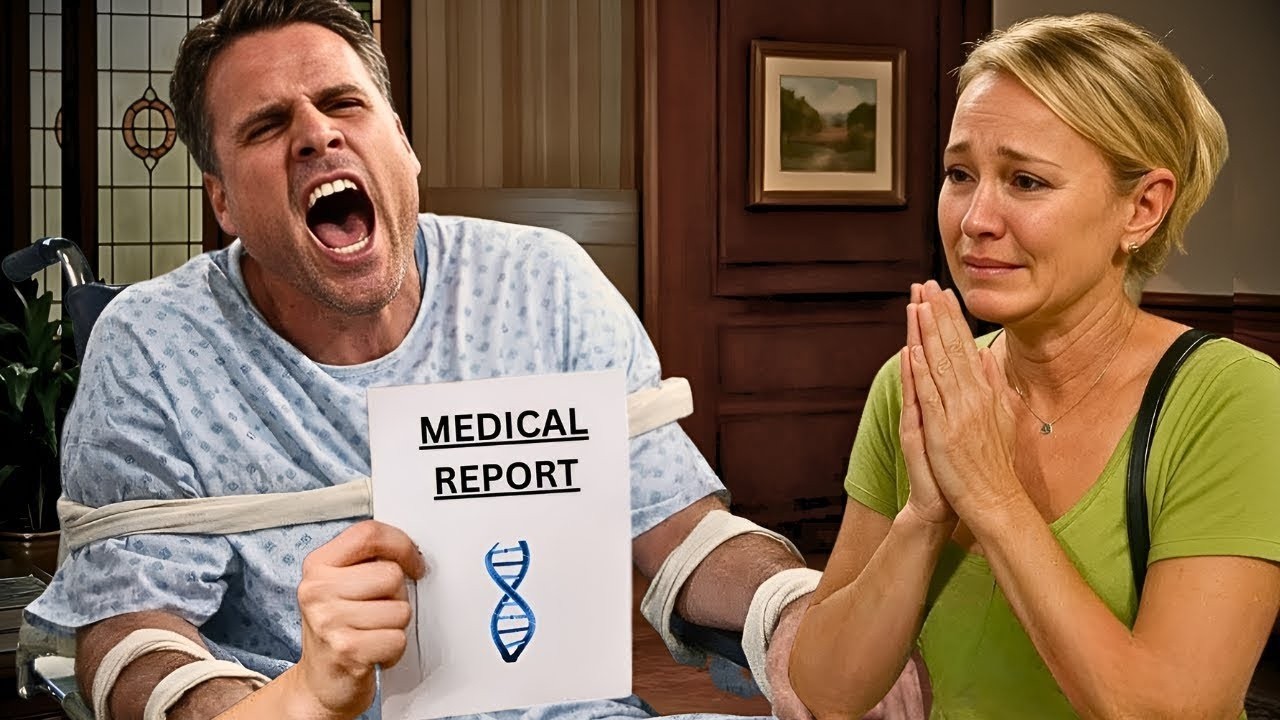
In her mind, she is not kidnapping Nick.
She is protecting herself.
A Descent Into Fragmented Reality
The situation escalates further when Sharon forces Nick into a car, initiating a tense and unsettling drive that feels increasingly disconnected from reality.
Her speech becomes fragmented. She jumps between ideas—control, betrayal, unseen threats, and distorted memories—none of which align in a coherent narrative, but all of which feel deeply real to her.
Nick, meanwhile, shifts into survival mode. Rather than escalating the situation, he carefully adapts his tone, attempting to de-escalate without validating her delusions. It is a delicate psychological balancing act—one wrong word could worsen her state.
For a brief moment, it appears to work. Sharon softens. Her grip loosens. Reality seems to flicker back into focus.
But the moment is fragile—and it does not last.
The Hospital: Reality Begins to Intervene
Their arrival at the hospital marks a turning point. Medical professionals immediately sense that something is wrong. The environment shifts from personal crisis to clinical urgency.
Nick seizes the opportunity with a silent plea—an expression that says everything without words: help me.
The response is careful and measured. No confrontation. No escalation. Just calm observation and gentle questioning.
And slowly, something begins to shift in Sharon.
Confusion replaces certainty. Her emotional intensity begins to fracture. Her breathing changes. Her physical posture softens.
And then, she looks at Nick again.
But this time, she sees him differently.
Not as a threat.
Not as an enemy.
But as Nick.
The Emotional Aftermath
The realization does not arrive as a single moment of clarity. It comes in waves—shock, recognition, fear, and overwhelming remorse. The emotional collapse that follows is not loud or dramatic. It is quiet, internal, and deeply human.
For Sharon, the consequences are immediate and devastating. She is forced to confront what her mind has done in a state of distortion. For Nick, the impact is equally profound—confusion, guilt, and emotional exhaustion replace the urgency of the moment.
Neither of them walks away unchanged.
A Story About More Than One Moment
What makes this storyline resonate is not the kidnapping itself, but what leads to it. The show carefully builds a narrative that highlights psychological fragility, emotional misinterpretation, and the devastating consequences of untreated mental health struggles.
Nick’s intentions are rooted in love and concern. Sharon’s actions are rooted in fear and distortion. And between them lies a breakdown of communication that neither fully controls.
This is not a simple villain-and-victim dynamic. It is a collision of love, fear, and instability that spirals beyond their control.
What Comes Next?
As Genoa City processes the fallout, the question is no longer just what Sharon did—but what happens after realization sets in.
Can trust be rebuilt after something like this?
Can Nick ever separate the woman he loves from what she became in that moment?
And perhaps most importantly—can Sharon find her way back to herself once the fog clears?
One thing is certain: this is not the end of their story. It is the beginning of a far more complicated emotional journey, one that will test every bond they thought was unbreakable.
Because in Genoa City, the most dangerous breakdowns are not always loud.
Sometimes, they begin with just five words.