
Willow left Wiley & Amelia after Jacinda revealed the truth to Michael – General Hospital Spoilers
Port Charles is once again spiraling into emotional and legal chaos as a shocking new development involving Willow Corinthos, Michael Corinthos, and Jacinda threatens to permanently reshape the custody battle over Wiley and Amelia. What begins as suspicion quickly escalates into a life-altering confrontation, leaving families fractured and loyalties permanently altered.
A Custody Battle Turns Into a Psychological War
The ongoing conflict over Wiley and Amelia has already pushed Michael Corinthos into increasingly strategic territory, but recent events suggest a far deeper shift is underway. Once defined by his attempts to distance himself from the darker Corinthos legacy, Michael now appears far more calculated—operating from a place of containment, risk assessment, and long-term control rather than purely emotional reaction.
At the center of this transformation is Willow Corinthos, whose position within the family dynamic has grown increasingly unstable. While she continues to present herself as a protective and devoted mother, suspicion surrounding her possible involvement in Drew Cain’s shooting has begun to reshape how others perceive her—particularly Michael.
Even without confirmation, the allegation alone has become powerful enough to alter alliances, influence decisions, and redefine trust.
Jacinda’s Revelation Changes Everything
The turning point arrives when Jacinda delivers explosive new information directly to Michael. According to her account, evidence has surfaced that casts serious doubt on Willow’s innocence in connection to Drew’s shooting. While the details remain contested and far from legally proven, the impact is immediate and devastating.
For Michael, the revelation is not just another complication—it is a potential confirmation of his deepest fears. His response is no longer passive or uncertain. Instead, it signals a decisive shift toward protecting his children at all costs, even if it means dismantling the current custody arrangement entirely.
The emotional weight of Jacinda’s claims forces Michael to reevaluate everything he believed about Willow’s role as a co-parent and partner in Wiley’s life.
Willow’s Breaking Point: A Sudden Exit
As suspicion intensifies, Willow reaches a critical breaking point. The emotional and psychological pressure of being viewed not only as a rival in custody court but also as a potential criminal suspect becomes overwhelming.
In a stunning development, Willow makes the decision to leave Wiley and Amelia behind.
Her departure is not framed as abandonment in a traditional sense, but rather as a deeply conflicted response to a situation she can no longer control. Sources within the storyline suggest Willow believes her continued presence may do more harm than good, particularly as accusations begin to influence how others perceive her parenting ability and emotional stability.
Still, the choice sends shockwaves through every layer of the Corinthos family structure.
Michael’s Strategic Shift: Protection or Control?
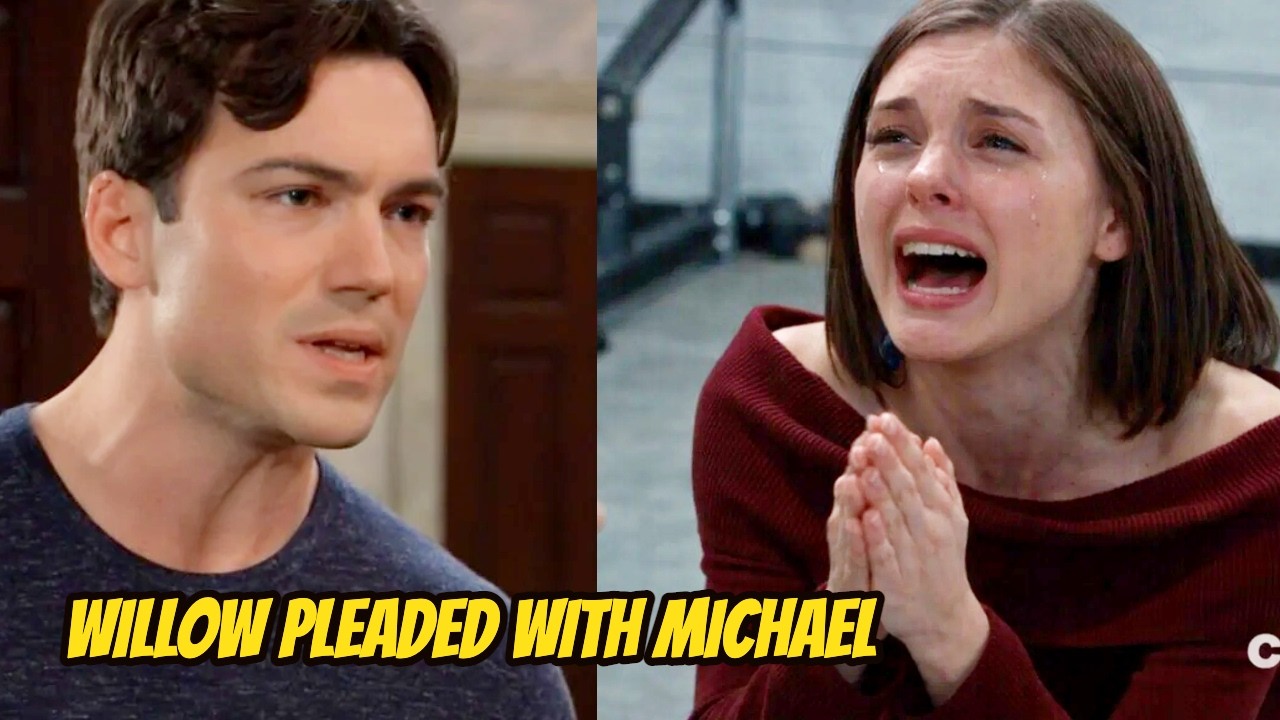
Michael’s reaction to Willow’s exit is complex and layered. On one hand, he is a father who has long fought to secure stability for Wiley and Amelia. On the other, his evolving approach suggests something more structured and deliberate is taking shape.
Rather than reacting emotionally, Michael begins to operate as though managing a system of risks. Willow is no longer viewed solely as a co-parent, but as a variable whose instability could threaten the environment he is trying to preserve for his children.
This shift raises an uncomfortable but central question within the narrative: is Michael acting purely to protect Wiley—or is he reshaping the entire family dynamic to ensure long-term control over custody and narrative authority?
In Port Charles, those distinctions are rarely clear-cut.
The Power of Perception in Port Charles
One of the most striking elements of this storyline is how quickly perception begins to replace verified fact. Willow’s alleged involvement in Drew’s shooting—whether accurate or not—has already begun to influence how others respond to her.
In the world of General Hospital, perception often functions as reality long before legal truth is established. Once suspicion takes hold, relationships begin to fracture, alliances shift, and reputations collapse under the weight of interpretation.
Willow now finds herself isolated within a narrative that is narrowing around her, with fewer allies willing to publicly defend her position.
Drew Cain Becomes a Secondary Casualty
While Drew Cain remains at the center of the original incident, his role in the evolving custody conflict takes on new meaning. Increasingly, he becomes a symbolic figure within Michael’s broader strategy—someone whose survival and stability may indirectly influence custody outcomes.
Interestingly, Michael’s actions suggest a willingness to protect Drew if it serves a larger purpose in stabilizing Wiley’s environment. This signals a notable evolution in Michael’s character, one where emotional bias is increasingly replaced by outcome-based reasoning.
In practical terms, Drew is no longer just a victim or rival—he becomes a factor in a larger strategic equation.
Willow’s Isolation Deepens
With Willow stepping away from Wiley and Amelia and suspicions continuing to circulate, her position becomes increasingly precarious. She is no longer simply fighting for custody rights—she is now navigating a landscape where every action is filtered through doubt.
Even neutral behavior risks being interpreted as confirmation of guilt or instability. This kind of narrative framing, long familiar to General Hospital viewers, often becomes self-reinforcing, tightening the emotional and social isolation of the accused character.
Willow’s departure, whether temporary or permanent, signals a dramatic restructuring of the family unit.
Michael at a Moral Crossroads
Despite his growing strategic clarity, Michael is not immune to internal conflict. His actions suggest a man increasingly aware that protecting his children may require difficult compromises—not just legally, but morally.
The more he seeks control over uncertainty, the more blurred the line becomes between protection and control. His decisions now carry the weight of long-term consequences that extend far beyond custody court.
This evolution places Michael at a critical narrative crossroads: remain a protector responding to threats, or become an architect actively shaping outcomes regardless of emotional cost.
What Comes Next?
With Willow gone, Jacinda’s accusations still reverberating, and Michael tightening his strategic grip, Port Charles is entering a new phase of emotional instability. The custody battle is no longer confined to legal arguments—it has become a struggle over truth, perception, and control.
For viewers, the central question now is not just who will gain custody of Wiley and Amelia, but what will remain of this family once the dust settles.
Because in true General Hospital fashion, nothing stays simple for long—and every decision made in the name of protection carries the potential for irreversible consequence.