
Yellowstone Universe Enters A State Of Controlled Narrative Chaos As Kayce Dutton’s Arc Darkens And Franchise Expansion Accelerates
The Yellowstone universe is moving into what industry observers are calling its most unpredictable creative phase yet. With multiple spin-offs expanding simultaneously and character arcs diverging across different timelines, Taylor Sheridan’s sprawling franchise is no longer behaving like a traditional television saga. Instead, it is evolving into a tightly interconnected storytelling ecosystem where emotional stakes, psychological tension, and long-term narrative design intersect in increasingly complex ways.
What once centered on land, legacy, and family survival has now transformed into a multi-layered narrative network where every decision reverberates far beyond a single storyline.
A Franchise Operating In Controlled Narrative Instability
One of the most striking shifts in the Yellowstone universe is its structural evolution. Rather than relying on a single dominant narrative thread, the franchise now unfolds across multiple parallel storylines that evolve independently while remaining subtly interconnected.
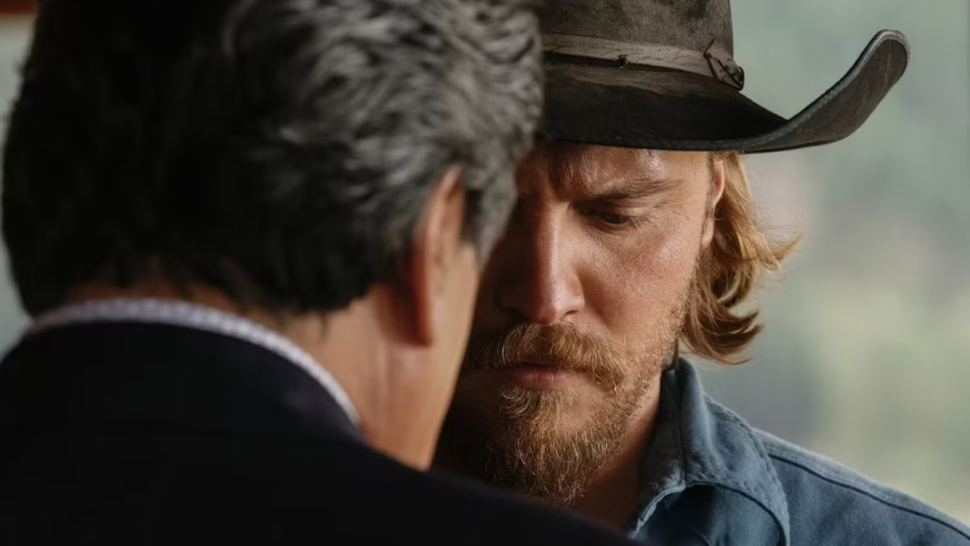
This approach creates what many analysts describe as “controlled narrative instability.” Each spin-off maintains its own tone and focus, yet no storyline exists in isolation. Themes, unresolved conflicts, and character trajectories are designed to echo across series boundaries, gradually building toward larger intersections.
As a result, the franchise no longer feels like a collection of separate shows. It increasingly resembles a single evolving system—one where every narrative shift contributes to a broader, carefully constructed design.
Kayce Dutton’s Transformation Becomes Increasingly Unstable
At the center of this expanding structure remains Kayce Dutton, whose journey in Marshals continues to redefine the emotional foundation of the franchise. Far removed from his early identity rooted in ranch life and family loyalty, Kayce is now fully embedded in a federal system that demands emotional suppression and operational precision.
But this transformation is not being portrayed as clean or stabilizing. Instead, it is increasingly framed as psychological erosion.
The deeper Kayce moves into law enforcement, the more fragmented his internal identity becomes. His decisions are shaped less by personal connection and more by duty, survival instinct, and unresolved trauma tied to his past life. This gradual detachment positions him as one of the most emotionally volatile figures in the entire Yellowstone universe.
Rising Tension Inside The Marshal Unit
The introduction of Garrett has added another layer of instability to Kayce’s storyline. What initially appeared to be a supporting character dynamic is now emerging as a central pressure point within the Marshal unit.
Both men share a military background, but their philosophies diverge sharply. Garrett operates with a rigid, mission-first mentality shaped by battlefield logic, while Kayce remains influenced by emotional memory and personal loss.
As missions grow more morally ambiguous, this ideological divide is expected to deepen, placing increasing strain on trust, leadership, and decision-making within the unit. Industry observers suggest this internal friction could eventually become one of the most volatile elements in the series.
Emotional Isolation Redefines The Franchise Tone
Across multiple Yellowstone storylines, a clear thematic shift is taking shape: emotional isolation is becoming the dominant narrative force.
Characters are increasingly removed from stabilizing relationships and familiar environments, forcing them into arcs defined by independence, survival, and internal conflict. This shift marks a tonal evolution for the franchise, moving away from traditional family-driven drama and toward psychologically grounded character studies.
For Kayce, this isolation is particularly pronounced. Without the emotional anchors that once defined his life, his trajectory is now shaped by pressure, responsibility, and emotional fragmentation.
Rip Wheeler And Beth Dutton Remain Structural Anchors
While the broader universe grows more fragmented, Rip Wheeler and Beth Dutton continue to function as stabilizing forces within the franchise’s expanding structure.
Their storyline in Dutton Ranch preserves a direct emotional link to the original Yellowstone identity. Rip’s loyalty-driven steadiness contrasts with Beth’s volatility, creating a dynamic that remains central to the franchise’s emotional core.
As other narratives drift further into psychological complexity, Rip and Beth appear to serve as grounding reference points—characters through which the audience can still recognize the emotional DNA of the original series.

Signs Of A Long-Term Unified Narrative Design
Behind the scenes, speculation continues to build around the franchise’s long-term structural intent. Rather than expanding indefinitely through isolated spin-offs, the current trajectory suggests a gradual movement toward narrative convergence.
This model would allow individual series to develop independently while still feeding into a larger unified storyline. Characters, unresolved conflicts, and emotional arcs could eventually intersect in a coordinated narrative endpoint.
Although no official confirmation has been made, the increasing alignment of themes, character histories, and tonal direction across spin-offs strongly supports this possibility.
A Universe Defined By Transition Rather Than Closure
What defines the Yellowstone franchise in its current phase is not resolution, but transformation. Characters are evolving in different directions, emotional foundations are shifting, and narrative boundaries are expanding across multiple timelines simultaneously.
Kayce Dutton’s arc embodies this shift most clearly. His progression from conflicted son to federal operative reflects the franchise’s broader evolution—from family-centered storytelling into a fragmented psychological universe shaped by pressure and moral ambiguity.
The result is a narrative environment that feels less like a completed saga and more like an evolving system still taking shape.
The Question Driving The Franchise Forward
As the Yellowstone universe continues to expand, one question increasingly dominates fan discussion and industry speculation:
Is this franchise carefully building toward its most ambitious unified conclusion—or is it becoming too large, too fragmented, and too unpredictable to remain structurally contained?
For now, one thing is clear: the Dutton legacy is no longer confined to a single ranch or a single series.
It is expanding, diverging, and redefining itself in real time.