
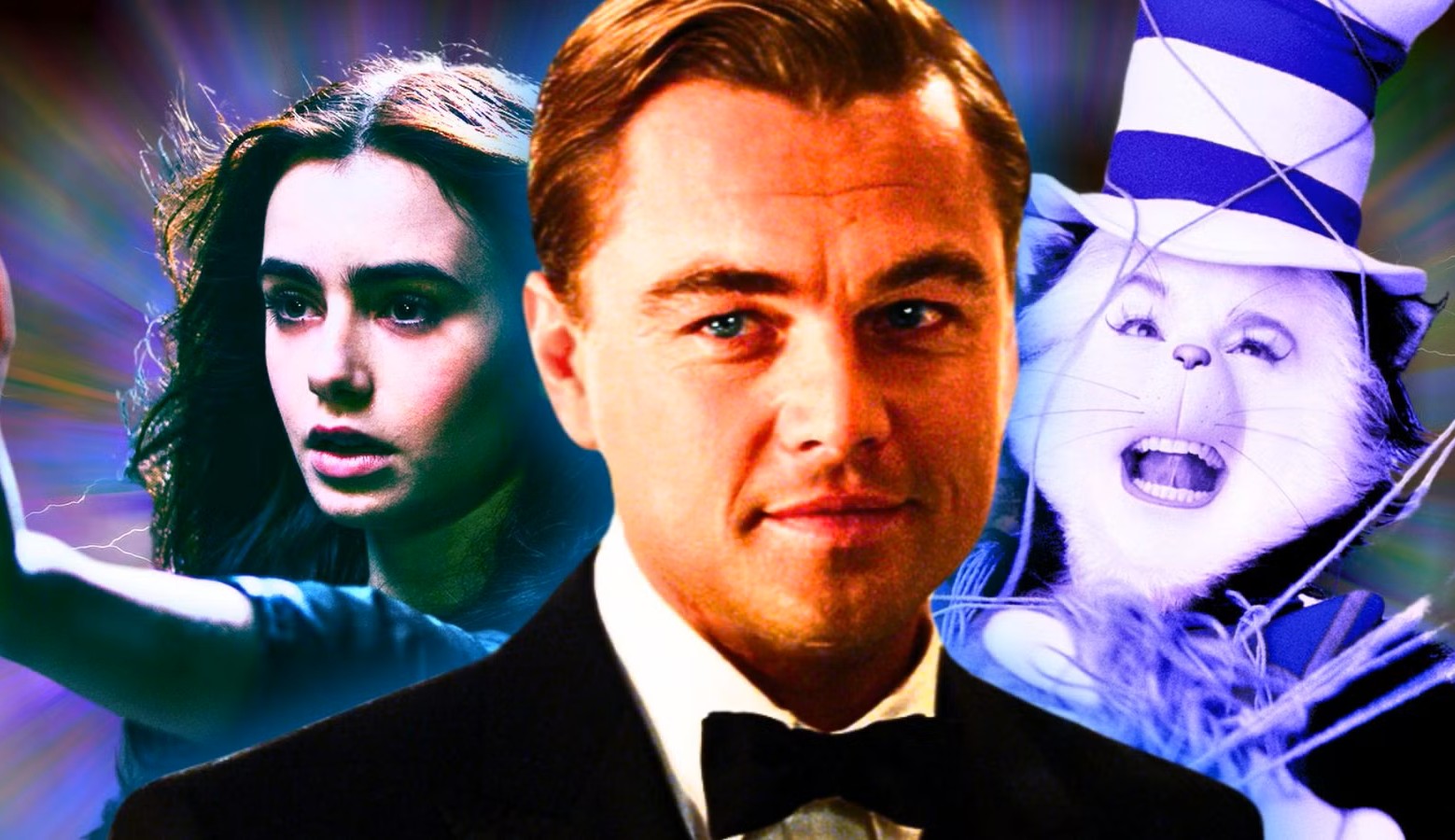
10 Beloved Books Hollywood Failed to Bring to Life on Screen
A great book can build an entire world inside a reader’s imagination. That is exactly what makes adapting one so risky.
Hollywood has long treated popular novels as ready-made blockbuster material: recognizable titles, loyal fan bases, built-in mythology, and emotional stakes already proven on the page. When it works, the result can become a cultural landmark. But when it fails, the disappointment hits harder than an ordinary bad movie because audiences are not just judging what is on screen. They are comparing it to the version they already loved.
Some adaptations stumble because they rush through dense world-building. Others flatten complex characters, soften sharper themes, or chase trends that were never part of the original story’s appeal. The films below all came from books with passionate readers, but each became a reminder that adapting a beloved novel requires more than buying the rights.
It requires understanding why people cared in the first place.
Why Great Books Do Not Always Make Great Movies
The most common mistake in a failed adaptation is not simply changing the plot. Changes are often necessary when moving from page to screen. The real problem comes when a film changes the identity of the story.
A fantasy novel can lose its scale. A satire can lose its bite. A children’s classic can lose its innocence. A young adult adventure can lose the voice that made readers feel personally connected to it. In each case, the movie may still carry the title of the book, but the emotional experience becomes something else entirely.
That disconnect is why these adaptations continue to frustrate fans years later.
The Adaptation Mistakes Fans Still Talk About
1. Eragon by Christopher Paolini
Christopher Paolini’s Eragon had all the ingredients Hollywood usually loves: dragons, prophecy, a young hero, and a sprawling fantasy world with room for franchise potential. The book captured young adult readers with its sense of adventure and mythic scale.
The 2006 film, however, became one of the most frequently cited examples of a fantasy adaptation that failed to translate the excitement of the source material. Instead of preserving the depth and momentum of the novel, the movie was criticized for stiff performances, weak visual effects, and a screenplay that stripped away much of the book’s texture.
For readers who had imagined Alagaësia as a rich and dangerous world, the film felt too thin to carry the weight of the story. What might have launched a major fantasy franchise instead became a warning about how badly things can go when world-building is treated as decoration rather than foundation.
2. The Lightning Thief by Rick Riordan
Rick Riordan’s Percy Jackson & the Olympians series became a modern YA favorite because it made Greek mythology feel fast, funny, and immediate. Percy’s voice was central to the books’ charm: sarcastic, relatable, and full of restless energy.
The 2010 film version of The Lightning Thief struggled because it moved away from several elements that made the book distinctive. Major plot changes, controversial casting choices, and a tone that did not fully capture Riordan’s wit left many fans feeling that the adaptation had misunderstood its own audience.
The disappointment was not just that details changed. It was that the movie seemed to miss the playful intelligence of the books. The original story balanced mythological stakes with middle-school chaos; the film often felt like it was chasing a more generic fantasy-adventure formula.
3. The Golden Compass by Philip Pullman
Philip Pullman’s His Dark Materials trilogy is not just fantasy. It is philosophical, ambitious, and layered with questions about authority, belief, power, and free will. That complexity is exactly what made The Golden Compass so beloved by readers — and so difficult to adapt.
The 2007 film had visual polish, but it rushed through the story and softened some of the more challenging material. In trying to make the book more broadly palatable, the adaptation lost much of the tension and thematic force that gave Pullman’s work its power.
For fans, the result was frustrating because the movie looked like The Golden Compass without fully feeling like it. The spectacle was there, but the emotional and intellectual weight was diminished.
4. The Dark Tower by Stephen King
Stephen King’s The Dark Tower is not the kind of story that can be easily compressed. The series blends fantasy, Western, horror, and metaphysical mythology into one of King’s most expansive fictional universes.
That made the 2017 film’s approach especially risky. By attempting to condense elements from multiple books into one movie, the adaptation created a story that many viewers found confusing and underpowered. Instead of delivering the epic sweep fans expected, the film felt like a fragment of a much larger narrative.
The problem was scale. The Dark Tower needed room to breathe, but the movie reduced a vast literary world into something far more conventional. For longtime readers, that was not just disappointing; it felt like a missed opportunity on a massive level.
5. Artemis Fowl by Eoin Colfer
Eoin Colfer’s Artemis Fowl books stood out because their young protagonist was not a traditional hero. Artemis was clever, morally complicated, and often closer to an antihero than a clean-cut savior. That edge gave the series its personality.
The 2020 Disney adaptation lost much of that sharpness. By softening Artemis into a more generic lead and mishandling the pacing and humor, the film missed the mischievous spirit that made the books appealing in the first place.
Fans wanted a smart, strange, high-stakes fantasy heist. What they got felt far more conventional. The adaptation’s biggest failure was not simply that it changed the character, but that it removed the very trait that made him memorable.
6. The Cat in the Hat by Dr. Seuss
Dr. Seuss’s The Cat in the Hat is simple, rhythmic, chaotic, and charming. Its appeal lies in its playful language and childlike sense of disorder. Translating that into live action was always going to be difficult, but the 2003 film became notorious for the wrong reasons.
Rather than preserving the innocent mischief of the book, the movie leaned into crude humor and adult-leaning jokes that clashed with the spirit of the original. The result alienated many parents and critics, who felt the film had distorted a beloved children’s classic into something loud and unpleasant.
It remains a striking example of how expanding a short children’s book into a feature-length film can go wrong when the added material does not match the source’s tone.
7. Gulliver’s Travels by Jonathan Swift
Jonathan Swift’s Gulliver’s Travels is often remembered as an adventure story, but its real strength is satire. The book uses fantastical journeys to critique society, politics, human arrogance, and power.
The 2010 film starring Jack Black took the broad outline of the premise and turned it into a slapstick comedy. In doing so, it lost the sharp commentary that made Swift’s work endure for centuries.
A modern reinterpretation did not need to be dry or overly faithful to succeed. But by replacing satire with broad humor and bathroom jokes, the film reduced a classic work of social criticism to something far less distinctive.
8. The Giver by Lois Lowry
Lois Lowry’s The Giver is quiet, haunting, and emotionally precise. Its power comes from restraint: the gradual discovery of truth, the moral weight of memory, and the unsettling calm of a society built on control.
The 2014 film adaptation struggled because it pushed the story toward a more familiar young adult dystopian template. By adding action-heavy elements and simplifying some of the novel’s deeper themes, the movie lost the subtlety that made the book so affecting.
For many readers, The Giver was never about spectacle. It was about awakening. The adaptation’s more conventional choices made the story feel less singular.
9. World War Z by Max Brooks
Max Brooks’s World War Z was not a standard zombie novel. Its interview-based structure gave the book a documentary-like realism, presenting a global catastrophe through fragmented human accounts. That format made it feel unusually grounded for the genre.
The 2013 Brad Pitt film took the title and broad zombie-apocalypse concept but transformed the material into a large-scale action thriller. While the movie had blockbuster energy, it bore little resemblance to the book’s distinctive structure and tone.
This is one of the clearest cases where the adaptation may function as its own film but disappoint as an interpretation of the source. Fans who admired the book’s political, social, and global scope were left with something much more streamlined and action-driven.
10. City of Bones by Cassandra Clare
Cassandra Clare’s The Mortal Instruments series built its following through a detailed shadow world of demons, hunters, supernatural politics, and romantic tension. The appeal was not only in the premise but in the layered mythology and character dynamics.
The 2013 adaptation of City of Bones struggled to make that world feel coherent on screen. Poor pacing, heavy exposition, and characters who felt flatter than their book counterparts made it difficult for the film to capture the energy of the series.
For a story dependent on atmosphere and emotional investment, that was a serious problem. The adaptation introduced the pieces, but it did not make them feel as compelling as they did on the page.
What These Adaptation Flops Have in Common
The most frustrating book-to-movie failures usually share the same core problem: they mistake the plot for the story.
A plot can be summarized. A story has rhythm, tone, character, theme, and atmosphere. Percy Jackson needed its wit. The Giver needed its quiet dread. Artemis Fowl needed its antihero edge. World War Z needed its documentary-style structure. The Dark Tower needed scope.
When those elements disappear, even recognizable names and familiar settings cannot save the adaptation.
There is also a lesson here about audience trust. Fans do not expect every scene to survive the journey from page to screen, but they do expect the film to respect the emotional contract of the book. When a movie seems embarrassed by, indifferent to, or confused about the source material, viewers can feel it immediately.