
Pakistan’s U.S.–Iran Mediation Effort Stalls as Peace Talks Face New Uncertainty
Pakistan’s attempt to help broker peace between the United States and Iran has run into fresh uncertainty, after a planned diplomatic push in Islamabad failed to produce direct talks between the two sides.
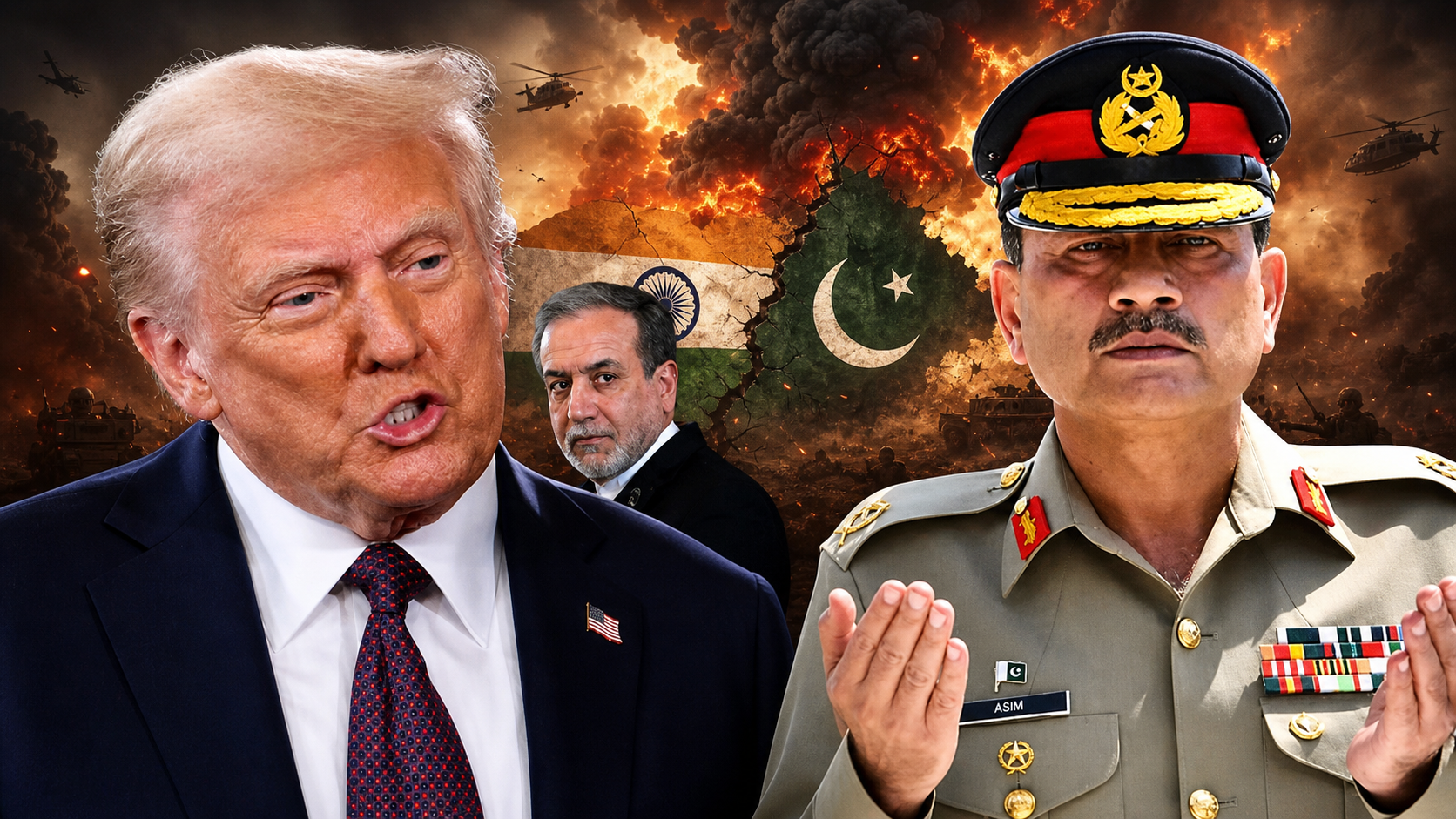
The effort placed Pakistan, a nuclear-armed South Asian country with ties across the Muslim world and a long history of balancing major-power relationships, in the unusual position of mediator between Washington and Tehran. But according to published reports, the latest round did not result in a breakthrough, and U.S. officials did not proceed with a planned visit to meet Iranian representatives in Pakistan.
Islamabad’s Mediation Bid Hits a Setback
The diplomatic initiative centered on Islamabad, Pakistan’s capital, where Iranian Foreign Minister Abbas Araghchi reportedly held discussions with Pakistani Prime Minister Shehbaz Sharif. The meetings were part of Pakistan’s broader effort to encourage dialogue and reduce tensions between Iran and the United States.
However, no direct meeting between U.S. and Iranian representatives took place, according to reports. U.S. President Donald Trump later canceled a planned trip by American envoys to Pakistan, saying Iran could initiate contact if it wanted negotiations to move forward.
The development underscored the fragility of the diplomatic track. While Pakistan has sought to keep communication open, the reported cancellation suggested that Washington and Tehran remained far apart on the terms of any settlement.
Why Pakistan Is Playing Mediator
For international readers, Pakistan’s role is significant because Islamabad maintains important relationships in multiple directions: with the United States, with neighboring Iran, and with Gulf and Muslim-majority countries affected by regional instability.
Pakistan has also portrayed itself as directly affected by the crisis. Prime Minister Shehbaz Sharif said the conflict had caused economic damage to Pakistan and that Islamabad would continue trying to ease tensions and promote peace in the wider region. One report cited him as saying the financial impact had reached $800 million.
That economic concern helps explain why Pakistan has an interest in mediation. A prolonged U.S.–Iran confrontation could disrupt trade, energy flows and regional stability, all of which matter to Pakistan’s fragile economic recovery.
Reported Demands Remain a Major Obstacle
The substance of the talks remains difficult to verify in full, and much of what is known comes from attributed reporting rather than official public documents.
According to reports, Iran conveyed demands during the Islamabad discussions, but the talks ended without a visible agreement. A later report said Iran had passed a new proposal to Pakistani mediators, but Trump indicated that Washington was not satisfied with the terms.
The reported points of contention include sanctions, naval restrictions, the Strait of Hormuz, and Iran’s nuclear program. The Guardian reported that issues around uranium enrichment and Iran’s nuclear stockpile remain central to the negotiations.
Because these matters involve national security, energy markets and international law, even limited diplomatic movement can carry global consequences.
The Strait of Hormuz Adds Global Stakes
One of the most sensitive issues is the Strait of Hormuz, a narrow waterway between Iran and the Arabian Peninsula that is critical to global oil and gas shipping. Reports have described the strait as a key pressure point in the crisis, with Iran and the United States linking maritime access, sanctions and security guarantees to broader diplomatic demands.
For global readers, this is why a regional diplomatic dispute can quickly become an international economic issue. Any sustained disruption near the Strait of Hormuz can affect energy prices, shipping routes and investor confidence far beyond the Middle East.
Pakistan’s mediation, therefore, is not only about easing U.S.–Iran tensions. It is also about preventing a wider shock that could affect countries with no direct role in the conflict.
Washington Faces Legal and Political Pressure at Home
The diplomacy is also unfolding against political and legal debate inside the United States. The Guardian reported that Trump argued a ceasefire arrangement had paused the U.S. War Powers Act deadline for seeking congressional authorization, an interpretation disputed by legal experts.
That domestic debate matters because U.S. foreign policy decisions can be shaped not only by battlefield or negotiating-room dynamics, but also by Congress, legal constraints and public pressure.
If the administration continues military pressure while diplomacy stalls, questions about authorization and oversight are likely to remain part of the U.S. political conversation.
A Diplomatic Opening, but No Breakthrough Yet
Despite the lack of progress, Pakistan has not abandoned its role. Reports indicate that Islamabad continues to support dialogue and believes mediation remains possible.
Still, the immediate outlook is uncertain. Washington appears unwilling to accept Iran’s reported conditions as presented, while Tehran has signaled that any settlement would need to address sanctions, maritime restrictions and broader security concerns. Those positions leave little room for a quick agreement unless one or both sides adjust their demands.
For now, Pakistan’s attempted mediation has kept a diplomatic channel visible, but not yet effective. The central question is whether Islamabad can help turn indirect messages into a workable negotiation — or whether the U.S.–Iran conflict will continue to be shaped more by pressure than by diplomacy.